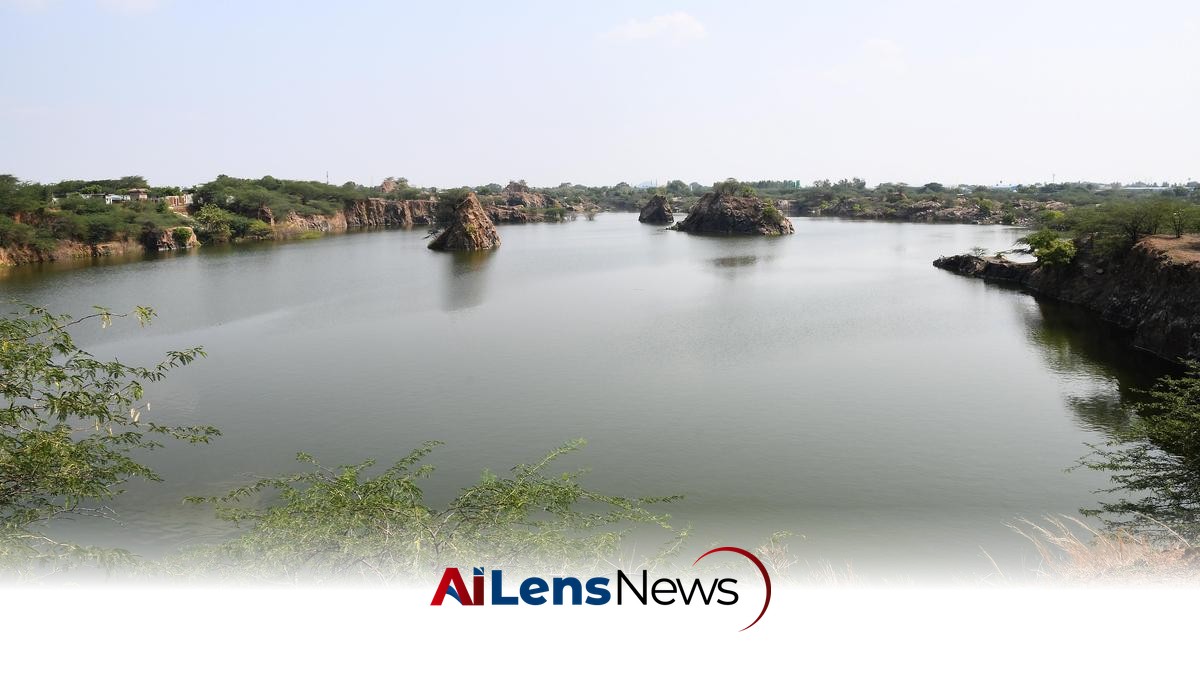


A study led by IIT Madras explores the feasibility of using abandoned quarries in Chennai to enhance the city's water supply amid declining reservoir levels.
Chennai, India Jul 17, 2026 ALN: A team of researchers, including those from the prestigious Indian Institute of Technology Madras (IIT Madras), is embarking on an innovative research initiative aimed at exploring the potential of abandoned quarries located in the southern fringes of Chennai as alternative water sources. This initiative comes amidst growing concerns over the water scarcity faced by the city, particularly in light of the challenges posed by climate change and erratic rainfall patterns.
Abandoned quarries are emerging as a vital component of Chennai’s drought contingency plan, which is crucial for a city that has historically struggled with water supply issues. The Chennai Metrowater Supply and Sewerage Board (Metrowater), which oversees the management of the city’s water resources, has identified these quarries as buffer sources that can be tapped during times of severe water shortage, particularly in the event of a poor Northeast monsoon season.
In recent years, Chennai has faced significant challenges due to declining water storage levels in its major reservoirs, which has prompted a renewed focus on alternative water sources. The Chembarambakkam reservoir, one of the primary sources of drinking water for the city, has been particularly affected by reduced inflows and increased evaporation rates. As a result, the city is now looking towards the potential of utilizing abandoned quarries to bolster its water supply.
The research team, led by Elango Lakshmanan, a visiting faculty member in the Hydraulics and Water Resources Engineering Group at IIT Madras, has initiated a comprehensive study to assess the viability of nearly 25 abandoned quarries in areas such as Tambaram, Vandalur, Nallambakkam, Tiruneermalai, Unamancheri, and Keerapakkam. This study aims to evaluate several critical factors, including the storage capacity of these quarries, the quality of the water they can potentially hold, and the feasibility of integrating them into the existing water supply network of the city.
Funded by the Union Ministry of Science and Technology, this research initiative seeks to develop a cost-effective and sustainable network of alternative water sources that can be relied upon during periods of water scarcity. According to Mr. Lakshmanan, the study not only focuses on the technical aspects of water storage and quality but also emphasizes the importance of linking these quarries to the nearest water supply networks to enhance the overall distribution of water within the city.
One of the notable findings of the research is the comparison between the quarries and the Chembarambakkam reservoir. While the Chembarambakkam reservoir spans an area of approximately 15 square kilometers, the quarries typically have a smaller water spread area, ranging from 0.3 square kilometers to 0.5 square kilometers. This smaller size may actually work to the advantage of the quarries, as they are expected to experience significantly lower evaporation losses, estimated to be between 10% to 20%. This contrasts sharply with the much larger reservoir, which is more prone to substantial evaporation, especially during the hotter months.
In practical terms, the research suggests that water from the Chembarambakkam reservoir should be supplied to the quarries in the months immediately following the Northeast monsoon. This strategy would help optimize the use of available water resources and minimize waste. The recommendations made by Mr. Lakshmanan and his team have been forwarded to the Water Resources Department for further consideration and implementation.
In addition to this promising research, Chennai has recently begun to see an increase in inflows of Krishna water, which has been a significant source of water for the city. Reports indicate that the inflow has reached nearly 312 cubic feet per second following a recent visit by Metrowater and Water Resources Department officials to Andhra Pradesh. This influx of Krishna water is expected to gradually rise to 500 cubic feet per second in the coming days, which will help maintain the storage levels of the city’s reservoirs, currently at approximately 47% capacity.
Despite the positive developments regarding water inflow, it is important to note that the Sikkarayapuram and Erumaiyur quarries, which together possess a storage capacity of about 0.7 thousand million cubic feet, are nearly 75% full. Metrowater officials have stated that they plan to draw water from these quarries only if the Chembarambakkam reservoir runs dry or if the Northeast monsoon fails to deliver adequate rainfall. This cautious approach underscores the need for prudent water management strategies in a city that is increasingly vulnerable to water shortages.
The available storage from the Sikkarayapuram quarries can supply approximately 30 million liters of water per day for nearly a year, while the Erumaiyur quarries can provide an additional 10 million liters per day for about 425 days. These figures highlight the significant potential of utilizing abandoned quarries as a reliable water source, particularly during dry spells.
Furthermore, there is an ongoing proposal to network the cluster of 25 Sikkarayapuram quarries into a single storage structure to enhance capacity. However, this proposal is still awaiting approval from the government. If approved, this initiative could vastly improve the city’s water management capabilities and provide a more resilient solution to the ongoing water crisis.
In conclusion, the research initiative led by IIT Madras represents a proactive approach to addressing Chennai's water scarcity challenges. By exploring the potential of abandoned quarries as alternative water sources, the city could significantly enhance its resilience against future droughts and water shortages. As urban areas around the world grapple with similar issues, the findings from this study may offer valuable insights and strategies for sustainable water management practices in other cities facing water scarcity.
To learn more about the latest developments in Environmental Policy, stay updated with our exclusive reports and analyses on AiLensNews.

