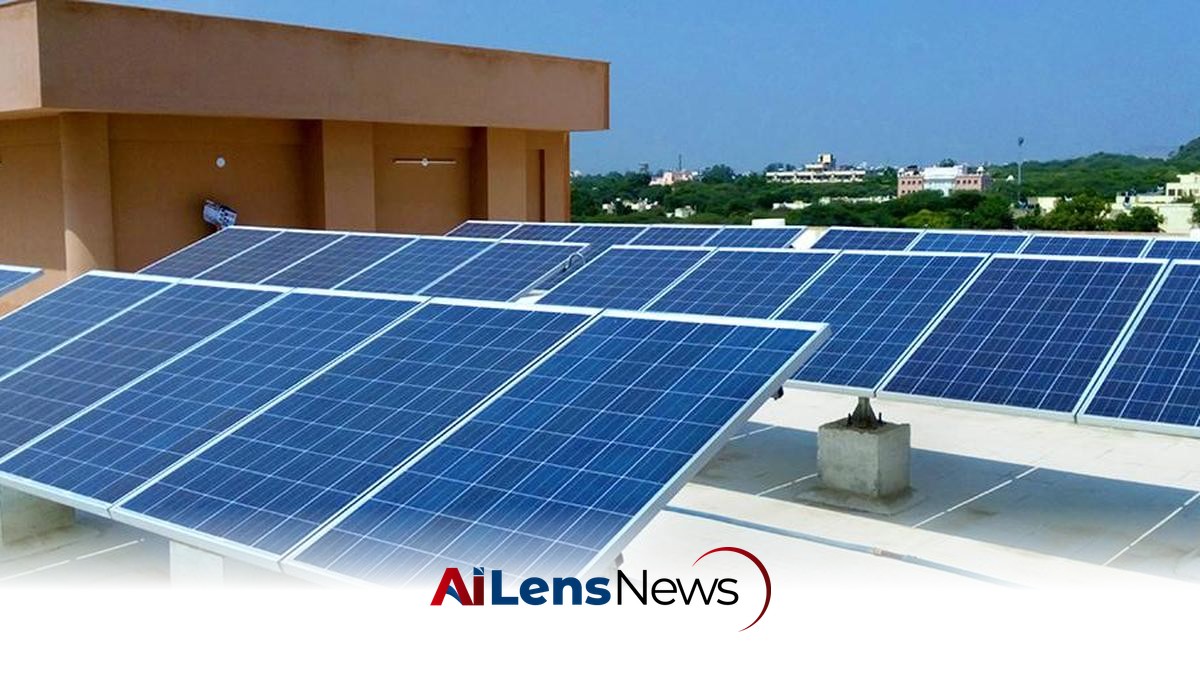


Union Minister Shripad Yesso Naik announces India's progress in renewable energy, achieving 50% capacity from non-fossil sources five years early.
Chennai, India Jul 23, 2026 ALN: India has made significant strides in its energy transition, achieving its target of having 50% of its installed electricity capacity derived from non-fossil fuel sources five years ahead of the set deadline of 2030. This milestone was announced by Union Minister of State for New and Renewable Energy and Power, Shripad Yesso Naik, on July 22, 2026. As of June 30, 2026, India's installed capacity from non-fossil fuel sources reached an impressive 297.36 GW, with renewable energy capacity alone accounting for 288.58 GW.
This achievement is particularly notable in the context of global efforts to combat climate change and reduce reliance on fossil fuels. The transition to renewable energy is seen as a crucial step in mitigating the impacts of climate change, which has become an increasingly pressing issue worldwide. India, being one of the largest carbon emitters, has recognized the need for a sustainable energy future, aligning its energy policies with global climate commitments. The commitment to renewable energy is further underscored by India's participation in international agreements such as the Paris Accord, where it pledged to reduce its carbon intensity and increase the share of non-fossil fuel energy in its overall energy mix.
In his address, Minister Naik highlighted that solar power has emerged as the dominant source of renewable energy in India, contributing 162.15 GW to the total capacity. Wind power follows with 57.44 GW, while large hydro power adds another 52.06 GW. Additionally, bio power contributes 11.75 GW, and small hydro power accounts for 5.18 GW. This diverse energy mix showcases India's commitment to leveraging various renewable resources to meet its energy demands. The growth in solar energy, in particular, has been driven by a combination of government incentives, technological advancements, and a growing market for solar products and services.
The government has set an ambitious target of achieving a total installed electricity capacity of 500 GW from non-fossil fuel sources by the year 2030. This goal reflects India's broader vision of transitioning to a low-carbon economy and enhancing energy security. The acceleration in renewable energy addition has been remarkable, with figures rising from 14,595.29 MW in the 2021-22 fiscal year to a substantial 54,591.75 MW in 2025-26. This rapid growth demonstrates the effectiveness of government policies and initiatives aimed at promoting renewable energy adoption, including the introduction of various schemes and financial mechanisms to support the deployment of renewable technologies.
Despite these achievements, several challenges remain in the path of expanding renewable energy capacity in India. Minister Naik identified key hurdles such as land acquisition, the need for robust transmission infrastructure, and effective grid integration. These challenges are critical to ensuring that the growing capacity of renewable energy can be effectively utilized and integrated into the national grid. The integration of renewable energy sources, particularly those that are variable, such as solar and wind, requires careful planning and management of the grid to maintain stability and reliability.
Land acquisition has been a persistent issue in India, often leading to delays in the implementation of renewable energy projects. To address this, the government has been collaborating with various States and Union Territories to identify suitable land for renewable energy projects. The Green Energy Corridor Scheme has been initiated to strengthen evacuation infrastructure, ensuring that electricity generated from renewable sources can be efficiently transmitted to consumption centers. This initiative is vital as it aims to create a robust grid that can handle the influx of renewable energy, which is often generated in remote areas far from urban centers.
Moreover, the government is working on improving forecasting and grid management through the establishment of Renewable Energy Management Centres. These centers are designed to enhance the reliability and stability of the grid as more variable renewable energy sources, such as solar and wind, are integrated into the energy mix. By leveraging advanced technologies and data analytics, these centers aim to optimize the operation of the grid, ensuring that supply and demand are balanced effectively.
Another significant challenge is the Right of Way (RoW) issues associated with transmission lines. To mitigate these challenges, the Ministry of Power has issued guidelines for the payment of compensation related to RoW for transmission lines. Since land rights and acquisition are primarily under the jurisdiction of state governments, the guidelines provide a framework for States and Union Territories to adopt, ensuring a more streamlined process for land acquisition necessary for expanding transmission networks. Addressing RoW issues is crucial for the timely completion of infrastructure projects that support the growth of renewable energy capacity.
The implications of India achieving this milestone extend beyond the immediate benefits of increased renewable energy capacity. It signals a shift in the energy paradigm, showcasing the potential for large-scale renewable energy deployment in a developing economy. This achievement can serve as a model for other nations, particularly those in similar developmental contexts, highlighting that transitioning to a sustainable energy future is not only necessary but also feasible. The success of India's renewable energy initiatives may inspire other countries to adopt similar approaches, fostering a global movement towards cleaner energy solutions.
Furthermore, India's success in increasing its renewable energy capacity can attract foreign investment and technological collaboration in the energy sector. As global investors increasingly prioritize sustainability, India's advancements in renewable energy may position it as an attractive destination for investment in clean technology and infrastructure development. This influx of investment can lead to job creation, technology transfer, and the establishment of new industries focused on renewable energy solutions.
Additionally, this achievement has significant implications for energy access in India. With a growing share of renewable energy in the energy mix, there is potential for improved energy access in rural and underserved areas. Renewable energy technologies, particularly solar power, can be deployed in decentralized formats, providing electricity to communities that are not connected to the national grid. This decentralized approach not only enhances energy access but also empowers local communities to take charge of their energy needs, fostering economic development and improving quality of life.
In conclusion, India's achievement of 50% non-fossil fuel electricity capacity ahead of the 2030 target is a landmark moment in the country's energy journey. While challenges remain, the government's proactive measures and commitment to expanding renewable energy capacity demonstrate a strong resolve to transition towards a sustainable energy future. As India continues to build on this momentum, it will play a critical role in the global fight against climate change and contribute to a more sustainable world. The journey ahead will require continued innovation, investment, and collaboration among various stakeholders, including government, industry, and civil society, to ensure that the full potential of renewable energy is realized.
To learn more about the latest developments in Renewable Energy, stay updated with our exclusive reports and analyses on AiLensNews.

