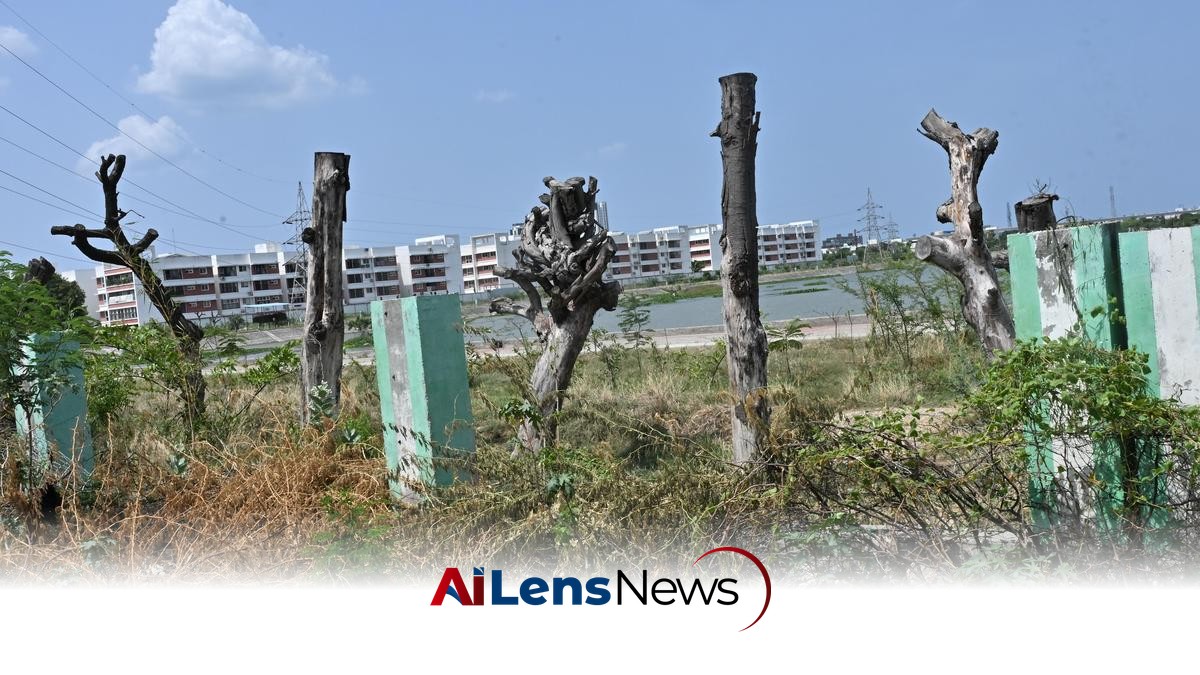


Transplanted trees at Raman Thangal Lake in Sholinganallur have died, raising concerns over post-transplant care and accountability.
Chennai, India Jul 13, 2026 ALN: Morning walkers circle Raman Thangal Lake in Sholinganallur, but instead of the shade promised by rows of transplanted trees, they are greeted by a line of lifeless trunks. This stark visual serves as a poignant reminder of the challenges associated with urban development and environmental preservation. The situation at the lake illustrates the broader issues facing many urban areas, where rapid development often comes at the cost of natural ecosystems.
Over a year after nearly 95 trees, most of which were mature adult trees, were relocated there by the Highways Department during road widening works, most have failed to survive. The transplantation was carried out between March and May 2025, a period that coincided with the onset of the dry season in the region. The trees were relocated to facilitate the widening of the East Coast Road (ECR) between Akkarai and Thiruvanmiyur, a project aimed at improving transportation and infrastructure in the rapidly urbanizing area. This project was part of a larger initiative to enhance connectivity in Chennai, a city that has seen significant growth in population and infrastructure demands over the past few decades.
A recent visit to the lake found rows of dead trunks with no signs of fresh leaves, shoots, or new growth, indicating that most of the trees had dried up after transplantation. This incident raises critical questions about the effectiveness of tree transplantation practices, particularly in urban settings where space is limited and environmental considerations often take a backseat to developmental needs. The failure of these trees to thrive highlights the need for more sustainable practices in urban planning and development.
Tree transplantation and compensatory plantation are commonly undertaken as mitigation measures when infrastructure projects require the removal of mature trees. This practice is intended to offset the environmental impact of development by relocating trees rather than cutting them down entirely. However, environmentalists point out that transplantation can succeed only if the trees receive intensive aftercare for several months after they are moved. The failure to provide such care can lead to high mortality rates among transplanted trees, as seen in the case of Raman Thangal Lake. This situation reflects a broader trend in urban development where immediate needs overshadow long-term ecological considerations.
T.D. Babu of Nizhal, a Chennai-based environmental organization, expressed his dismay at the situation, stating, “The place has become a graveyard of trees. The location itself is good because it is next to a waterbody, so water availability should not have been a problem. But there are no new leaves, shoots, or sprouts.” His comments highlight the irony of the situation; despite being relocated to a potentially favorable environment with access to water, the trees have not thrived. This raises concerns about the adequacy of the transplantation process and the subsequent care provided to the trees. The apparent contradiction between the trees' location and their health underscores the complexity of urban ecological management.
Mr. Babu explained that transplantation places trees under severe stress because a significant portion of their root system is damaged during excavation and relocation. This stress can be exacerbated by environmental factors such as temperature fluctuations, soil conditions, and water availability. After transplantation, trees require not only adequate watering but also growth promoters, anti-fungal treatment, organic manure, and regular monitoring to maintain soil moisture and promote healthy growth. “They should be monitored until they put out new leaves. At the very least, they need careful maintenance through one full summer,” he said, emphasizing the need for a comprehensive aftercare plan that extends well beyond the initial relocation phase. This highlights a critical gap in current practices where the focus is often on the act of transplantation rather than the long-term care that is essential for success.
The implications of this situation extend beyond the immediate loss of trees. Urban areas like Chennai face increasing pressure from development, which often leads to the destruction of green spaces. The failure of tree transplantation projects can contribute to a decline in urban biodiversity, increased air pollution, and a reduction in the overall quality of life for residents. Green spaces play a crucial role in urban ecosystems, providing habitat for wildlife, improving air quality, and offering recreational opportunities for communities. The loss of trees can exacerbate the urban heat island effect, leading to higher temperatures in densely built areas, which can further impact public health and comfort.
Environmentalists argue that the District Green Committee should periodically review tree transplantation projects to monitor survival rates and fix accountability where maintenance has been neglected. This oversight is essential for ensuring that future transplantation efforts are successful and that the ecological integrity of urban areas is preserved. They say that agencies responsible for transplantation should be held accountable when trees die due to poor aftercare. Without accountability, there is little incentive for agencies to prioritize the health of relocated trees, leading to a cycle of failure that undermines conservation efforts. This lack of accountability can also erode public trust in governmental initiatives aimed at environmental protection.
The issue of tree transplantation is not unique to Chennai; it is a challenge faced by many cities around the world as they grapple with the dual pressures of urbanization and environmental conservation. As cities continue to expand, the need for effective strategies to manage urban green spaces becomes increasingly urgent. This includes not only the successful transplantation of trees but also the preservation of existing green areas and the integration of nature into urban planning. Urban planners and policymakers must adopt a holistic approach that balances development with environmental stewardship to create sustainable cities.
An official from the Highways Department acknowledged the issue and said the matter would be looked into. This response indicates a recognition of the problem, but it remains to be seen what concrete actions will be taken to address the failures observed at Raman Thangal Lake. Moving forward, it is crucial for government agencies, environmental organizations, and the community to collaborate on developing best practices for tree transplantation and care, ensuring that urban development does not come at the expense of the environment. Engaging the community in these efforts can also foster a sense of ownership and responsibility towards local green spaces.
In conclusion, the situation at Raman Thangal Lake serves as a cautionary tale about the complexities of tree transplantation in urban environments. As cities like Chennai continue to grow, the importance of maintaining healthy green spaces cannot be overstated. Effective aftercare, accountability, and community involvement are essential components of successful tree transplantation efforts that can help mitigate the environmental impact of urban development while enhancing the quality of life for residents. The lessons learned from this incident can inform future projects, ensuring that urban green spaces are preserved and enhanced for generations to come. By prioritizing ecological health alongside urban development, cities can create vibrant, sustainable environments that benefit both people and nature.
To learn more about the latest developments in Conservation, stay updated with our exclusive reports and analyses on AiLensNews.

