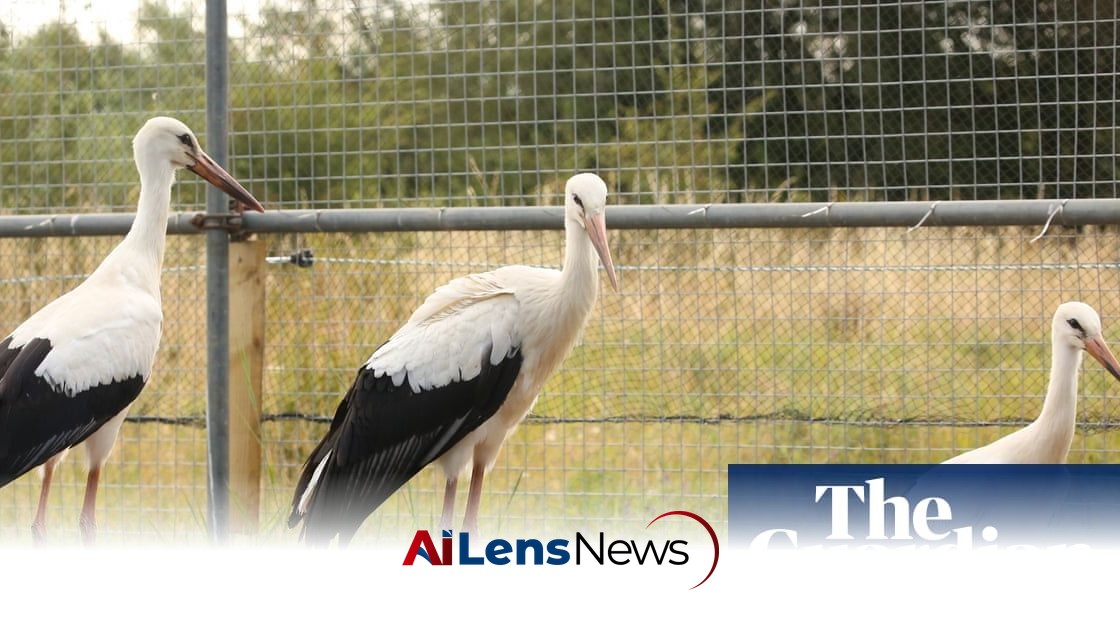


Three juvenile white storks have arrived at Willington Wetlands in Derbyshire, marking the species' return to the Midlands after centuries of absence.
New Delhi, India Jul 28, 2026 ALN: A long orange beak poked curiously out from its wooden crate, followed by a sleek head and slender body. Then the first white stork of the morning flapped its wings and took to the air. Moments later, a second emerged tentatively to stalk through the long grass, followed closely by a final sibling who stretched its wings and explored the length of the enclosure.
The trio of juvenile white storks have just arrived at their new home in Willington Wetlands in Derbyshire, and conservationists are hopeful that their presence will kickstart the return of the birds to the Midlands after an absence of more than 600 years. The return of the white stork is not just a significant event for local wildlife enthusiasts; it symbolizes a broader movement towards ecological restoration and biodiversity recovery in the region.
“It feels absolutely incredible,” said Katie Last, the living landscape officer for Derbyshire Wildlife Trust, who has overseen the project and manages the nature reserve. “To see white storks back at Willington feels like a real milestone. We’ve put years of work into restoring this landscape. I’m over the moon with how it all went. Our next aim is to get to the point where they’re a sustainable population and they can live outside, flying around and people can see them moving through the landscape.” This statement reflects the significant efforts made by various conservation groups to restore habitats that support not only storks but a variety of species that have also been affected by habitat loss.
Historically, white storks were once common across the Midlands, but they disappeared from Derbyshire and much of the UK around the 14th century. Their decline was primarily due to habitat loss, hunting, and changes in agricultural practices that reduced their natural foraging grounds. As urbanization increased and wetlands were drained for agriculture, the stork population dwindled. Recent conservation efforts, however, have led to increased sightings of white storks in the region, although none have yet established breeding populations. The hope is that the trio of juveniles – one male, one female, and one of yet-to-be-determined sex – will act as a “magnet flock” to attract wild birds moving through the Trent Valley, encouraging them to settle and eventually breed.
“White storks seek safety in numbers, so it’s been proven that white storks will settle around other white storks,” Last said. “We’ve got wild white storks migrating over from Africa. We’ve had white storks recorded in nearby Matlock and Ashbourne, so this is the perfect opportunity. We’ll also be putting artificial platforms up in existing trees to give birds space and encourage nesting.” This strategy is part of a broader approach to wildlife conservation, which emphasizes the importance of creating suitable habitats and conditions that can support diverse species. By providing nesting platforms and ensuring a safe , conservationists hope to foster a self-sustaining population of storks in the area.
Watched by an excited gathering of staff, volunteers, donors, and birders, the freshly released birds soon settled into their new home. They were bred at Celtic Rewilding’s captive breeding facility in Staffordshire before being moved to their new, purpose-built enclosure, which is predator-proof, with an electric fence to defend against foxes and minks, and fine netting to keep smaller birds out and protect the storks from avian flu. This careful planning highlights the challenges that come with reintroducing species into areas where they have been absent for centuries. Conservationists must consider not only the immediate needs of the species but also the long-term viability of their populations in the wild.
Over time, Derbyshire Wildlife Trust hopes to see white storks successfully breeding in the area and to manage releases from the enclosure into the reserve as part of the ambitious species-recovery programme. The first pair will be carefully monitored. Depending on how they settle and progress, additional birds may be shipped into the reserve in future. “Our long-term hope is that white storks become part of the Midlands landscape once again, but success is about much more than one species,” said Rachel Bennett, the director of wilder landscapes and wilder communities at Derbyshire Wildlife Trust. “Success means thriving wetlands, more wildlife across the landscape, and communities that feel connected to nature and invested in its future.” This statement underscores the interconnectedness of species recovery and community engagement in conservation efforts.
The £309,000 project has been funded by the Veolia al Trust through the Landfill Communities Fund. “This whole project is about more than the return of an iconic bird,” said Last. “It’s about reigniting people’s sense of wonder in nature. If you can create the kind of healthy, dynamic landscape that supports white storks, you’re also creating habitats that benefit countless other species.” This perspective reflects a growing trend in conservation that emphasizes holistic approaches to ecosystem management, where the focus is not solely on individual species but on the health of entire ecosystems.
The wetlands, a 40-hectare (100-acre) rewilding site that was previously an area of gravel pits, has been identified as a critical stepping stone for stork recovery. Years of restoration work have helped create wet grassland, open pools, and reed beds, which provide ideal foraging and nesting conditions for storks. The site is also home to Derbyshire’s first resident beavers in more than 800 years, after two pairs of Scottish beavers were released in 2021, which has helped create a “fluid, dynamic wetland habitat,” Last explained. The return of beavers, often referred to as ecosystem engineers, plays a crucial role in enhancing wetland habitats. Their activities in dam-building create ponds and wetlands that benefit a multitude of species, thus improving overall biodiversity within the area.
Storks “have a really strong connection with people across Europe, and they’re part of lots of folklore. They migrate and arrive in spring, so they’re a sign of new life, which is why they’re associated with delivering babies – there’s the story that birthmarks are where the stork carried the baby, leaving their mark on them. Because they have that history with us, they’re great at inspiring people to reconnect with nature. They’re an iconic species that capture people’s imaginations, but what they really represent is healthier wetlands, healthier ecosystems, and a landscape that’s becoming richer for wildlife.” The cultural significance of storks adds another layer of importance to their reintroduction, as they can serve as ambassadors for conservation efforts and help foster a greater appreciation for local wildlife.
“This has got to be the ultimate wetland that acts as a space for protection for wildlife but on a larger landscape scale,” added Last. “We want to see this reserve extending out and for the River Trent to be a wildlife corridor. We want landowners to work with us, get onboard and give a bit of space for wildlife to move freely. We want the wildlife we’ve got here to be able to move freely in and out across Derbyshire and beyond.” This vision of connectivity and collaboration among landowners, conservationists, and local communities is essential for creating resilient ecosystems that can withstand al changes and support diverse wildlife populations in the future.
To learn more about the latest developments in Conservation, stay updated with our exclusive reports and analyses on AiLensNews.

