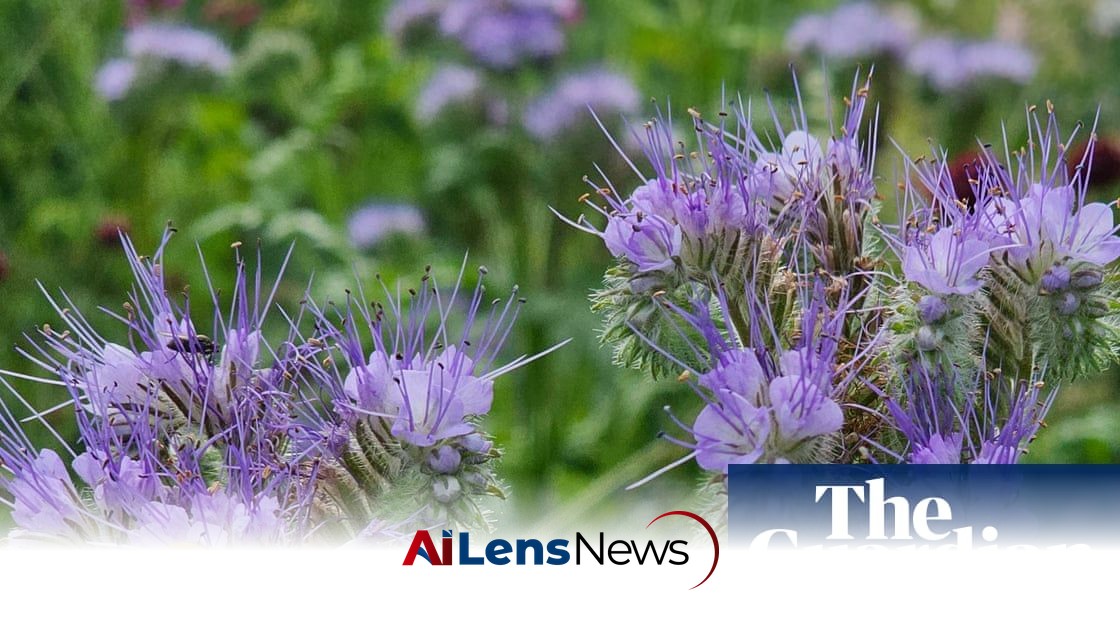


Phacelia tanacetifolia, a favorite among gardeners and farmers, serves as a cover crop that enriches soil and attracts pollinators, showcasing its ecological benefits.
New Delhi, India Jul 13, 2026 ALN: Allendale, Northumberland: Phacelia tanacetifolia, commonly known as phacelia, is gaining recognition not only for its beauty but also for its ecological benefits. This versatile plant is a favorite among farmers and gardeners alike, serving as an effective cover crop that enhances soil health while attracting a variety of pollinators.
Cupped by bristly sepals, the five-petalled flowers of phacelia flare open at the tips, drawing insects to their abundant nectar and blue pollen. Hoverflies, honeybees, parasitic wasps, solitary bees, and bumblebees thrive in the vibrant ecosystem created by this plant. As I hunker down among the plants, I am surrounded by life, a testament to the vital role phacelia plays in supporting biodiversity. The presence of these insects is crucial not only for pollination but also for the overall health of the ecosystem, as they help in the control of pest populations and contribute to the pollination of a wide variety of crops.
Pollinators are facing significant threats globally due to habitat loss, pesticide use, and climate change. The decline in their populations has raised alarms among ecologists and agricultural experts, as these insects are essential for the reproduction of many flowering plants, including numerous crops that humans rely on for food. Phacelia, with its rich nectar and pollen, provides a critical resource for these pollinators, thereby supporting their populations and, by extension, the ecosystems that depend on them.
I always keep a packet of phacelia seeds ready for sowing into any bare soil among both vegetables and ornamentals. Recently, I rearranged a section of my flower garden to curtail the spread of some vigorous Michaelmas daisies, creating space for biennial cotton thistles, the giant Onopordum acanthium, which will tower above my head next summer. To prevent weeds from germinating in the temporarily cleared ground, I sowed phacelia, and its softly mauve flowers have become a beautiful wash of color at mid-height in the border. This plant not only adds aesthetic value but also serves practical purposes in the garden.
Phacelia's ability to grow quickly and cover bare soil is particularly beneficial in preventing erosion. The roots of phacelia help to bind the soil, reducing the risk of runoff and soil degradation, which can be a significant concern in many gardening and agricultural contexts. Furthermore, the organic matter that phacelia contributes to the soil when it is tilled back in enhances soil structure, promotes microbial activity, and increases nutrient availability for subsequent crops.
The practice of adding organic matter to soil is fundamental to sustainable gardening and farming. As phacelia decomposes, it releases nutrients that are essential for plant growth, thus reducing the need for synthetic fertilizers. This not only lowers costs for gardeners and farmers but also minimizes the al impact associated with chemical inputs.
Farmers grow phacelia as a cover crop due to its rapid growth, which suppresses weeds, captures nutrients, improves drainage, and conditions the soil. At field scale, it creates a soothing haze of purple while providing a high nectar yield that supports millions of insect lives. In gardens, it is often direct-sown as a green manure plant, cut down while still green, and then dug into the vegetable garden to enrich the soil. This practice not only enhances the physical properties of the soil but also contributes to a reduction in the need for chemical fertilizers, making it an ally friendly choice for sustainable agriculture.
The cultivation of phacelia can be particularly advantageous in crop rotation systems. By planting phacelia in the off-season, farmers can break pest and disease cycles, improve soil health, and increase overall farm productivity. Additionally, the presence of phacelia can attract beneficial insects that help control pest populations, reducing the reliance on pesticides and promoting a more balanced ecosystem.
Crop rotation is a well-established agricultural practice that helps maintain soil fertility and reduces the buildup of pests and diseases. Integrating phacelia into these systems not only complements other crops but also enhances the overall resilience of the farming operation. As farmers face increasing challenges from climate change and market fluctuations, such practices become essential for long-term sustainability.
Upon closer inspection, phacelia reveals a rhythmic structure, with each flower opening in sequence along a coiled scroll reminiscent of a violin's headstock; hence its common name, fiddlehead. This intricate design is what captivates me as I hold a sprig of phacelia next to my sketchbook. Through the act of drawing, I notice the details: the amethyst stamens bursting from the flowers, the hairs covering each stem, and the lines of maturing seedpods stacked along the stem like an ear of wheat. The aesthetic appeal of phacelia has inspired not only gardeners but also artists, photographers, and designers who seek to capture the beauty of nature in their work.
The striking form of phacelia is beautifully captured in a 1928 photograph by Karl Blossfeldt, whose work revealed the extraordinary patterns and symmetry of plants. The unfurling of ferns, the uncoiling of comfrey, and the elegant curls of phacelia are showcased with startling clarity in his black-and-white images. This plant not only inspires art but also nurtures the soil, adds color to my borders, and fills the air with pollinating insects. The interplay between art and nature is profound, as the beauty of phacelia serves as a reminder of the intricate connections that exist within our ecosystems.
Art plays a crucial role in raising awareness about al issues. By portraying the beauty of plants like phacelia, artists can inspire others to appreciate nature and take action to protect it. The visual representation of biodiversity can evoke emotions and motivate individuals to engage in conservation efforts, emphasizing the importance of preserving our natural world.
Phacelia is more than just a plant; it is a vital component of both agricultural and garden ecosystems. Its ability to enrich the soil, attract pollinators, and inspire creativity makes it a must-have for any gardener. As I continue to cultivate my garden, I am reminded of the importance of such plants in promoting biodiversity and supporting the intricate web of life that sustains us. With increasing concerns about land degradation and the decline of pollinator populations, the cultivation of phacelia and similar plants becomes not only a personal choice but also a collective responsibility. By integrating phacelia into gardens and farms, we contribute to a healthier planet, ensuring that future generations can enjoy the beauty and benefits of diverse ecosystems.
In conclusion, the role of phacelia extends beyond mere aesthetics; it represents a commitment to sustainable practices that benefit both the and agriculture. As awareness grows regarding the importance of biodiversity, plants like phacelia will continue to be champions of ecological health, serving as a bridge between beauty and utility in our gardens and fields. The future of gardening and farming lies in understanding and embracing the interconnectedness of all living things, and phacelia serves as a perfect example of how one plant can embody this philosophy.
To learn more about the latest developments in Conservation, stay updated with our exclusive reports and analyses on AiLensNews.

