

More
Checking your session
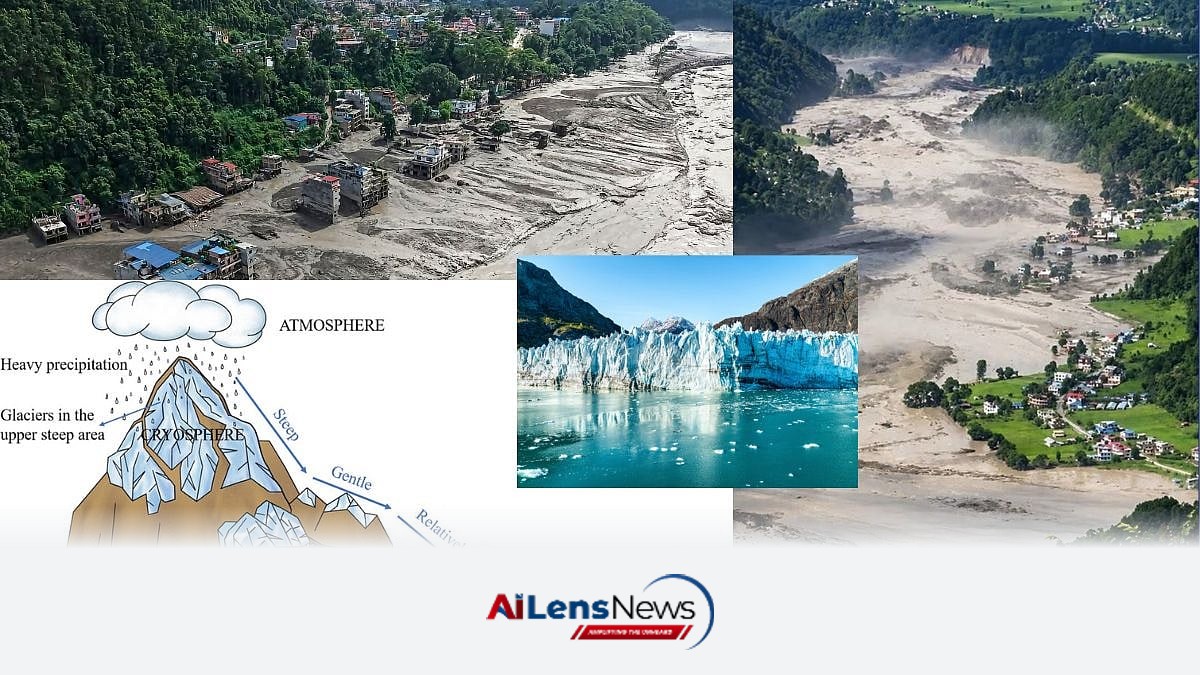



A devastating flash flood in Nepal's Rasuwa district has raised urgent questions about the impact of climate change on glacial stability and extreme weather events.
New Delhi, India Aug 27, 2026 ALN: A shocking video depicting the instant when flash flood waters rushed through areas of Nepal has emerged online, featuring images of chaos as locals rushed to flee from the swiftly approaching waters. The video, recorded from within a bus, likely a school bus, depicts passengers looking frightened as floodwaters rushed through the region. A number of individuals can be heard yelling and observed running away on foot, while some utilise scooters to escape from the approaching water and wreckage.
Nepal hit by flash flood on Wednesday
On Wednesday, a massive flood hit the Bhote Koshi River region in Rasuwa district near the Nepal-Tibet border, releasing a powerful flow of water and debris that impacted communities, roads, bridges, and hydropower facilities. The flash flood struck the Bhote Koshi River at around 9 AM local time. Authorities said the sudden surge appeared to have come from the direction of the Chinese side of the border before rushing downstream.
The hardest-hit areas included Timure and Syafrubesi in Rasuwa district. As the floodwaters moved downstream, they entered the Trishuli River and affected Nuwakot and other neighbouring areas, leaving little time for communities to respond. It led to the deaths of over 157 people, leaving many missing. The loss of life and the impact on local infrastructure have raised serious concerns about the capacity of emergency response systems in the region.
What triggered the Nepal flash flood?
According to reports, at Galchchi, the water level rose by as much as nine metres in just 30 minutes. Several monitoring stations were damaged and washed away. The flash flood washed away bridges, damaged hydropower infrastructure, and more. Scientists are measuring the sequence and are still investigating the precise sequence of events. However, according to preliminary assessments based on satellite information, videos, and reports from the affected region in Nepal, a large volume of ice and rock debris may have entered the Lende Khola, which is a tributary of the Bhote Koshi.
The catastrophic flash flood along the Nepal-Tibet border was triggered by a massive glacial and rock collapse (an ice avalanche) that hurtled down the mountain valley, sending a destructive surge of meltwater, mud, and debris into the Bhote Koshi river system. This incident raises alarms about the stability of glacial structures in the region, which have been increasingly affected by climate change.
Are the Himalayas warning?
The devastating flash flood in Nepal has once again highlighted the growing vulnerability of the Himalayan region to extreme weather events. While heavy rainfall can trigger sudden floods, scientists have increasingly warned that rapid warming is also destabilising glaciers, snowfields, and high-altitude lakes across the Himalayas. The region is experiencing a notable increase in temperature, which has significant implications for the hydrology of the area.
The Himalayas are warming faster than many other parts of the world. Rising temperatures are accelerating glacier melt, causing some glacial lakes to expand. When the natural barriers holding these lakes back become unstable, they can suddenly burst, releasing enormous volumes of water downstream. Such events, known as glacial lake outburst floods (GLOFs), can cause destruction within minutes, impacting communities and ecosystems in their path.
How Nepal is geographically vulnerable?
Nepal is particularly vulnerable because of its mountainous terrain and thousands of glaciers and glacial lakes. Communities living in valleys and along river systems face risks not only from GLOFs but also from landslides, cloudbursts, and intense monsoon rainfall. Nepal sits atop a violently active tectonic collision zone and right beneath the fragile and rapidly melting high-altitude terrain of the Tibetan Plateau. The geographical features of the region, combined with its susceptibility to climate change, create a precarious situation for its inhabitants.
The consequences extend beyond Nepal. The Himalayas are often described as the “Third Pole” because they contain vast stores of freshwater in glaciers and snow. Rivers originating in the region support millions of people across South Asia, which makes changes in the mountain environment a major regional concern. The loss of glacial mass not only threatens local water supplies but can also lead to downstream flooding, affecting agricultural practices and livelihoods in countries like India, Bangladesh, and Bhutan.
As climate change continues to accelerate, the implications of such extreme weather events could become more pronounced. The increased frequency and intensity of flash floods, along with other climate-induced disasters, could overwhelm local infrastructure and emergency response systems, leading to greater loss of life and property. Furthermore, the socio-economic ramifications of these disasters could hinder development efforts in the region, exacerbating poverty and inequality.
In light of these events, there is a pressing need for comprehensive disaster management strategies that incorporate climate adaptation measures. This includes improving early warning systems, investing in resilient infrastructure, and enhancing community preparedness to respond to natural disasters. Additionally, regional cooperation is essential, as the impacts of climate change and natural disasters do not adhere to political boundaries. Collaborative efforts among neighboring countries could facilitate resource sharing and coordinated responses to mitigate the effects of such catastrophic events.
Ultimately, the flash floods in Nepal serve as a stark reminder of the urgent need for global action on climate change. As the world grapples with the realities of a warming planet, the experiences of vulnerable regions like the Himalayas must inform broader discussions on sustainability, environmental stewardship, and the protection of communities at risk.
To learn more about the latest developments in Climate Change, stay updated with our exclusive reports and analyses on AILensNews.

A recent study highlights the significant threats posed by climate change to glo…

New data reveals a staggering rise in heat-related deaths in England, with offic…
A recent study highlights the severe implications of climate change on food secu…
A recent study highlights the significant effects of climate change on agricultu…
World leaders convene at the Climate Summit to discuss strategies for combating …