

Dimapur is set to be developed as India's first NetZero district, promoting sustainable development through a collaborative model involving multiple stakeholders.
Kohima, India Jul 12, 2026 ALN: NetZero Horizon and the Good Shepherd Welfare Society (GSWS) have proposed developing Dimapur as India's first NetZero district under the NetZero District Model (NDM), aimed at promoting climate-resilient and sustainable development.
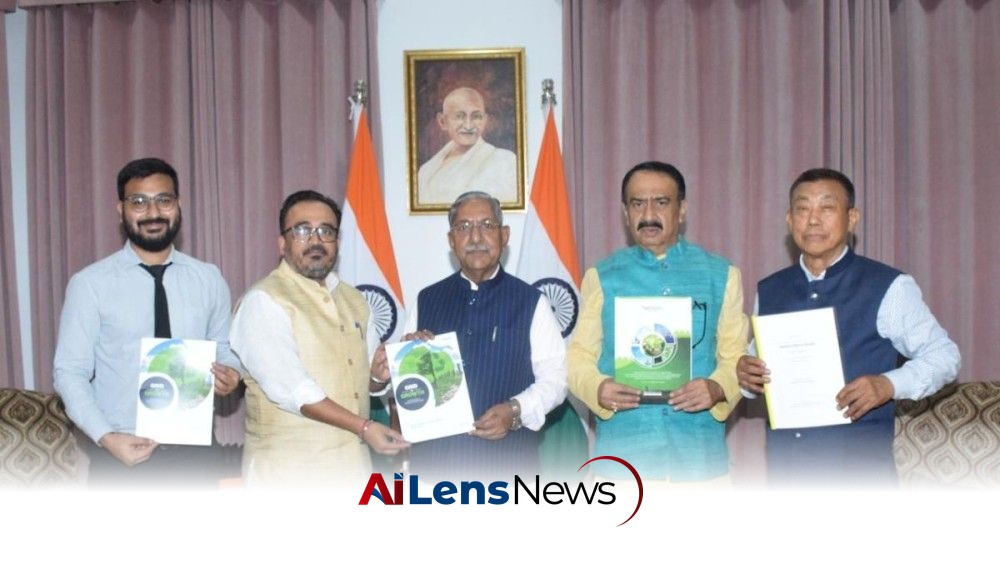
A delegation comprising NetZero Horizon Consulting Advisor Deepak Thakur, Editor-in-Chief Rahul Deo, Managing Editor Saurav Kumar, and GSWS president Imli Yanger Jamir met Governor Nand Kishore Yadav at Raj Bhavan in Kohima on July 11 and presented the vision and roadmap for the proposed initiative.
During the meeting, the delegation invited the Governor to attend the "Grid to Growth" event scheduled to be held in New Delhi on August 29. Yadav accepted the invitation to attend the programme as the chief guest and wished the initiative success.
The Governor also welcomed the proposal to develop Dimapur into a NetZero district and expressed hope that the initiative would help position the region at the forefront of India's climate action and sustainable development efforts.
According to the proposal, the NetZero District Model seeks to transform Dimapur into a model district for climate-resilient and inclusive development by focusing on four strategic pillars—energy security, water security, green skilling, and community-led governance.
The initiative is envisaged as a scalable framework that can be replicated across districts in the country to support India's transition towards a low-carbon and climate-resilient economy.
The delegation noted that the project draws inspiration from Prime Minister Narendra Modi's vision of "Viksit Bharat 2047" and aims to translate national climate goals into actionable interventions at the district level.
It proposes collaboration among governments, industry, academic institutions, civil society organisations, and local communities to generate measurable environmental, economic, and social benefits.
The proposed programme in Dimapur includes stakeholder consultations, institutional partnerships, capacity-building initiatives, policy support, and pilot projects to strengthen local resilience while promoting sustainable growth.
The organisations emphasized that the initiative is intended to serve as a replicable model for district-level climate governance and contribute to India's long-term net-zero and sustainable development goals.
Dimapur, the largest city in , is strategically significant due to its geographical location and socio-economic context. With a population of over 100,000, it serves as a commercial hub for the northeastern region of India, making it an ideal candidate for such a pioneering initiative. The city's existing infrastructure and community dynamics can be leveraged to implement the proposed changes effectively.
Climate change is a pressing global issue, and India has committed to reducing its carbon emissions and transitioning to a sustainable economy. The concept of NetZero refers to achieving a balance between the greenhouse gases emitted and those removed from the atmosphere. India's commitment to achieving net-zero emissions by 2070 was announced by Prime Minister Narendra Modi at the COP26 climate summit in Glasgow in 2021, which has prompted various local initiatives aimed at fostering sustainability.
The NetZero District Model is designed to address specific local challenges while aligning with national objectives. By focusing on energy security, the initiative aims to promote renewable energy sources, reduce dependence on fossil fuels, and enhance energy efficiency. This is particularly relevant as India seeks to increase its renewable energy capacity to 500 GW by 2030, as part of its broader climate action strategy.
Water security is another critical pillar of the initiative. With increasing water scarcity issues faced across the country, particularly in urban areas, the proposal emphasizes the need for sustainable water management practices. This includes rainwater harvesting, wastewater recycling, and improving the efficiency of water distribution systems. Such measures are vital for ensuring that Dimapur can sustainably meet the needs of its growing population.
Green skilling focuses on equipping local communities with the skills necessary to thrive in a green economy. This involves training programs that prepare individuals for jobs in renewable energy, sustainable agriculture, and environmental conservation. By investing in human capital, the initiative aims to foster job creation and economic resilience, which are crucial for long-term sustainability.
Community-led governance emphasizes the importance of local participation in decision-making processes. Engaging residents in the planning and implementation of sustainability initiatives ensures that the solutions are tailored to the unique needs of the community and fosters a sense of ownership among citizens. This participatory approach is essential for the success of any sustainable development initiative.
The implications of developing Dimapur as a NetZero district extend beyond the local context. If successful, this initiative could serve as a blueprint for other districts across India, demonstrating that climate-resilient development is achievable even in diverse socio-economic settings. The scalability of the NetZero District Model means that lessons learned in Dimapur could inform policies and practices in other regions, contributing to a nationwide movement towards sustainability.
Moreover, the initiative aligns with global efforts to combat climate change, as cities are recognized as significant contributors to greenhouse gas emissions. By pioneering a model for sustainable urban development, Dimapur could position itself as a leader in climate action, attracting investment and fostering partnerships with organizations focused on sustainability.
In conclusion, the proposal to develop Dimapur as India's first NetZero district represents a significant step towards addressing climate change at the local level. With the support of various stakeholders, including government, industry, and civil society, this initiative has the potential to create a sustainable, resilient, and inclusive community that can serve as a model for others to follow in the quest for a greener future.
To learn more about the latest developments in Sustainable Development, stay updated with our exclusive reports and analyses on AiLensNews.

