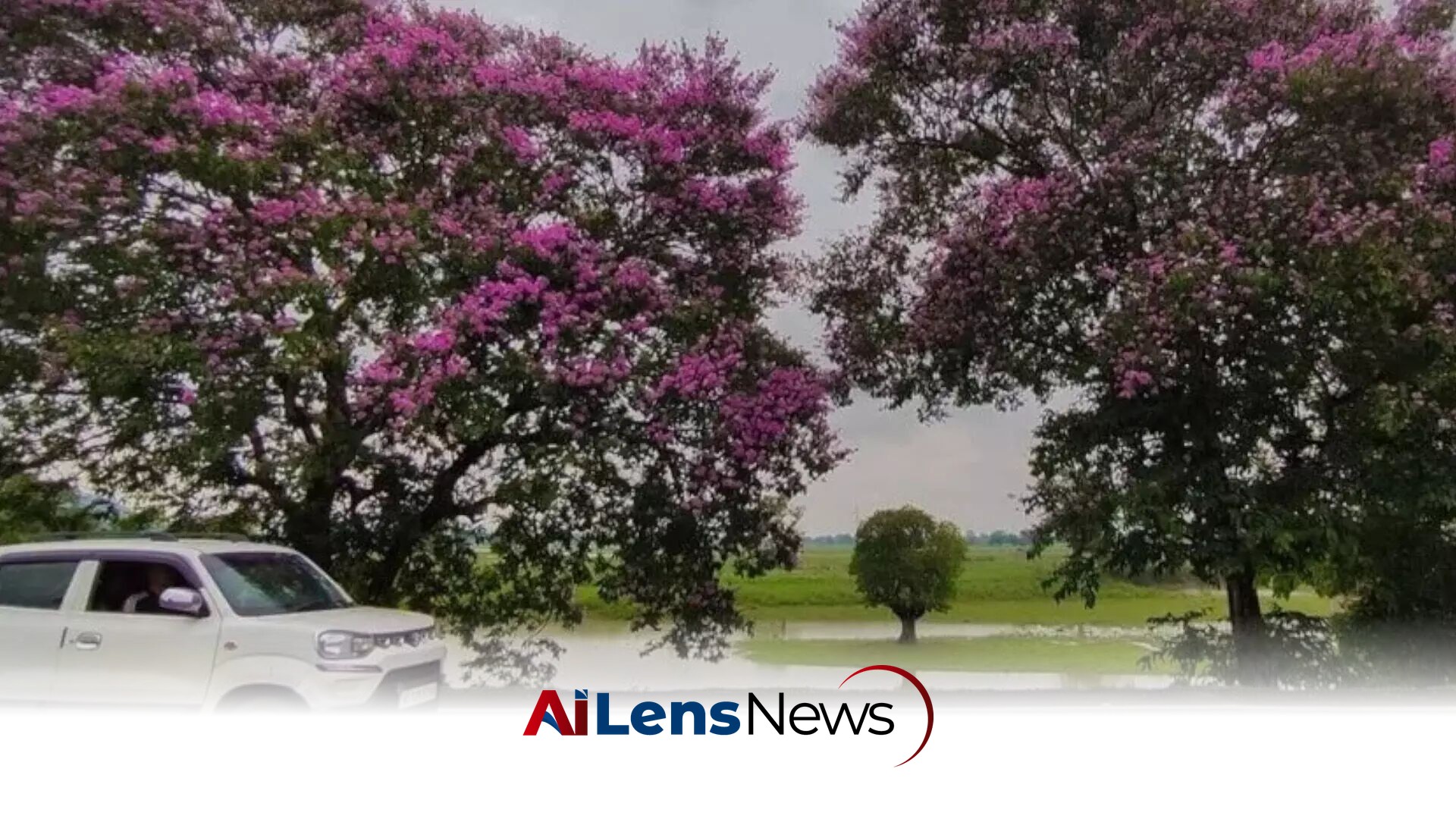


The Assam government plans to plant Ezar trees along NH-37 to enhance Guwahati's identity as a 'purple city', inspired by the state's floral hues.
Imphal, India Jul 15, 2026 ALN: Assam Chief Minister Himanta Biswa Sarma announced on Wednesday that the government will initiate the plantation of Ezar trees along the national highway 37 bypass from Khanapara to Jalukbari. This initiative is part of the broader plan to develop Guwahati as a 'purple city'. The decision reflects a growing trend among urban planners and local governments to integrate environmental sustainability into city development, particularly in rapidly urbanizing regions like Guwahati.
The 'kapou' flower, known for its purple hue, is already being utilized by the Guwahati Municipal Corporation (GMC) in this project. Sarma emphasized that the Public Works Department (PWD) has also been directed to incorporate the purple shade in its buildings throughout the city. This color choice is not merely aesthetic; it aims to create a cohesive urban identity that resonates with the local culture and environment.
"The Forest Department will begin the plantation of Ezar trees from Khanapara to Jalukbari as part of the Guwahati Ring Road project," he stated. The Ezar tree, scientifically known as Lagerstroemia speciosa, is not only valued for its beautiful purple flowers but also for its resilience and adaptability to urban conditions, making it an ideal candidate for urban greening initiatives.
The GMC had previously announced its vision for Guwahati as a 'purple city', drawing inspiration from the 'kapou', which is the state flower, and the vibrant purple blooms of the Ezar tree, also known as the Queen's Crape Myrtle. The initiative is expected to enhance the aesthetic appeal of the city while promoting biodiversity and improving air quality, which is crucial in urban areas where pollution levels are often high.
Additionally, the chief minister revealed that Rs 150 crore has been allocated for the Ring Road project, aimed at alleviating flood issues in the Jorabat area, which serves as a gateway to Meghalaya. This allocation underscores the government's commitment to addressing pressing infrastructural challenges while simultaneously pursuing environmental objectives. Flooding has been a significant concern in this region, exacerbated by climate change and urban development, making effective planning and execution critical.
"The consultant for the Ring Road has been instructed to devise a plan and consult with experts from IIT-Guwahati regarding flood mitigation strategies," Sarma, who represents the Jalukbari constituency, added. Engaging with academic institutions like IIT-Guwahati not only brings technical expertise to the project but also fosters a collaborative approach to urban planning that can yield innovative solutions to complex challenges.
BJP legislator Pradyut Bordoloi highlighted the significance of the 'purple city' initiative, noting that the color choice is inspired by the 'kapou' flower. He also recounted the historical importance of Ezar trees during the Ahom battles against the Mughals at Saraighat. This historical context enriches the initiative, linking contemporary urban development to the region's cultural heritage and identity.
Bordoloi explained that the wood from the Ezar was utilized to construct boats for the Ahom naval fleet, which played a crucial role in defeating the invading Mughals. By referencing this historical narrative, the initiative not only aims to beautify the city but also seeks to instill a sense of pride among residents by connecting them to their past.
In response, Housing and Urban Affairs Minister Kaushik Rai stated that the decision to develop Guwahati as a 'purple city' was made during a stakeholders' meeting. This inclusive approach to urban development ensures that various perspectives are considered, enhancing the project's legitimacy and fostering community support. He assured that various measures, including the plantation of Ezar trees, have been initiated to ensure a cleaner and greener Guwahati.
The concept of a 'purple city' aligns with global trends in urban planning that prioritize environmental sustainability, cultural identity, and community engagement. Cities around the world are increasingly recognizing the importance of integrating green spaces into urban environments, not only for aesthetic reasons but also for their ecological benefits. The plantation of Ezar trees and the promotion of the 'kapou' flower are steps toward creating a more resilient urban ecosystem that can better withstand the impacts of climate change.
Moreover, the initiative could have far-reaching implications for local biodiversity. Urban areas often serve as hotspots for biodiversity loss, with native species being replaced by non-native varieties. By focusing on native flora like the Ezar tree and the 'kapou' flower, the 'purple city' initiative could help restore natural habitats, support local wildlife, and promote ecological balance within the urban landscape.
The environmental benefits of planting Ezar trees extend beyond aesthetics and biodiversity. These trees are known for their ability to improve air quality, as they can absorb pollutants and produce oxygen, which is vital in urban areas where air quality is often compromised. The presence of green spaces, including tree plantations, has been linked to improved mental health and well-being, offering residents a respite from the hustle and bustle of city life.
Furthermore, the initiative reflects a broader commitment to sustainable urban development in Assam. As cities continue to grow and face challenges related to climate change, pollution, and resource management, innovative projects like the 'purple city' can serve as models for other urban areas in the region and beyond. This approach can inspire similar initiatives that prioritize ecological health while fostering a sense of community and belonging among residents.
In conclusion, the initiative to develop Guwahati as a 'purple city' through the plantation of Ezar trees and the promotion of the 'kapou' flower represents a multifaceted approach to urban development. It combines environmental sustainability, cultural heritage, and community engagement into a cohesive vision for the future of Guwahati. As the project unfolds, it will be essential to monitor its progress and impact, ensuring that it meets its goals of creating a greener, cleaner, and more vibrant city for all residents. The success of this initiative may serve as a catalyst for further environmental projects in Assam, encouraging a more sustainable and resilient urban future.
To learn more about the latest developments in Sustainable Development, stay updated with our exclusive reports and analyses on AiLensNews.

