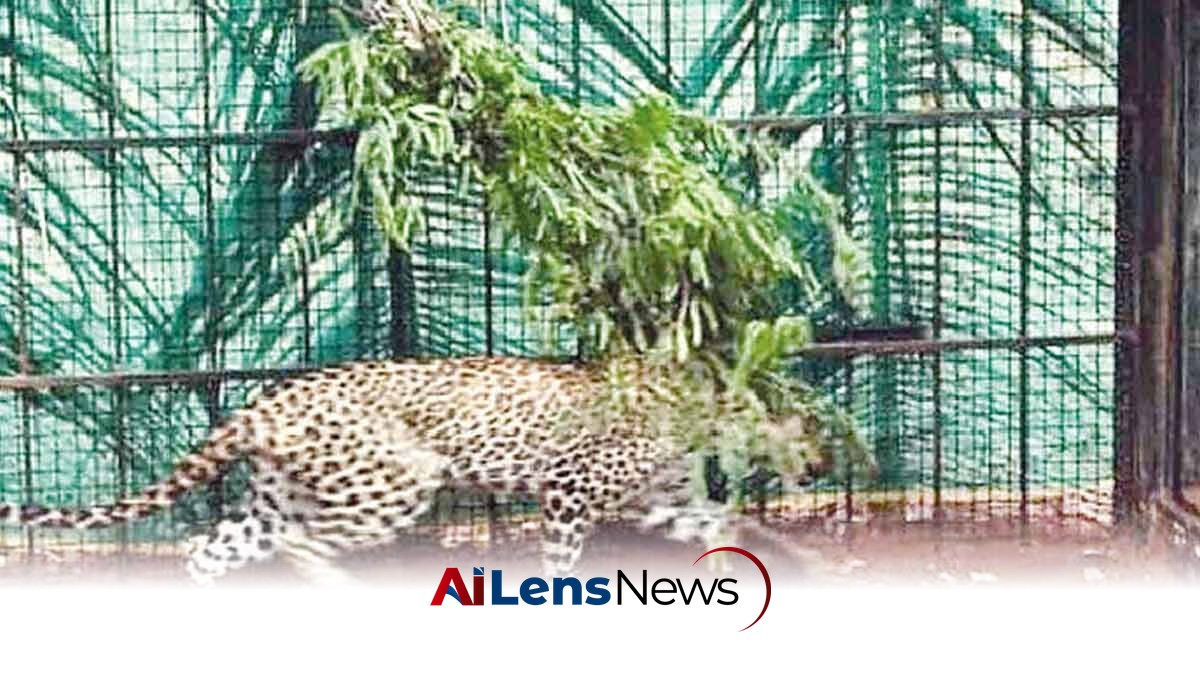


A female leopard that caused panic in Chamarajanagar, Karnataka, has been captured after a 15-day operation by the Forest Department. The leopard was involved in livestock attacks and a tragic incident resulting in a child's death.
Bengaluru, India May 25, 2026 ALN: Chamarajanagar: A female leopard that had created panic in the forest fringes of Chamarajanagar district was finally captured by the Forest Department after an intense 15-day operation. The leopard was trapped in a specially placed cage near Indiganatha Haadi in Hanur taluk, bringing relief to villagers and devotees visiting Male Mahadeshwara Hills.
The operation was launched following a tragic incident in which a young boy named Harshith was killed in a leopard attack near the Nagamale forest route during a padayatra, a pilgrimage on foot. This incident not only highlighted the dangers posed by wildlife encroaching into human habitats but also raised concerns regarding the coexistence of humans and leopards in the region. Since then, forest officials, wildlife experts, and sharpshooters had been conducting continuous combing operations in the dense forest region, aiming to locate and capture the leopard responsible for the attack. The tragic loss of life has spurred local authorities to take more proactive measures in wildlife management, underscoring the need for a delicate balance between conservation and community safety.
According to officials, the leopard was caught early Saturday morning when it entered a specially designed “Tumakuru cage” placed near Indiganatha Haadi. A dog had been tied inside the cage as bait. As the leopard entered the trap while attempting to attack the animal, the cage door automatically locked. This method of trapping is commonly used in wildlife management, where live bait is employed to lure predators into a secure enclosure. Forest officials said the captured leopard is suspected to be the same animal involved in the boy’s death. However, there is currently no conclusive proof linking the animal to the attack. To confirm its involvement, officials have collected saliva, urine, and fecal samples from the animal and sent them to the Forensic Science Laboratory (FSL) for examination. This step is crucial in establishing a forensic link between the leopard and the incident, which may have implications for future wildlife management strategies in the area.
The leopard had continued attacking livestock even during the search operation. Over the last two weeks, it reportedly killed more than five goats and sheep in nearby villages, increasing fear among residents. Livestock predation by leopards is a significant concern for rural communities, particularly in regions where human-wildlife conflict is prevalent. The fear of further attacks can lead to heightened tensions between local populations and wildlife authorities, complicating efforts to manage and conserve leopard populations. Farmers and herders, who often rely on livestock for their livelihood, find themselves in a precarious situation where the threat of wildlife predation looms large, forcing them to adopt defensive measures.
The Forest Department had installed cages at four strategic locations including Indiganatha, Nagamale, and Mendare as part of the operation. Around 30 personnel, including leopard experts, forest watchers, and sharpshooters, participated in the mission. The collaborative effort underscores the complexity of wildlife management in areas where human and animal territories overlap. It also reflects the importance of community involvement and awareness in addressing wildlife conflicts. The presence of trained personnel is essential not only for the immediate capture of the leopard but also for educating local communities about safety measures and coexistence strategies. Workshops, community meetings, and educational campaigns can play a vital role in fostering a better understanding of wildlife behavior and the importance of conservation.
Officials from the Cauvery Wildlife Sanctuary confirmed that preparations are underway to shift the captured leopard to Bannerghatta National Park in Bengaluru after medical examination and completion of legal procedures. Bannerghatta National Park is known for its wildlife rehabilitation efforts and serves as a sanctuary for various species, including leopards. The relocation process will involve assessing the health of the leopard and ensuring it is fit for transfer. This step is critical not only for the welfare of the animal but also for maintaining ecological balance in the region. Relocation is often seen as a humane solution to mitigate human-wildlife conflict, but it must be approached with caution to ensure that the animal does not return to human-inhabited areas.
Human-wildlife conflict is a growing concern in many parts of India, where rapid urbanization and agricultural expansion have led to habitat loss for many species, including leopards. The encroachment into wildlife habitats often results in increased encounters between humans and leopards, leading to tragic outcomes, as seen in the case of Harshith. Forest officials are tasked with the challenging responsibility of managing these conflicts while also ensuring the protection of wildlife populations. Effective management strategies often involve a combination of capture and relocation, community education, and habitat restoration efforts. The integration of local communities into wildlife conservation efforts can significantly enhance the effectiveness of these strategies.
Moreover, the incident raises important questions about wildlife conservation and the need for sustainable coexistence strategies. As human populations continue to grow and expand into wildlife territories, it becomes imperative to develop comprehensive wildlife management plans that prioritize both human safety and animal conservation. This includes implementing measures such as establishing wildlife corridors, enhancing community awareness programs, and improving livestock protection methods to reduce the likelihood of predation. Wildlife corridors can facilitate safe passages for animals, reducing the chances of conflict while allowing them to access resources necessary for their survival.
In conclusion, the capture of the female leopard marks a significant development in the ongoing efforts to manage human-leopard interactions in Karnataka. While the immediate threat to the local community has been addressed with the capture of the leopard, the broader issues surrounding human-wildlife conflict remain. Continued collaboration between wildlife authorities, local communities, and conservationists will be essential in fostering a safer and more harmonious coexistence between humans and leopards in the region. It is crucial that lessons learned from this incident inform future wildlife management policies, ensuring that both human and animal welfare are prioritized in the face of ongoing environmental challenges.
To learn more about the latest developments in Environmental Policy, stay updated with our exclusive reports and analyses on AiLensNews.

