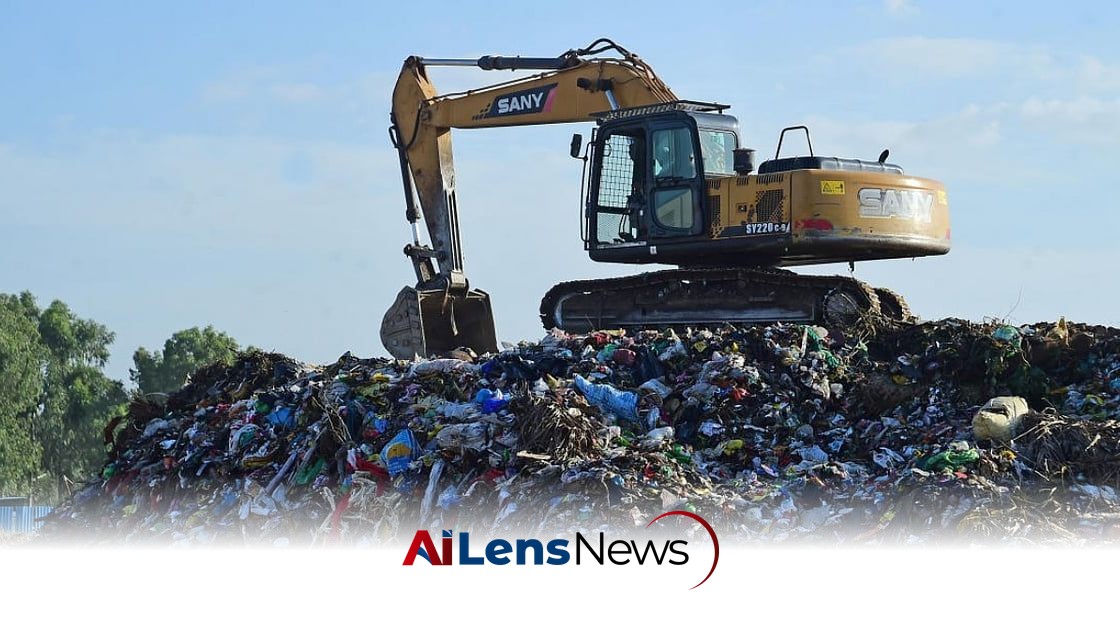


A study reveals heavy metal pollution in groundwater around a closed landfill in Bengaluru, posing health risks and affecting agriculture.
New Delhi, India Jul 13, 2026 ALN: Bengaluru: A closed landfill in Bengaluru is continuing to contaminate groundwater with heavy metals and salts, according to a new study that found borewells within a 2-km radius of the Doddabidarakallu mixed waste processing plant contained pollutants above permissible limits, posing potential long-term health risks.
Bengaluru Urban district has nine legacy waste dumpsites, all managed by the Greater Bengaluru Authority (GBA), with an estimated 97.82 lakh tonnes of waste accumulated across them. Doddabidarakallu is one such site, although it has remained closed for some time. The legacy of these landfills, many of which have been operational for decades, raises significant concerns regarding environmental health and safety, particularly in a rapidly urbanizing area like Bengaluru.
The study, conducted by M Bamini and RK Somashekar of the Department of Environmental Science, Bangalore University, analysed 120 groundwater samples collected from 51 borewells over two hydrological cycles between 2022 and 2024. The meticulous approach of the researchers highlights the ongoing environmental challenges posed by improper waste management practices and their long-term impacts on public health and the ecosystem.
The researchers found at least three heavy metals above permissible limits in the groundwater samples collected from the area surrounding the landfill. Nickel concentrations ranged from 0.02 to 0.12 mg/litre, exceeding the Bureau of Indian Standards (BIS) limit of 0.02 mg/litre as well as the stricter World Health Organisation (WHO) guideline. Manganese exceeded BIS limits in 18.3% of the samples, while lead was detected above permissible levels in 6.7% of the samples. These findings are particularly alarming, as heavy metals are known to pose serious health risks, including neurological damage, kidney dysfunction, and other chronic health issues.
“This will lead to bioaccumulation and affect people consuming the water over a period of time. Some people, in whom bioaccumulation does not happen, may theoretically escape the problem. However, this has to be scientifically evaluated,” Prof Somashekar told DH.
Bioaccumulation refers to the process whereby organisms accumulate toxic substances in their bodies over time, often leading to higher concentrations of these substances in higher trophic levels of the food chain. This raises concerns not just for human health but also for the broader ecological community, including wildlife that may rely on contaminated water sources.
The study also reported widespread groundwater salinity, which is a significant concern for both human consumption and agricultural practices. Around 68% of the samples fell under the high and very high salinity hazard classes (C3 and C4) under the United States Salinity Laboratory (USSL) classification. High salinity levels can lead to soil degradation, affecting the growth and yield of crops, which is critical in a region that relies heavily on agriculture.
Post-monsoon samples recorded high bicarbonate concentrations, while pre-monsoon samples showed elevated chloride and sulphate levels, indicating “leachate intrusion and evaporative concentration.” Leachate, a toxic liquid formed when waste breaks down in landfills, can seep into groundwater, carrying with it a cocktail of hazardous substances that can persist in the environment for years. This underscores the importance of effective landfill management and monitoring to prevent such contamination.
Although pH levels remained within acceptable limits, total dissolved solids exceeded the desirable limit of 500 mg/litre in all samples. Some even crossed the permissible limit of 2,000 mg/litre, pointing to mineral dissolution and contamination linked to human activities. The presence of high total dissolved solids can indicate a range of problems, including the potential for corrosion of pipes and infrastructure, as well as adverse effects on aquatic life.
The researchers warned that elevated salinity threatens not only soil health but also agricultural productivity. “Farmers reported declining yields of salt-sensitive crops such as beans and tomatoes, corroborating chemical findings,” the study noted. This decline in agricultural productivity can have cascading effects on food security and local economies, particularly for communities that depend on agriculture for their livelihoods.
Somashekar emphasized that no other significant pollution source was identified in the vicinity, reinforcing the notion that the groundwater within the 2-km radius can be influenced only by the landfill. This underscores the importance of scientific waste management at every stage, starting with segregation at source. Proper waste management practices can mitigate the risks associated with landfill operations, including leachate production and greenhouse gas emissions. In many cases, the lack of adequate waste segregation and recycling can exacerbate the environmental impact of landfills, leading to increased pollution and health risks.
The implications of these findings extend beyond immediate public health concerns. They highlight the urgent need for comprehensive waste management strategies, which include not only improved landfill practices but also community education on waste segregation and recycling. As Bengaluru continues to grow, addressing the environmental challenges posed by waste management will be critical to ensuring a sustainable future.
Furthermore, the situation in Bengaluru serves as a cautionary tale for other rapidly urbanizing cities facing similar challenges. As urban populations grow, the management of waste becomes increasingly complex, requiring innovative solutions and a commitment to sustainable practices. The contamination of groundwater resources can have long-lasting effects on public health, agricultural productivity, and the overall quality of life for residents.
In conclusion, the study conducted by Bamini and Somashekar sheds light on a pressing environmental issue in Bengaluru, revealing the ongoing risks associated with legacy landfills and the urgent need for effective waste management strategies. As the city grapples with the challenges of urbanization, it must prioritize the health of its residents and the environment by adopting sustainable waste management practices and ensuring that contaminated sites are properly remediated.
To learn more about the latest developments in Pollution & Waste, stay updated with our exclusive reports and analyses on AiLensNews.

