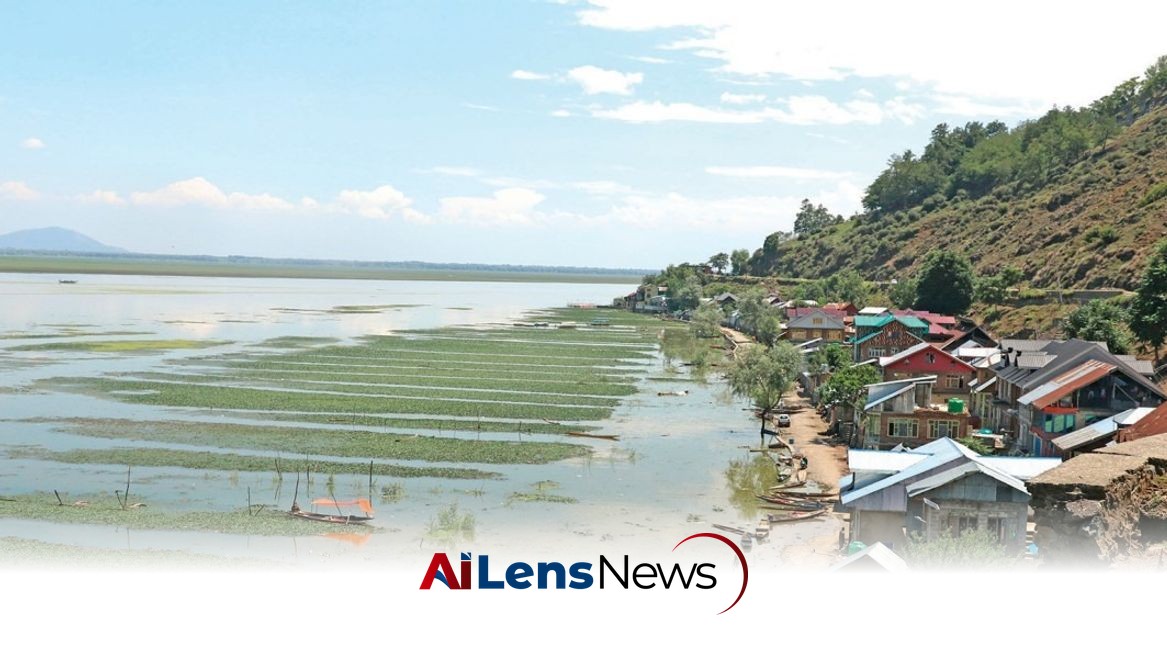


The Centre has revised Jammu and Kashmir's wetland inventory to 1,793, clarifying that earlier reports of disappearing lakes were based on preliminary satellite data.
New Delhi, India Aug 1, 2026 ALN: The Centre has clarified that reports suggesting hundreds of lakes and wetlands in Jammu and Kashmir have disappeared are based on preliminary satellite imagery and should not be construed as conclusive evidence, informing Parliament that a comprehensive reassessment has revised J&K's inventory to 1,793 wetlands and water bodies.
The clarification came in a written reply to a question in the Lok Sabha by Union Minister for Jal Shakti C R Patil, amid concerns over shrinking and vanishing lakes across the country and references to an earlier Comptroller and Auditor General (CAG) report which had stated that 518 out of 697 lakes in J&K had either disappeared or reduced in size. This alarming report raised significant concern among environmentalists, policymakers, and the general public regarding the health of Jammu and Kashmir's unique ecosystem.
Responding to the concerns, the Ministry said the CAG observations were derived from an inventory prepared by the Department of Environment and Remote Sensing, Jammu and Kashmir, using LISS-III satellite imagery with an approximate spatial resolution of 23 metres. This resolution, while useful for initial assessments, may not capture the full complexity of wetland dynamics, which can be influenced by numerous factors including seasonal changes, anthropogenic activities, and climatic variations.
Such datasets, it said, provide only preliminary technical information for researchers and administrators and cannot, by themselves, establish permanent disappearance, shrinkage, encroachment or unlawful conversion of wetlands. The ministry emphasized that while satellite imagery is a powerful tool for monitoring land use changes over time, it is not infallible and must be used in conjunction with ground-truthing methods to ensure accurate assessments.
The ministry said remote sensing imagery reflects changes in water spread or land cover but must be corroborated with land records, cadastral maps, notified wetland boundaries, field inspections and official records before any definitive conclusion can be drawn regarding the status of a wetland. This multi-faceted approach is critical in ensuring that conservation efforts are based on accurate and comprehensive data.
It informed the Parliament that the J&K government subsequently undertook a comprehensive revision and expansion of the wetland inventory using very high-resolution satellite imagery, grid-based analysis, jurisdictional refinement and extensive field verification. This thorough approach involved collaboration among various stakeholders, including local communities, environmental NGOs, and governmental bodies, to gather a more accurate representation of the region's wetland resources.
The exercise resulted in an updated inventory of 1,793 wetlands and water bodies, replacing the earlier database relied upon in the audit observations. According to the revised inventory, 1,499 wetlands are below one hectare or classified as additional wetland-like features, while 294 wetlands exceeding one hectare have been identified across J&K. The distinction between smaller and larger wetlands is significant, as it affects the management strategies that need to be employed to conserve these critical ecosystems.
Of the larger wetlands, 113 fall within forest areas, 54 inside protected areas, three under the Lake Conservation and Management Authority (LCMA) and Wular Conservation and Management Authority (WUCMA), while 124 are located outside forest jurisdictions. The presence of wetlands in protected areas highlights their ecological importance and the need for stringent conservation measures to safeguard these habitats from potential threats such as pollution, encroachment, and climate change.
The ministry reiterated that water is a State subject, and that the protection, conservation, and management of wetlands are primarily the responsibility of state governments and Union Territory administrations. This decentralization of responsibility allows for localized management strategies that are better tailored to the unique challenges and opportunities present in different regions.
The Centre, it said, supplements these efforts through policy support, financial assistance and centrally sponsored programmes. These initiatives are designed to empower local governments and communities to take active roles in wetland conservation and management, recognizing that grassroots involvement is crucial for the success of any environmental program.
It also highlighted the First Census of Water Bodies conducted across 33 states and Union Territories to create a national database containing details on the size, condition, storage capacity, encroachment status and utilisation of water bodies. This comprehensive census is a vital step in understanding the current status of water bodies across the country, enabling better planning and resource allocation for conservation efforts.
Listing the major initiatives taken by the Centre, the ministry said the Wetlands (Conservation and Management) Rules, 2017 prohibit encroachment, conversion of wetlands for non-wetland uses, dumping of solid waste, discharge of untreated sewage and industrial effluents, and permanent construction within notified wetlands. These rules are designed to provide a legal framework for the protection of wetlands and ensure that they are managed sustainably.
It said that all states and Union Territories have constituted Wetland Authorities to oversee conservation and management. These authorities play a crucial role in coordinating efforts across different levels of government and ensuring that conservation measures are effectively implemented.
The ministry said that under the National Plan for Conservation of Aquatic Ecosystems (NPCA), the Centre has provided approximately Rs 1,170 crore as its share for conservation and restoration of around 172 wetlands across the country. The programme supports wastewater treatment, shoreline protection, desiltation, stormwater management, catchment treatment, biodiversity conservation, bio-fencing, weed control and community participation. The emphasis on community involvement is particularly important, as it fosters a sense of ownership and responsibility among local populations regarding their natural resources.
Other national initiatives highlighted in the reply include implementation of the Ramsar Convention, the Save Wetlands Campaign, Mission Sahbhagita, the Amrit Dharohar initiative, and the Jal Sanchay Jan Bhagidari programme aimed at improving groundwater recharge and rainwater harvesting through community participation. These programs reflect a broader commitment to sustainable water management practices and the recognition of the interconnectedness of water bodies and their surrounding ecosystems.
For J&K specifically, the government said the UT has established a Wetland Authority chaired by the Chief Secretary and district-level wetland management units to coordinate conservation efforts. This structured approach aims to streamline efforts and ensure that all stakeholders are working towards common conservation goals.
Management of Wular Lake, Dal and Nigeen lakes, and Manasbal Lake is being carried out through dedicated authorities, while ecologically important wetlands such as Hokersar, Haigam, Shallabugh, Surinsar-Mansar, and Gharana are protected by the Wildlife Protection Department. These specific management strategies are crucial for addressing the unique ecological and social dynamics of each wetland.
The Centre said that conservation measures in J&K include periodic wetland mapping and monitoring using remote sensing backed by field verification, preparation of site-specific management plans, selective desiltation and de-weeding, restoration of natural streams, anti-encroachment drives, scientific solid waste disposal, maintenance of ecological water levels and annual biodiversity and waterbird population assessments to preserve the ecological integrity of wetlands. These comprehensive measures are indicative of a proactive approach to wetland conservation, aiming not only to protect existing resources but also to restore and enhance degraded ecosystems.
The implications of these updates to the wetland inventory in Jammu and Kashmir are significant. They reflect a commitment to improving the understanding and management of vital ecosystems that provide numerous ecological services, including water filtration, flood control, and habitat for diverse species. The updated inventory also underscores the importance of employing advanced technologies and methodologies in environmental monitoring, allowing for more informed decision-making in conservation efforts.
As the global community continues to grapple with the impacts of climate change and environmental degradation, the steps taken by the Centre and the Jammu and Kashmir government highlight the critical need for collaborative and science-based approaches to resource management. The ongoing efforts to protect and restore wetlands in this region serve as a model for other areas facing similar challenges, demonstrating that with the right tools, policies, and community engagement, it is possible to safeguard these irreplaceable natural resources for future generations.
To learn more about the latest developments in Environmental Policy, stay updated with our exclusive reports and analyses on AiLensNews.

