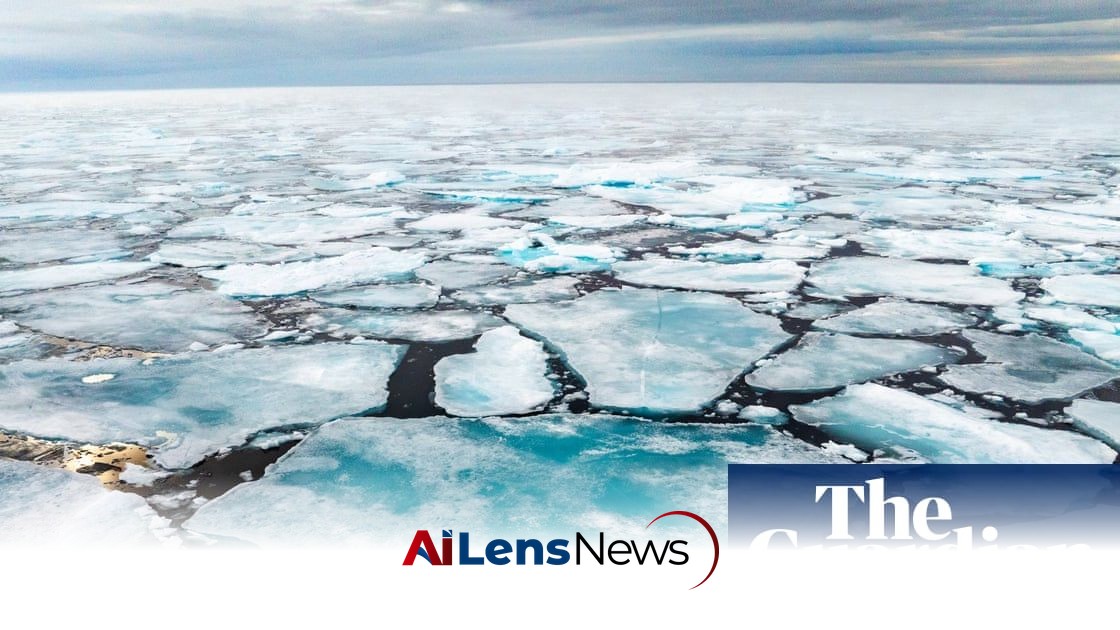


A new study reveals that the previously recorded slowdown in Arctic sea ice melting has ended, marking the largest wintertime decline ever observed.
New Delhi, India Jul 21, 2026 ALN: The Arctic region has long been a focal point for climate scientists studying the effects of global warming, particularly regarding the extent and health of sea ice. Recent findings indicate that a previously observed slowdown in the decline of Arctic sea ice has come to an end, revealing significant reductions in ice coverage. This development raises important questions about the future of Arctic ecosystems, global climate patterns, and the implications for weather systems far beyond the polar region.
Historically, the Arctic has experienced dramatic changes in its ice cover, particularly since the late 20th century. Satellite records, which began in 1979, have shown a consistent trend of diminishing sea ice, especially during the summer months. The summer minimum extent of Arctic sea ice has halved since these measurements began, with the lowest recorded levels occurring in recent years. This decline is alarming not only for its immediate impacts but also for the broader implications it has on global climate systems.
The Arctic is often viewed as a barometer for climate change, as it is warming at approximately twice the rate of the global average. This phenomenon, known as Arctic amplification, occurs due to various feedback mechanisms, including the albedo effect, where less ice cover leads to more heat absorption by the ocean. As the ice melts, it exposes darker ocean water, which absorbs more sunlight and accelerates warming, further contributing to ice loss. Understanding these dynamics is crucial for predicting future climate scenarios and the potential for irreversible changes.
In a study published in the summer preceding the recent findings, researchers noted a surprising slowdown in the rate of sea ice decline over a two-decade period. Between 2005 and 2024, the study indicated that there was no statistically significant decrease in the extent of Arctic sea ice. This was unexpected, given the overall trend of rising global temperatures. The researchers hypothesized that natural variations in ocean currents may have contributed to this temporary stabilization, providing a brief respite from the ongoing decline. However, they cautioned that this was likely a short-term phenomenon and predicted a resurgence in melting at approximately double the long-term rate within the next five to ten years.
Fast forward to the present, and the latest study, utilizing the most up-to-date satellite observations, has confirmed that the slowdown is indeed over. The researchers found that between 2024 and 2025, there was a staggering 5.8% decline in Arctic sea ice, marking the largest year-to-year wintertime drop ever recorded. This significant reduction underscores the urgency of the situation and aligns with the predictions made in earlier studies regarding the eventual resumption of ice loss.
Dr. Duo Chan, the lead author of the new paper from the University of Southampton’s School of Ocean and Earth Science, remarked on the findings, noting that what initially appeared to be a pause in the early 2020s has now been revealed as a mere temporary slowdown within a longer-term decline. This perspective is critical as it highlights the complexity of climate dynamics in the Arctic, where natural variability can sometimes obscure the underlying trends driven by anthropogenic climate change.
Dr. Alessandro Silvano, a co-author of the study, elaborated on the implications of the sharp decline in winter sea ice. He indicated that while the drop in ice extent was unusual, it remains physically plausible under the current conditions of Arctic warming. The loss of sea ice is particularly concerning because it serves as a crucial insulator between the relatively warmer Arctic ocean and the much colder atmosphere above. As sea ice diminishes, more ocean heat and moisture are released into the atmosphere, which can significantly alter weather patterns.
The feedback loops created by the loss of sea ice can lead to changes in atmospheric pressure patterns, influence storm development, and affect large-scale atmospheric circulation. These changes not only impact the Arctic region but can also have far-reaching effects on weather systems in regions much farther south, including North America and Europe. The interconnectedness of climate systems means that shifts in the Arctic can translate into altered weather patterns, increased frequency of extreme weather events, and broader climate disruptions.
Dr. Chan emphasized the importance of these findings as a warning about the ongoing climate crisis. He pointed out that while short-term recoveries in sea ice may provide a misleading sense of stability, they do not alter the long-term trajectory of Arctic ice loss. The low winter sea ice extents observed in 2025 and 2026 serve as a stark reminder that the decline is not only continuing but may be accelerating in a warming climate.
The implications of these findings extend beyond the Arctic itself. The loss of sea ice has significant ramifications for global climate systems, including potential impacts on sea level rise, ocean circulation patterns, and biodiversity in both marine and terrestrial ecosystems. As Arctic ice continues to melt, the region's unique ecosystems face unprecedented challenges, including habitat loss for species that depend on ice-covered areas, such as polar bears and seals.
Moreover, the decline of Arctic sea ice may exacerbate existing challenges related to climate change, such as food security, water resources, and human health. Communities that rely on stable climate conditions and healthy ecosystems are likely to face increased risks as the climate continues to change. The socio-economic implications of these changes are profound, affecting everything from local livelihoods to global supply chains.
In conclusion, the recent study highlighting the resumption of Arctic sea ice decline serves as a critical reminder of the complexities of climate change and the urgent need for action. As researchers continue to monitor and analyze these changes, it becomes increasingly clear that understanding the dynamics of Arctic sea ice is essential for predicting future climate scenarios and developing effective strategies to mitigate the impacts of climate change. The Arctic is not just a distant region; it is a vital component of the Earth's climate system, and its health is intertwined with the well-being of the planet as a whole.
As the world grapples with the consequences of climate change, the Arctic's plight underscores the necessity for global cooperation in addressing al challenges. International agreements, such as the Paris Agreement, aim to limit global warming and its effects, but achieving these goals requires concerted efforts from all nations. The Arctic serves as a reminder that climate change is a global issue, transcending borders and affecting all life on Earth.
In light of the recent findings, there is an increasing call for urgent action to curb greenhouse gas emissions and implement adaptive strategies for communities at risk. Scientists advocate for enhancing research funding, developing innovative technologies for carbon capture, and promoting sustainable practices across industries. The future of the Arctic—and indeed the planet—depends on the choices made today, emphasizing the importance of informed decision-making and proactive measures in the face of an uncertain climate future.
To learn more about the latest developments in Climate Change, stay updated with our exclusive reports and analyses on AiLensNews.

