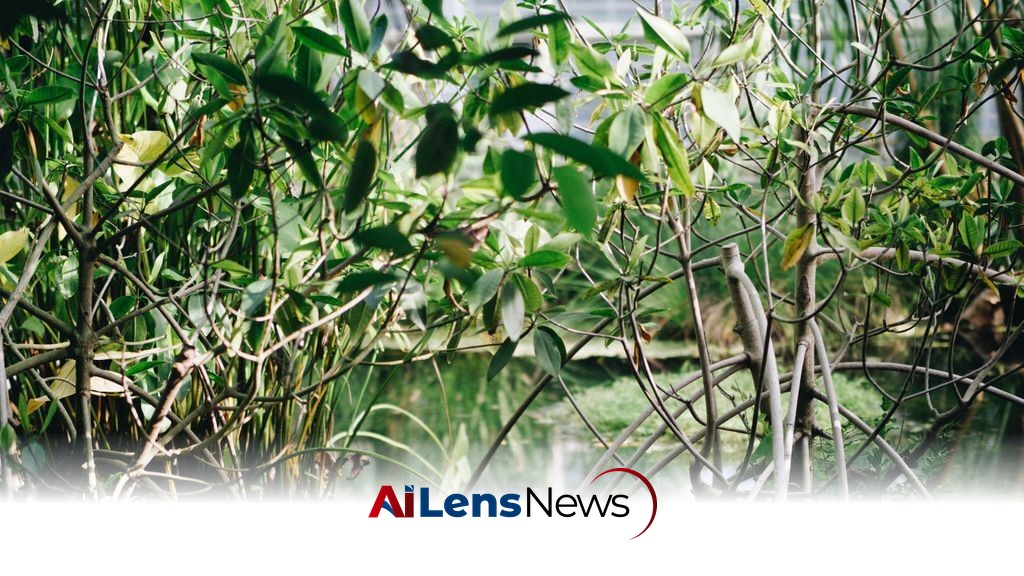


Andhra secures second place in the MISHTI scheme for mangrove restoration, highlighting its commitment to coastal ecosystem conservation.
Amaravati, India Jul 27, 2026 ALN: Andhra has emerged as a leader in mangrove restoration, securing the second position in India under the MISHTI (Mangrove Initiative for Shoreline Habitats and Tangible Incomes) scheme of the Ministry of Environment, Forest and Climate Change. This recognition highlights the state's ongoing efforts to restore and conserve its coastal ecosystems, which are vital for both environmental health and the livelihoods of local communities.
The state's Forest Department announced on Sunday that Andhra continues to enhance its commitment to coastal ecosystem restoration and biodiversity conservation through extensive mangrove development as part of the Great Green Wall of Andhra initiative. This initiative is designed to combat the adverse effects of climate change, protect coastal areas from erosion, and improve the overall health of marine ecosystems.
In the fiscal year 2025-26, the department reported the establishment of 2,047.70 hectares of mangrove plantations, with a total investment of Rs 18.04 crore dedicated to coastal ecosystem restoration. The establishment of these mangrove plantations is not just a matter of planting trees; it involves comprehensive planning and execution that takes into account the specific ecological needs of the region, the species of mangroves that can thrive in local conditions, and the socio-economic dynamics of the coastal communities.
Additionally, the Department has implemented the innovative Fish Bone Technique, which improves tidal water circulation, increases the survival rates of mangroves, and enhances long-term ecological resilience. This technique is a significant advancement in mangrove restoration practices, as it addresses some of the challenges faced by traditional methods, such as sedimentation and water stagnation. By improving water flow, the Fish Bone Technique helps create a more favorable environment for mangrove growth and sustenance.
For the upcoming fiscal year 2026-27, the state has set an ambitious target to restore 1,618 hectares of mangrove ecosystems across Andhra . This goal reflects the state's proactive approach to environmental management and its recognition of the critical role that mangroves play in coastal protection and biodiversity conservation.
Through science-based restoration, sustainable coastal management, and ongoing conservation efforts, Andhra is committed to building resilient coastlines, protecting biodiversity, and strengthening the livelihoods of coastal communities, as stated by the Forest Department. The integration of scientific research into restoration practices ensures that the efforts are not only effective but also sustainable in the long run.
Deputy Chief Minister and State Forest Minister Pawan Kalyan expressed pride in the state's achievement under the MISHTI scheme, viewing it as a significant milestone in the journey towards ecological restoration and climate resilience. His remarks underscore the importance of government leadership in environmental initiatives, which can inspire further action from both the public and private sectors.
"I extend my heartfelt appreciation to the Principal Chief Conservator of Forests and Head of Forest Force (PCCF & HoFF), all senior officers, field officers, frontline forest personnel, and every member of the Andhra Forest Department for their relentless efforts, dedication, and unwavering commitment in achieving this remarkable achievement. The successful restoration of more than 2,047 hectares of mangroves, adoption of innovative conservation practices, and unwavering focus on protecting our coastal ecosystems reflect the Department's vision and hard work," he added.
Pawan Kalyan emphasized the importance of continuing this collective mission to build a greener, more resilient Andhra while safeguarding biodiversity and securing sustainable livelihoods for future generations. His comments highlight the interconnectedness of environmental sustainability and economic development, particularly in regions where communities rely heavily on natural resources.
On the occasion of the International Day for the Conservation of Mangrove Ecosystems, the Deputy Chief Minister reiterated the vital role of mangroves as the guardians of the coast, describing them as the lungs of the shoreline and one of nature's greatest gifts to humanity. This metaphor encapsulates the ecological significance of mangroves, which serve not only as a buffer against natural disasters but also as a habitat for diverse marine life.
"Along Andhra's 1,053 km coastline, these extraordinary ecosystems serve as our first line of defense, protecting coastal lives and livelihoods from cyclones, storm surges, sea erosion, and the growing impacts of climate change. They nurture rich marine biodiversity, sustain our coastal communities, and capture vast reserves of blue carbon, making them indispensable to a resilient future. Protecting mangroves is not merely about conserving forests; it is about safeguarding lives, strengthening ecological security, securing livelihoods, and preserving the natural wealth that future generations deserve," he stated. This statement reflects a growing recognition of the importance of natural solutions to environmental challenges, particularly in the context of climate change.
The Deputy Chief Minister highlighted that the state government's commitment to mangrove conservation is reflected in tangible actions through the Great Green Wall of Andhra initiative. This initiative not only focuses on restoration but also emphasizes the importance of community involvement and awareness in conservation efforts.
"Over the past two years, nearly 7,000 acres of mangroves have been restored and developed across the state. Building on this momentum, we have set a target to restore another 4,000 acres during 2026-27, reaffirming our resolve to strengthen Andhra's natural shield against climate change and protect our coastal communities. Let us protect the forests that protect us. Every mangrove restored strengthens our coastline. Every mangrove conserved secures lives, livelihoods, and the future," he concluded. This forward-looking vision for mangrove restoration in Andhra serves as a model for other states and countries facing similar environmental challenges. It demonstrates the potential for effective, community-driven conservation strategies to yield significant ecological and economic benefits.
To learn more about the latest developments in Conservation, stay updated with our exclusive reports and analyses on AiLensNews.

