

A reflective walk through the Warwickshire countryside reveals the challenges faced by butterflies amidst modernity and changing weather patterns.
New Delhi, India Jul 8, 2026 ALN: Barston, West Midlands: It’s been a strange year so far for butterflies, and I get my summer meadow brown moment beneath a roaring jumbo jet.
On one of the longest days, my mum and I walk through the Warwickshire countryside near her home beneath the flight path of Birmingham airport. The planes are loud enough that we have to pause our conversation as they thunder overhead. This is second nature to Mum but it’s jarring for me, especially as the landscape looks as if it might have remained the same for hundreds of years. We traipse tracks worn by time, people, and wildlife, shaded by gnarled oaks and flanked by un-flailed hedges that burst with life. It feels peaceful, bucolic, ancient. Then the sky fills with a jumbo jet and the present hits us with a bang.
Amid the din, we make out chiffchaffs and great tits, robins and yellowhammers. Grasses reach up to my shoulders but are as tall as my much shorter mum, and sometimes I lose her in them. I get lost in them too, as meadow brown butterflies dance for a mate and I stop to greet each one of them.
It’s been an odd year for butterflies so far: alternately too hot or too wet and windy for them to fly well. I hoped the May heatwave might bring some out of hibernation, but when the wind returned, all hopes were dashed. On the allotment, where long grass abounds, I’ve seen a smattering, but it’s not until Mum and I walk through past and present on an early day of summer that I have my meadow brown moment. Because a smattering isn’t enough: this is a species to be seen and enjoyed by the hundred. A meadow isn’t a meadow without a party of brown butterflies bouncing around the fescues, bents, and meadow grasses the females lay their eggs on.
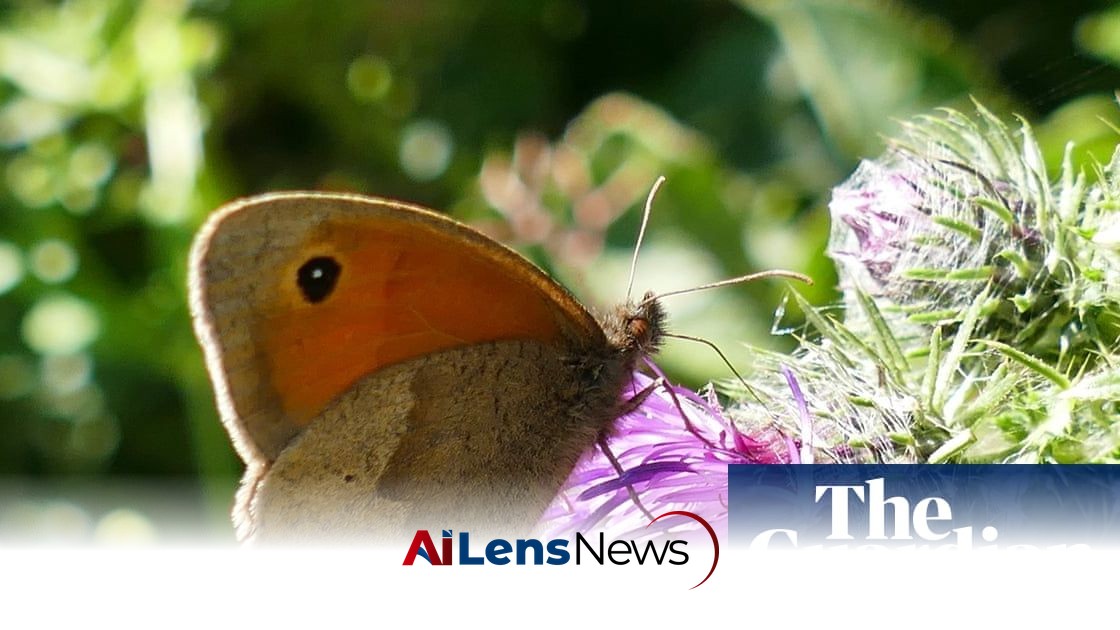
Mum walks on ahead and I lose her again in the haze. I follow a meadow brown in its never-ending dance and rejoice when it finally stops for a sip of bramble nectar. I creep up slowly, taking photos as I move, each time achieving a closer shot. Later at Mum’s, I check it: it’s perfect. Worth being lost in the grass.
Butterflies, particularly the meadow brown, are an integral part of the ecosystem, serving as indicators of ecological health. Their presence or absence can reflect the state of the habitat and the effects of climate change. The meadow brown butterfly, scientifically known as Maniola jurtina, is a common sight in meadows and grasslands across Europe. It thrives in warm, sunny conditions but is increasingly threatened by habitat loss, pesticide use, and climate variability. This year’s erratic weather patterns have made it particularly challenging for them, as they rely on specific conditions for mating and laying eggs.
The meadow brown is characterized by its brown wings adorned with distinctive eye spots, which serve as a defense mechanism against predators. These butterflies are typically found in grassy areas, where they feed on nectar from various wildflowers. Their life cycle includes a larval stage where they feed on grasses, making the preservation of meadows critical for their survival. The decline of this butterfly species could signify broader ecological issues, as many other species depend on the same habitats.
In the context of Barston, the juxtaposition of natural beauty and industrial noise from the nearby airport highlights the ongoing struggle between nature and human development. The Warwickshire countryside is known for its picturesque landscapes, rich biodiversity, and historical significance. Yet, the encroachment of urbanization and infrastructure projects poses threats to the delicate balance of these ecosystems. The sound of planes overhead serves as a reminder of modernity and the changes that have come to rural areas.
This experience of walking with my mum and observing the butterflies is not just about enjoying nature; it is also about understanding our role in preserving it. Each butterfly sighting feels like a small victory against the odds, a reminder of resilience in nature. The meadow brown's dance among the grasses is a fleeting moment of beauty, but it carries with it a message about conservation and the importance of protecting our natural habitats.
As we continue our walk, the sun begins to set, casting a golden hue over the fields. The butterflies become more active in the warm light, flitting from flower to flower, and I feel a deep sense of connection to this landscape. The presence of wildlife, even amid the noise of planes, brings a sense of tranquility and continuity. It reminds me that life persists, adapting to changing circumstances, and that there is still beauty to be found in the world.
Reflecting on this day, I am reminded of the importance of engaging with nature and fostering a sense of stewardship for our . The meadow brown butterfly, with its delicate wings and vibrant life cycle, embodies the fragility of our ecosystems. As we face increasing al challenges, it is crucial that we take action to protect these spaces, ensuring that future generations can also experience the joy of seeing butterflies dance in the meadows.
The landscape of Warwickshire, with its rolling hills and rich agricultural history, provides a unique backdrop for understanding the interplay between nature and human activity. Historically, this area has been shaped by farming practices, which have both nurtured and threatened local wildlife. The introduction of modern farming techniques, including the use of pesticides and monoculture practices, has led to a decline in biodiversity. As habitats are altered or destroyed, species such as the meadow brown face increasing pressure.
Moreover, the impact of climate change cannot be overstated. As temperatures rise and weather patterns become more unpredictable, butterflies and other wildlife are forced to adapt or face extinction. The meadow brown's reliance on specific al conditions for reproduction makes it particularly vulnerable. Conservation efforts, such as habitat restoration and the creation of wildlife corridors, are essential in mitigating these effects and ensuring the survival of this and other species.
In conclusion, my encounter with the meadow brown butterfly serves as a poignant reminder of the interconnectedness of life and the impact of our actions on the natural world. It urges us to cherish and protect the landscapes that sustain us, advocating for a balance between development and conservation. Every butterfly sighting is a testament to resilience, a call to action for all of us to play our part in safeguarding the beauty and biodiversity of our planet. The experiences shared with loved ones in nature can inspire a deeper appreciation for the , fostering a collective responsibility to ensure its preservation for future generations.
To learn more about the latest developments in Conservation, stay updated with our exclusive reports and analyses on AiLensNews.

