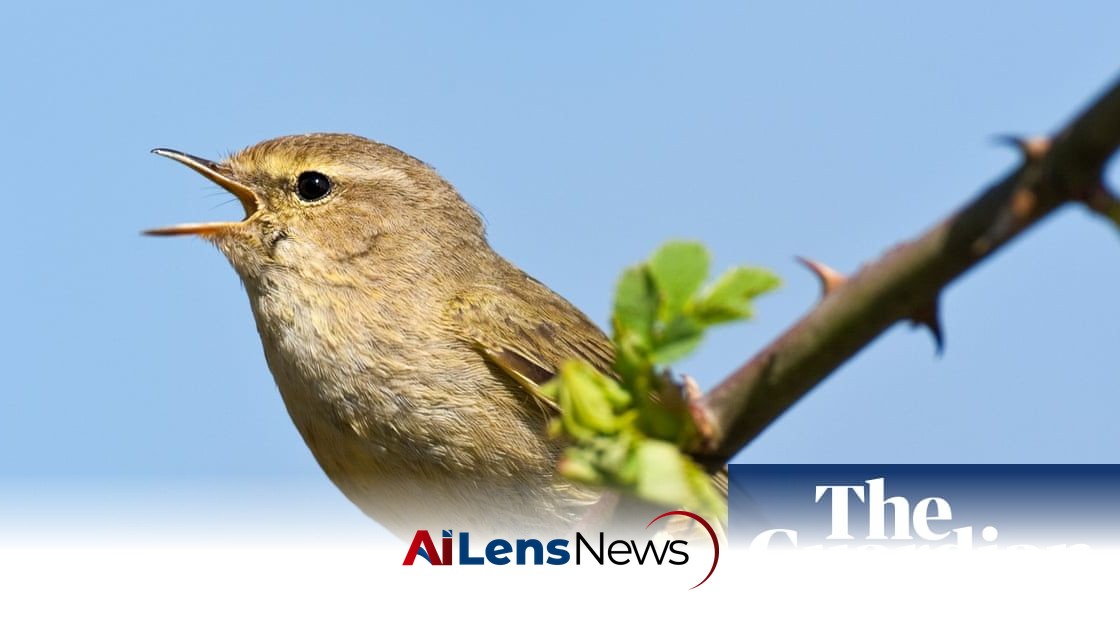


Cornell Lab for Ornithology plans data linkup between app and population monitoring on eBird platform.
New Delhi, India Jul 4, 2026 ALN: The Merlin bird ID app represents a significant advancement in the intersection of technology and citizen science, allowing individuals to contribute directly to global biodiversity efforts. This app, developed by the Cornell Lab of Ornithology, has transformed how birdwatching is approached by leveraging machine learning to offer real-time identification of birds through their songs. With the integration of this data into the eBird platform, the app aims to bolster conservation initiatives aimed at protecting at-risk bird species around the world.
Since its launch in 2021, the Merlin app has gained considerable traction among bird enthusiasts and casual observers alike. The app employs sophisticated algorithms to analyze and identify birdsong, providing users with not only the identification of the species but also a visual representation in the form of an image. This feature is particularly appealing to users who may not have extensive knowledge of avian species but wish to engage with nature and contribute to scientific research.
The urgency of this initiative is underscored by alarming statistics regarding global bird populations. In the UK alone, the total bird population has plummeted by more than 70 million over the past five decades, according to data from the British Trust for Ornithology. This drastic decline has resulted in a significant alteration of the natural soundscape, with the vibrant chorus of birdsong that was commonplace in the 1970s now markedly diminished. Such changes not only affect biodiversity but also have implications for ecosystem health and stability.
In May of this year, nearly 2 million users in the UK engaged with the Merlin app, utilizing it to identify birds in various s, from urban gardens to rural woodlands. The app's ability to recognize unique patterns in birdsong through spectrograms—visual representations of sound—demonstrates the power of technology in enhancing our understanding of wildlife. Each species produces a distinct sound pattern, which the app has been trained to recognize, facilitating a more accurate identification process.
The eBird platform, which has been operational since 2002, serves as a comprehensive database for bird observation data contributed by citizen scientists worldwide. With over 2 billion records, eBird stands as one of the largest citizen science initiatives globally. The integration of Merlin's real-time data into eBird represents a significant advancement in the collection and analysis of bird population data. Jessie Barry, a leader in the Merlin project, emphasized the upcoming features that will enhance the connection between the two platforms. Users will soon be able to upload audio recordings directly from Merlin to eBird, thereby streamlining the process of data collection and analysis.
Barry remarked, "This data helps create tools that can be used to further conservation, inspire support, and inform ecological management strategies." By facilitating the flow of information from individual users to a global database, the app not only empowers citizen scientists but also strengthens the overall understanding of avian populations and their trends.
As of now, the Merlin app boasts the capability to identify 2,066 bird species, covering a significant number of species found in the United States, Canada, Europe, and even extending to common species in regions such as India and South America. The app's user base has expanded rapidly, with over 40 million downloads across 240 countries, marking a substantial increase from 33 million downloads reported just last December. The UK has emerged as a notable contributor to this user base, with almost 2 million downloads recorded in May, reflecting a growing interest in birdwatching and conservation.
Barry noted, "It is always an ongoing project to collect additional species. There are a few we would like to add, but we are always adding more and improving the performance of the models." This commitment to continuous improvement ensures that the app remains a valuable tool for both novice and experienced birdwatchers.
Despite the promising developments associated with the Merlin app, there are valid concerns regarding the accuracy of its identifications. Some experts caution against relying solely on the app for official breeding bird surveys, as misidentifications can occur. The European Bird Census Council has advised against using Merlin in such formal contexts and has established a monitoring group to oversee and harmonize acoustic bird monitoring efforts across Europe. This highlights the need for a balance between technological innovation and the rigorous standards required in scientific research.
Users like Moira Forsyth from Scotland have shared positive experiences with the app, noting its ability to reveal a richer diversity of bird species in their local areas than previously recognized. Equipped with the Merlin app, field guides, and binoculars, users are encouraged to explore their surroundings and deepen their connection with nature. Forsyth's account illustrates the app's potential to foster a greater appreciation for biodiversity.
However, as Prof. Richard Gregory from the RSPB pointed out, while the app's increasing popularity is commendable, it is not without its pitfalls. He recounted a humorous yet concerning incident where the app mistakenly identified his dachshund as a mallard. This anecdote underscores the importance of user awareness regarding the app's limitations, particularly for those who may not possess expert knowledge of bird species. Gregory emphasized, "If you aren’t an expert, you wouldn’t necessarily know there was an error." This highlights the critical need for users to approach the app with a degree of caution and to verify identifications through additional resources when necessary.
In response to these challenges, Barry assured that research teams utilizing the data collected through the app are actively working to address issues related to data quality. She stated, "Our ability to understand changes in bird populations will be better served with more data to work with than if we don’t collect it at all." This proactive approach aims to enhance the reliability of data collected through the app, ultimately contributing to more effective conservation strategies.
As the Merlin app continues to evolve, its role in promoting citizen science and fostering a deeper connection between individuals and nature will be crucial in addressing the pressing challenges facing global bird populations. By empowering users to contribute to scientific research and conservation efforts, the app not only enhances public engagement but also serves as a vital resource in the ongoing fight to protect at-risk bird species and preserve biodiversity for future generations.
To learn more about the latest developments in Conservation, stay updated with our exclusive reports and analyses on AiLensNews.

