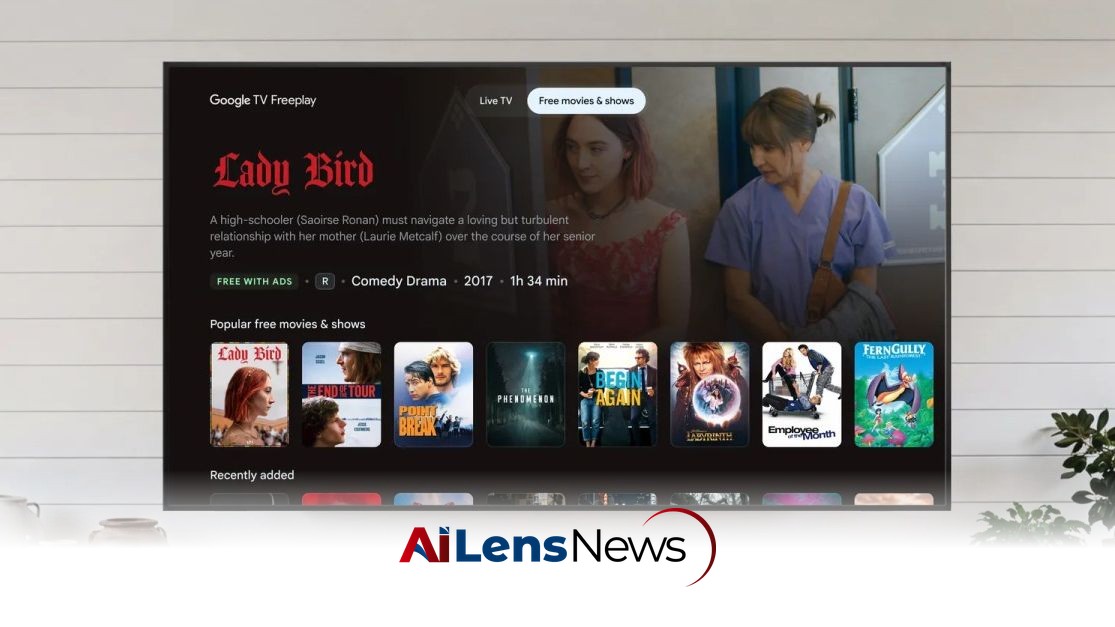


Google TV Freeplay now allows users to select from over 10,000 shows and movies, including popular titles like 'Lady Bird' and 'Hell's Kitchen'.
Washington DC, United States Aug 12, 2026 ALN: Google TV Freeplay, the company’s free, ad-supported streaming service, has recently expanded its offerings to include video on demand (VOD). This significant update allows users to access a library of over 10,000 shows and movies, enabling viewers to select content based on their preferences rather than being confined to a predetermined schedule of always-on channels. This move reflects a growing trend in the streaming industry, where consumer demand for flexibility and variety is increasingly pronounced.
The addition of on-demand options is particularly noteworthy as it enhances the user experience by providing greater control over what to watch and when to watch it. Among the new titles available on Google TV Freeplay are popular films and shows such as Lady Bird, a critically acclaimed coming-of-age film, Seventeen Again, a nostalgic comedy, and the reality cooking competition series Hell’s Kitchen. This diverse array of content caters to a wide audience, appealing to different tastes and age groups.
In conjunction with the expansion into on-demand content, Google TV Freeplay has also broadened its live television offerings. The service now boasts more than 300 channels covering a variety of genres, including news, sports, reality TV, true crime, and lifestyle programming. Some of the newly added channels include the reality-focused World of Love Island, the sports-centric Yahoo! Sports Network, and the business news channel Bloomberg TV Plus. Additionally, lifestyle content is represented by The Martha Stewart Channel, which aligns with current trends in home and cooking shows.
The expansion of Google TV Freeplay comes at a time when free and ultra-cheap streaming options are gaining traction in the market. As subscription-based streaming services continue to raise their prices, consumers are increasingly seeking alternatives that do not require a monthly fee. Google TV Freeplay joins the ranks of other ad-supported platforms such as Tubi, The Roku Channel, and Pluto TV, which have successfully attracted viewers by offering free content funded through s. This trend highlights a shift in consumer behavior, where viewers are willing to watch ads in exchange for free access to a broad range of entertainment options.
Moreover, the competitive landscape of streaming services is evolving. Disney Plus, a major player in the streaming market, is reportedly considering the launch of a free streaming tier, which would further intensify the competition among ad-supported platforms. The potential entry of Disney into the free streaming space underscores the growing recognition of the value of ad-supported content as a viable business model in the streaming industry.
The implications of this shift are significant for both consumers and content creators. For consumers, the availability of free streaming options provides greater accessibility to a variety of entertainment choices without the burden of subscription fees. This democratization of content consumption allows for a wider audience reach, particularly among those who may not have the financial means to to multiple streaming services. As a result, platforms like Google TV Freeplay can play a crucial role in making entertainment more accessible to diverse demographic groups.
For content creators and advertisers, the rise of ad-supported streaming services presents new opportunities for revenue generation. As more viewers flock to free platforms, advertisers are likely to increase their investments in these channels to reach a broader audience. This could lead to the development of more targeted advertising strategies that cater to specific demographics, enhancing the effectiveness of advertising campaigns. Advertisers may also benefit from the ability to engage with viewers in a more interactive manner, utilizing data analytics to refine their messaging and improve viewer engagement.
Google has indicated its commitment to continuously updating the Freeplay library throughout the year, suggesting that the service will remain dynamic and responsive to viewer preferences. This ongoing investment in content curation is essential for maintaining viewer engagement and satisfaction, particularly in a competitive market where consumer attention is fragmented across numerous platforms. By regularly refreshing its content offerings, Google TV Freeplay can keep viewers returning for new experiences, thereby increasing its market share.
In conclusion, the expansion of Google TV Freeplay to include on-demand streaming options and an enhanced live TV lineup marks a significant development in the streaming landscape. By offering a diverse range of content for free, Google is positioning itself as a strong contender in the ad-supported streaming market. This strategic move not only aligns with current consumer trends favoring flexibility and affordability but also sets the stage for future innovations in content delivery. As consumer preferences continue to evolve, the success of such platforms will depend on their ability to adapt, innovate, and provide value to viewers seeking flexible and affordable entertainment options.
Furthermore, the expansion of Google TV Freeplay can be seen as part of a broader industry trend where traditional television viewing habits are being disrupted by the rise of streaming services. Viewers are increasingly moving away from cable subscriptions and linear TV, opting instead for on-demand content that allows them to watch what they want, when they want. This shift has significant implications for the future of television, as it challenges traditional advertising models and encourages networks to rethink their content strategies.
The growing popularity of ad-supported streaming services like Google TV Freeplay could also influence how content is produced and distributed. With more platforms entering the free streaming space, content creators may find new avenues for distributing their work without relying solely on traditional networks or subscription-based models. This could lead to a more diverse range of content being produced, as independent creators and smaller studios gain access to wider audiences.
Additionally, as the ad-supported streaming model continues to gain traction, it may prompt existing subscription services to reconsider their pricing structures and content offerings. Consumers may begin to expect more value from their subscriptions, leading to potential shifts in how streaming services package their content and what they offer to rs. This could create a more competitive environment where platforms are incentivized to innovate and enhance user experiences.
In summary, the expansion of Google TV Freeplay to include on-demand streaming options and an enhanced live TV lineup is a significant step forward in the streaming landscape. It not only caters to the evolving preferences of consumers but also reflects broader industry trends that are reshaping how content is consumed and monetized. As the streaming market continues to evolve, platforms that prioritize flexibility, variety, and user engagement are likely to thrive in this dynamic environment.
To learn more about the latest developments in TV Shows, stay updated with our exclusive reports and analyses on AiLensNews.

