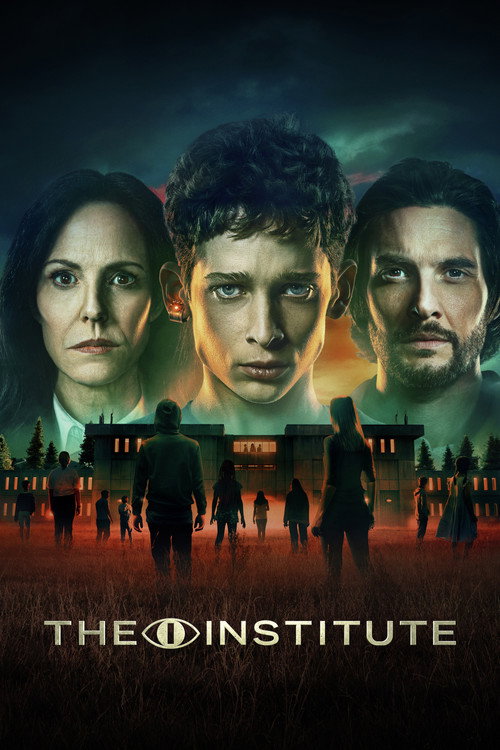








'The Institute' arrives with an intriguing premise: a kidnapped boy, Luke Ellis, wakes up in a mysterious facility filled with other children, all possessing unusual abilities. This initial setup offers promise, suggesting potential for a gripping tale about extraordinary challenges faced by gifted youth. However, while the series dives into the complexities of its characters and their predicaments, it falls into a familiar trap of derivative storytelling and misses the mark in delivering a truly suspenseful atmosphere. In the role of Luke, the young actor brings considerable depth, navigating the character's emotional landscape and the fears that accompany his extraordinary circumstances. His friendships with fellow inmates, each with their unique abilities, are portrayed with authenticity, allowing viewers a glimpse into the challenges of their confinement and the camaraderie that develops in such dire situations. Yet, as gripping as these interpersonal dynamics can be, they are not enough to elevate the overall experience of the series. Critics have noted that 'The Institute' lacks the genuine horror and immersive atmosphere that it promises. Instead of exploring the implications of power, fear, and survival in a deeply unsettling way, the series often leans into familiar tropes. The sense of dread that should permeate a story set in a facility where children are ostensibly trapped and exploited is often diminished by an uneven tone that shifts between drama and occasional levity without a coherent blend. The narrative jumps back and forth between Luke’s experiences and those of Tim Jamieson, a haunted former police officer seeking a fresh start. While Tim's story introduces an interesting complexity, it often feels like an unnecessary distraction from the central plot, diluting the urgency of Luke's plight rather than enhancing it. The eventual collision of their stories is built up over the course of the series, but when it happens, it leaves much to be desired. Each episode flows with a runtime of 54 minutes, providing ample opportunity to explore its themes but often bogged down by pacing issues. Some episodes drag, extending moments that feel overly familiar or reliant on clichés, which detracts from the overall engagement. The atmospheric elements that could contribute to a sense of foreboding are overshadowed by a visual style that feels standard at best. On a technical note, the series does employ some competent cinematography and sound design, which help set a suitable tone for the story. Scenes depicting the Institute itself are crafted to evoke a feeling of sterile dread; however, these moments feel fleeting amidst a series of uninspired choices elsewhere in the show. The music often attempts to build tension but can come off as formulaic, leading to a predictable buildup without the payoff it seeks. In the realm of young adult entertainment that balances intriguing science fiction with horror elements, 'The Institute' offers some captivating performances and an engaging mystery, yet it ultimately struggles to carve out a unique identity. There’s a palpable sense that the series could have benefitted from a deeper dive into its darker themes and a more cohesive narrative structure that integrates its various storylines more fluidly. The overall result is a series that's moderately entertaining but ultimately leaning towards the forgettable—one that may resonate with younger audiences seeking a blend of story and spectacle but may leave seasoned viewers craving more substance. Its uneven narrative and reliance on familiar tropes, coupled with a tonal inconsistency, prevent it from achieving the heights it aspires to. As a result, while 'The Institute' is worth a watch for its performances and some compelling moments, it ultimately stands as more of a missed opportunity than a must-see.