

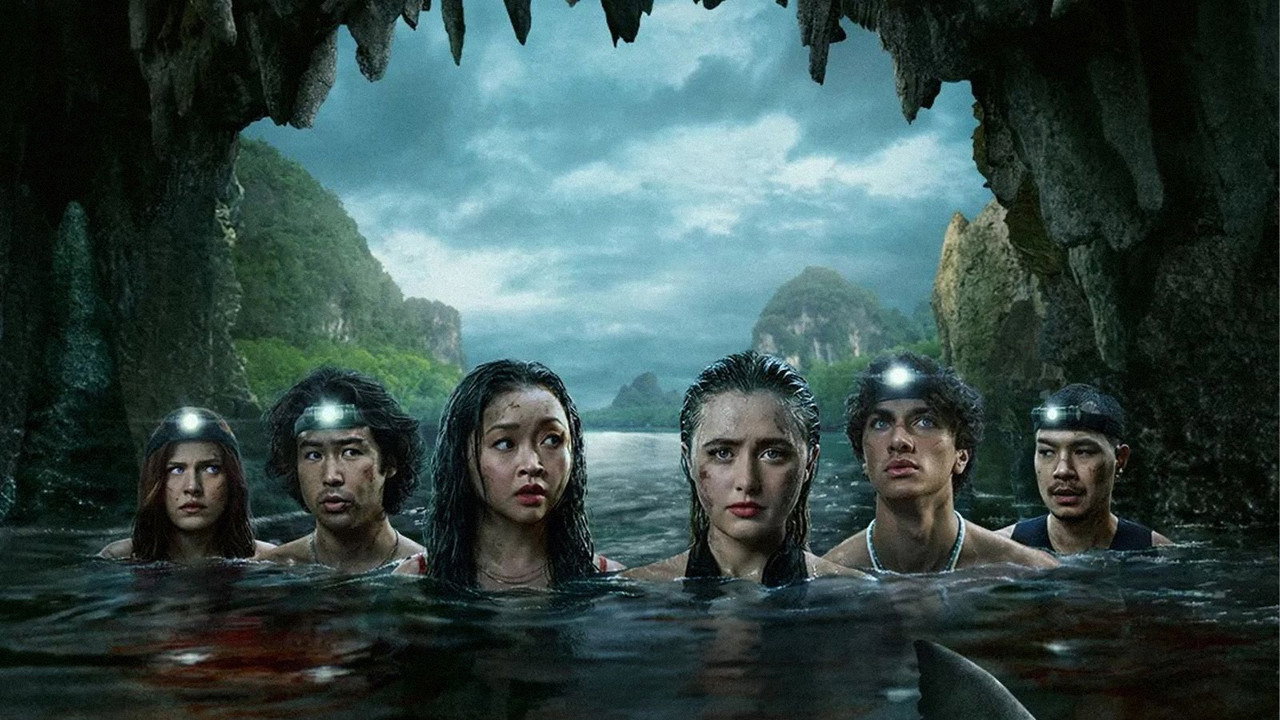








The Devil's Mouth attempts to carve out its niche in the survival thriller genre but feels like a well-trodden path rather than an exhilarating journey. The film follows a group of college friends whose adventure in Thailand takes a dark turn when they find themselves trapped in submerged caves. As the oxygen dwindles and tensions rise, they are forced to confront both their deadly surroundings and unresolved conflicts among themselves. While the premise is solid, the film quickly succumbs to predictable storytelling tropes that undermine its potential for genuine tension.
At the center of this narrative is Kathryn Newton, who plays Sara, a character struggling to navigate her relationships while dealing with life-or-death stakes. Newton brings a relatable depth to her performance, managing to evoke both vulnerability and strength as she unravels under pressure. Her portrayal is a breath of fresh air amid a cast that, unfortunately, operates within the confines of one-dimensional archetypes. While her struggle resonates, the lack of nuanced character development among the rest of the group dilutes her impact. When conflicts arise based on past grievances, they often feel shoehorned in, existing solely to heighten drama without establishing a foundation for the audience to care about these characters.
The film's cinematography captures the claustrophobia of the underwater caves but does little more than visually reinforce the suffocating tension. A few sequences showcase expert framing and intelligent lighting that create a sense of dread, yet these moments are sparse. The reliance on predictable jump scares dilutes what could have been a more immersive experience. The underwater setting presents an opportunity for innovative storytelling, yet the script fails to maximize its potential, settling instead for familiar horror elements.
A significant flaw in The Devil's Mouth is its pacing, which oscillates between sluggish exposition and frantically edited moments of terror. While it's clear that the filmmakers aimed to build suspense, the erratic flow leaves the audience disengaged at crucial points. Just as moments of tension are built, they often dissolve into predictable conflict or rushed resolutions. By the time we reach the climax, what should be terrifying feels rote. The stakes feel artificially inflated, leading to a lack of emotional investment in the fate of the characters.
Despite these shortcomings, The Devil's Mouth manages to offer moments of visual intrigue and some surprisingly effective horror sequences, especially during the early portions of the film. The descent into the caves, laden with water and darkness, is well-executed and provides a claustrophobic nightmare. The predator—though treated as somewhat of a cliché—is at times an effective source of tension, embodying the primal fear of being hunted.
However, the film simply cannot escape the gravity of its clichés. From the fraying friendships to the fear of betrayal, these elements feel all too familiar, lacking the clever reimagining that could have elevated this standard framework into something unique. Instead, The Devil's Mouth embodies everything that often plagues survival horrors, making it hard to shake the feeling that we’ve seen this all before.
In sum, The Devil's Mouth serves as an example of missed opportunity in craft and narrative execution. Kathryn Newton’s performance shines as a lone bright spot in a film burdened by weak character arcs and forgettable plot twists. Though there are flashes of potential, they fade amidst the staleness of overused tropes and insufficient development, leaving the film more akin to a one-time watch than a memorable entry in the genre. As it stands, audiences seeking an engaging survival thriller may find themselves better suited elsewhere.