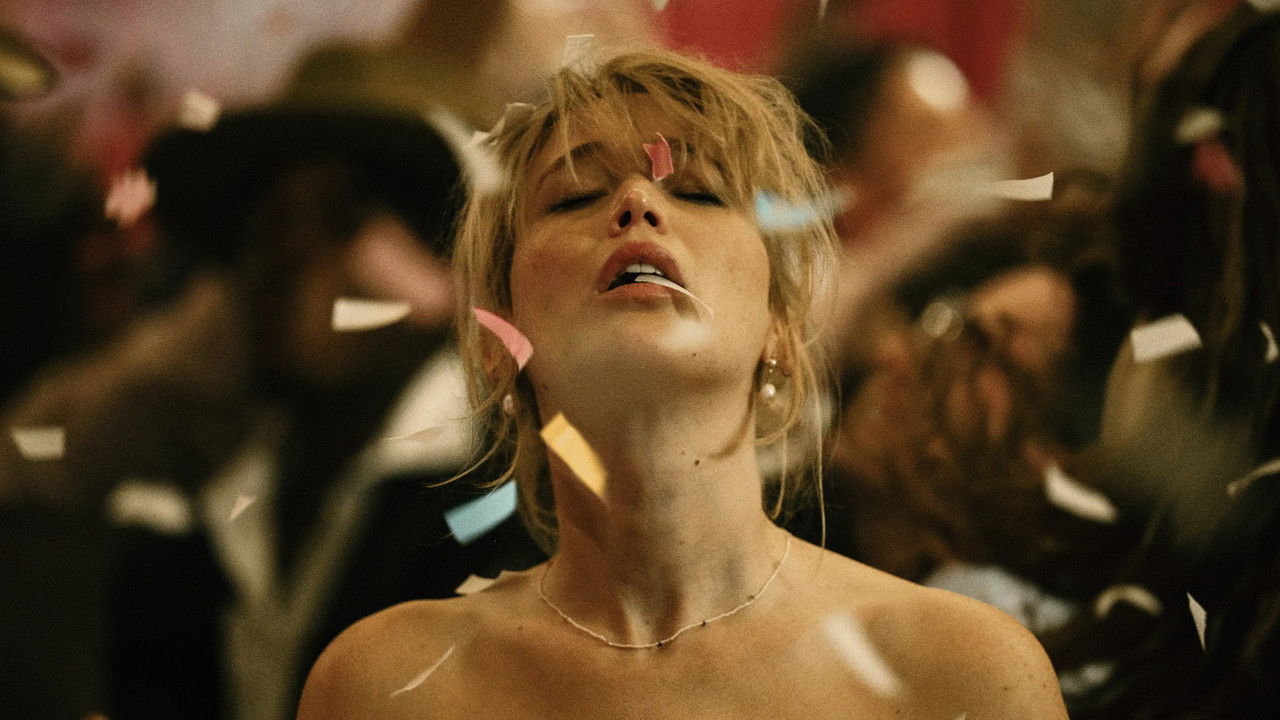








‘Die My Love’ invites viewers into a dense psychological landscape, driven by the character of Grace, played with profound emotional depth by Jennifer Lawrence. The film captures the disorienting transition from the bustling streets of New York to the isolating vastness of rural Montana, setting a stark backdrop for Grace's increasingly troubled psyche as she grapples with motherhood and artistic frustration. Lawrence's portrayal oscillates seamlessly between vulnerability and an unsettling strength; her performance stands out as a meticulous dissection of a woman on the brink.
From the outset, the film’s atmosphere is uniquely immersive. The cinematography utilizes the sweeping Montana landscape to echo Grace's inner turmoil, with shots that linger on idle moments, emphasizing her solitude. The isolation of the home, once a refuge, gradually morphs into a prison. This visceral connection between setting and psychological state is crafted with deliberate intent, resulting in an uneasy tension that permeates the story. Director, whose style leans toward the evocative and sparse, makes bold choices by allowing silence to linger in scenes, amplifying the creeping dread and alienation Grace feels.
Yet, this artistic choice is a double-edged sword. While the film excels in creating a haunting atmosphere, there are moments when its artistic ambitions come off as indulgent. The narrative can drift toward abstraction, leaving viewers grappling with patches of disconnection, where symbolism overtakes clarity. Some sequences evoke a dreamlike quality that may resonate deeply for some but risk alienating others seeking straightforward storytelling. Moments of raw emotion are frequently undercut by surreal imagery, which might serve to illustrate Grace’s internal struggles but can disrupt narrative flow.
The relationship between Jackson and Grace plays a crucial role in laying bare the complexities of their bond. Jackson becomes a ghostly figure in Grace's life, which is both physically and emotionally isolating. This distance is palpably felt in their exchanges, hyper-charged with unspoken resentment. The film poignantly explores how creativity can both nurture and suffocate, particularly in a maternal role. The couple's dynamic adds layers to their individual struggles, yet viewers may find themselves wishing for a deeper exploration of Jackson's character to understand his motivations and emotional repercussions.
While critical reception has leaned positively, audience reactions have been more divisive. This disparity often stems from the film's heavy reliance on symbolism that may not communicate universally. It offers a rich tapestry of themes around love, identity, and the mental health struggles tied to motherhood, which resonates powerfully for some but may leave others feeling adrift in its narrative intentions. In its raw portrayal of motherhood, ‘Die My Love’ sheds light on the darker aspects of mental health, prompting important conversations even if it sacrifices universal accessibility.
The film’s musical score, while not dominating scenes, utilizes haunting melodies that complement the visual aesthetics and emotional undercurrents, enhancing the palpable sense of dread that permeates the film. The sound design, intertwined with the visuals, constructs an immersive world that is both beautiful and deeply unsettling.
In conclusion, ‘Die My Love’ stands as a compelling exploration of psychological complexity wrapped in a gothic atmosphere, masterfully carried by Jennifer Lawrence. However, its ambitious narrative choices may alienate some audience members while captivating others. The film, though uneven, is undeniably impactful, challenging perceptions of love and motherhood in a way that stays with you long after the credits roll. It’s a film that asks for patience and introspection, rewarding those willing to engage with its chaos and artistry. Just don't expect easy answers or resolutions; this is a deeply human story of fracture and resilience with no clear path to redemption.