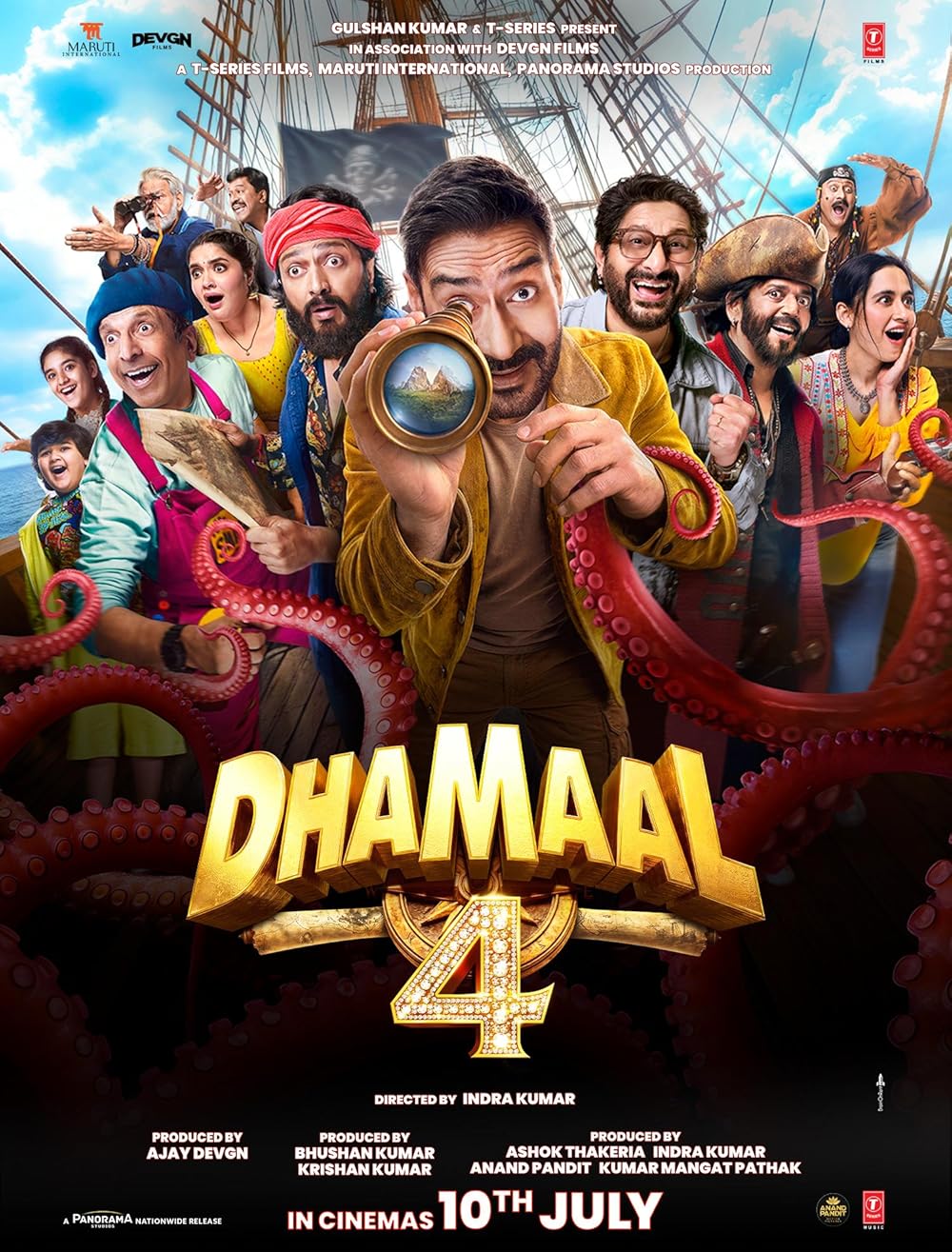


Friday, 10th July 2026 marked the much-anticipated theatrical arrival of Dhamaal 4 across a wide spectrum of major cinema chains, including INOX, Cinepolis, Miraj Cinemas, Carnival Cinemas, Mukta A2 Cinemas, Wave Cinemas, SRS Cinemas, SPI Cinemas, MovieTime Cinemas, and Asian Cinemas. As a significant entry in the annals of Bollywood’s long-standing comedy franchises, Dhamaal 4 arrives with a substantial historical weight. It is the fourth installment in a series that defined "no-brainer" slapstick for an entire generation of Indian cinema-goers. In the current cinematic climate of 2026, where audiences are increasingly discerning and the industry is shifting toward more high-concept storytelling, the return of the Dhamaal brand—known for its unapologetic reliance on chaos, physical comedy, and ensemble dynamics—is both a strategic gamble and a potential boon for fans seeking a pure, unadulterated stress-buster. This review aims to dissect the film’s components, from its narrative structure and directorial vision to its technical merits and reception, providing a comprehensive analysis of whether this latest chapter justifies its existence in a crowded market.
Genre and Background
Dhamaal 4 firmly anchors itself in the genre of "madcap adventure comedy." This is a genre that demands a specific contract between the filmmaker and the audience: a suspension of logic in exchange for consistent entertainment. Since its inception in 2007, the Dhamaal franchise has occupied a unique niche in Indian cinema, prioritizing situational humor and the chemistry between a large ensemble cast over traditional narrative depth. The background of this production is particularly intriguing. It is not merely a sequel; it is an attempt to revive a specific brand of humor that has been largely missing from the mainstream landscape for several years. Director Indra Kumar, a veteran of this genre, has returned to the helm with the task of modernizing the franchise’s appeal while honoring the established "chaos-first" ethos that long-time fans demand. The film operates on the premise that comedy is not just about the script but about the energy created when talented actors collide in a high-stakes, low-logic scenario.
Plot Overview
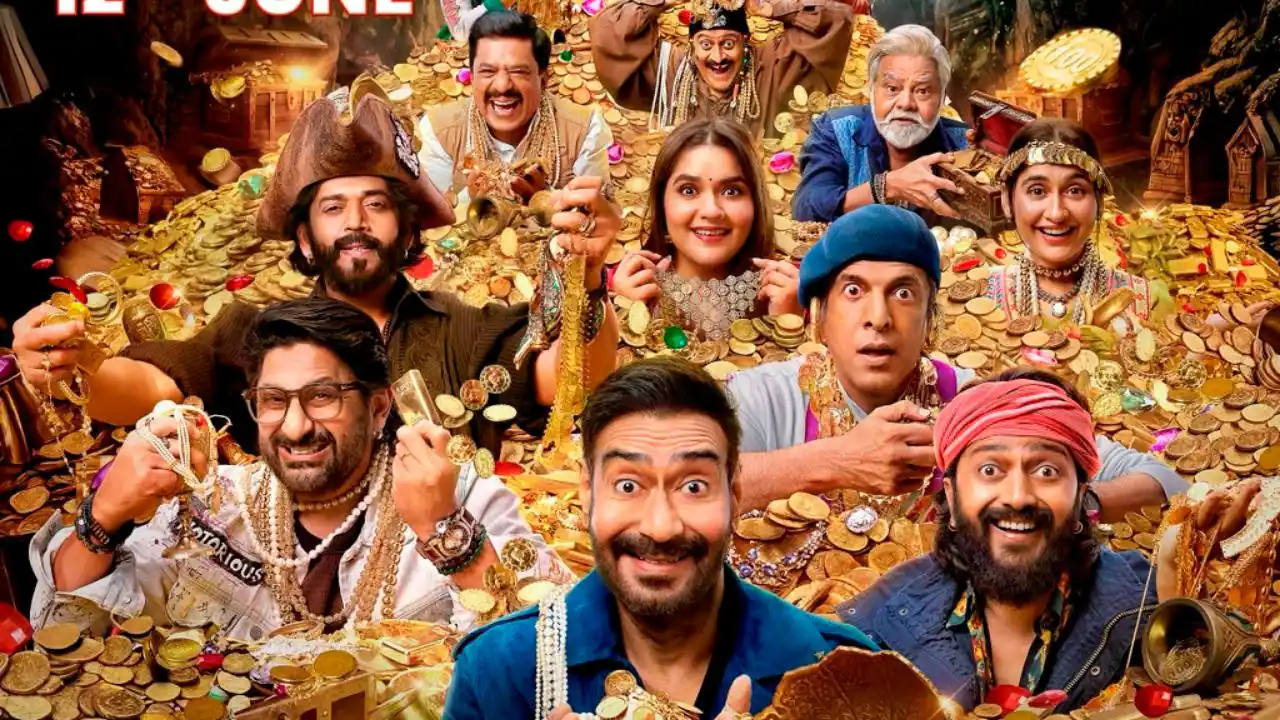
The narrative arc of Dhamaal 4 is constructed around the quintessential treasure hunt trope, a device that has served the franchise faithfully since its beginning. The story is initiated by a central quest: a legendary, hidden treasure, the location of which is a closely guarded secret known only to an eccentric individual named Prithvi, played by Upendra Limaye. This setup effectively acts as a narrative "magnet," pulling all the various characters into a single, cohesive conflict.
The story introduces us to a bustling cast of characters, each with their own comedic baggage. We follow Guddu (Ajay Devgn), a character whose professional exterior hides a layer of lovable absurdity, and his associate Johnny (Sanjay Mishra). They are accompanied by two children, Aamayra and Aarav, who represent a new variable in the franchise—the requirement for familial approval. Guddu is in pursuit of a romantic future with Alia (Isha Gupta), and his success depends on the children’s acceptance of him.
Parallel to this, we see the return of the franchise’s emotional anchors, Adi (Arshad Warsi) and Manav (Javed Jaffrey), who bring their signature brand of chaotic camaraderie. They are joined by Adi’s wife, Rosie (Sanjeeda Sheikh), expanding the group dynamic. The mix is further stirred by the introduction of Lallan (Riteish Deshmukh) and his newlywed bride, Paro (Anjali Anand). Finally, we have the antagonistic forces—Adhura (Ravi Kishan) and his sidekick Jhinga (Vijay Patkar)—who view the treasure as their ticket out of obscurity. As these groups intersect, the film transforms into a game of wits, blunders, and physical mishaps. The plot is essentially a vehicle for these characters to interact in increasingly absurd environments, from jungle escapades to high-pressure set pieces, ensuring that the audience is kept in a state of continuous comedic engagement without being bogged down by complex expository dialogue.
Performance Review: The Ensemble Dynamics
The performance landscape of Dhamaal 4 is perhaps its most significant asset. When dealing with a film that relies so heavily on character-based humor, the success of the project rests squarely on the shoulders of the actors.
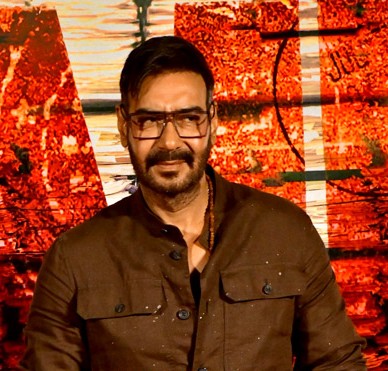
Ajay Devgn, as the primary anchor, brings a seasoned approach to his role as Guddu. He is an actor known for his ability to seamlessly transition from the intensity of high-octane dramas to the playfulness of ensemble comedies. In Dhamaal 4, he does not attempt to "out-act" his co-stars; instead, he adopts a collaborative energy. His timing in the physical comedy sequences—particularly those involving the more chaotic elements of the hunt—is sharp, proving that he understands the "straight man" dynamic required in a world filled with eccentrics.
Arshad Warsi and Javed Jaffrey are, without hyperbole, the soul of the franchise. Their return as Adi and Manav is not just a casting decision; it is a vital injection of continuity that grounds the film in its own history. Their chemistry remains undiminished by the passage of time. The ease with which they play off each other’s improvisational cues is a masterclass in comedic partnership. They possess an innate understanding of when to push the humor and when to allow it to breathe, making them the most reliable performers in the entire cast.
Riteish Deshmukh, playing Lallan, brings a vital third energy to the lead trio. His portrayal is marked by a frantic intensity that contrasts well with the more laid-back energy of Adi and Manav. Deshmukh has always been a reliable comedian, but here, he demonstrates a keen sense of regional flair that adds a necessary layer of texture to the film. His scenes with Anjali Anand (Paro) are particularly noteworthy. Anjali Anand delivers a performance that acts as a pivot point for the film; she manages to bring a grounded, emotional performance to a genre that typically eschews sentiment, allowing for moments of genuine connection between the characters.
Sanjay Mishra, in the role of Johnny, is, quite simply, a comedic force of nature. He occupies a space that few other actors can, where he manages to be both deeply funny and oddly pathetic at the same time. His timing is impeccable, and he provides a layer of dry, deadpan humor that breaks the relentless intensity of the film's physical gags.
Ravi Kishan, playing the primary antagonist Adhura, is clearly having a tremendous amount of fun. He avoids the temptation to play the villain with traditional menace, opting instead for a flamboyant, over-the-top performance that fits perfectly within the heightened reality of the Dhamaal universe. Supported by Vijay Patkar as Jhinga, they form a rivalry that is as humorous as it is competitive.
Finally, the contributions of Sanjeeda Sheikh, Isha Gupta, Upendra Limaye, and Brijendra Kala round out an ensemble that is clearly dedicated to the vision of the film. While some of these roles are smaller, each actor manages to leave a distinct imprint, ensuring that the film never feels dominated by a single star, but rather functions as a true collaborative machine.
Direction and Screenplay
Director Indra Kumar has approached Dhamaal 4 with the sensibility of a filmmaker who knows his audience intimately. His direction is characterized by an unwavering commitment to the pacing of the film. In a genre where "sluggishness" is the enemy, Kumar ensures that the narrative moves with a rapid, staccato rhythm. He has mastered the art of "contained chaos"—managing a large ensemble cast, ensuring that every character has a moment of individual relevance while keeping the broader narrative thread coherent.
The screenplay, a collaborative effort involving Paritosh Painter, Balvinder Singh Suri, Bunty Rathore, and Ved Prakash, is a study in "gag-density." The script operates on the philosophy that a joke should follow another joke as quickly as possible. This approach, while highly effective for sustaining momentum, presents a specific challenge: quality control. Some jokes land with incredible impact, becoming instant highlights of the film, while others feel like familiar echoes of previous installments.
However, the screenwriters deserve credit for the structural evolution attempted in this installment. The decision to introduce a "dash of emotion" in the final act is a narrative risk. Traditionally, Dhamaal films are entirely devoid of sentiment, operating purely on absurdity. The inclusion of a sincere emotional beat, particularly involving the children and the reconciliation of the groups, adds a layer of depth that might surprise long-time fans. While not every viewer will find these emotional interludes successful, they represent a maturation of the franchise. The dialogue is snappy, and while it occasionally leans on repetitive tropes, it remains largely functional, serving the comedic action rather than distracting from it.
Technical Aspects: A Modernized Aesthetic
The technical production of Dhamaal 4 suggests a significant leap forward compared to the earlier entries in the franchise. The cinematography by Sudhir Kumar Chaudhary is vivid and purposeful. He employs a visual palette that is bright, energetic, and perfectly suited to the "adventure" theme. The camera work is dynamic, particularly during the action-comedy sequences, utilizing wide angles to capture the interplay of the ensemble and close-ups to highlight the expressive reactions of the actors.
The production design by Swapnil Bhalerao and Madhur Madhavan creates a world that is visually cohesive. Even when the scenarios are absurd, the setting is rendered with high production standards, lending the film an air of authenticity that prevents it from feeling "cheap" or "haphazard." The sets are functional, designed with the specific needs of physical comedy in mind—sturdy enough for stunt work, yet detailed enough to serve as convincing backdrops for the narrative.
The editing by Sanjay Sankla warrants specific praise. Editing is the invisible hand of comedy; it is the difference between a joke landing and a joke dying. Sankla has done a commendable job in maintaining a tight, rhythmic flow. Managing the story arcs of a dozen characters across multiple locations is a gargantuan task, and the editor has successfully avoided the pitfall of a disjointed narrative. The transitions between the various storylines are smooth, keeping the film’s momentum from stalling.
However, the Visual Effects (VFX) in Dhamaal 4 have invited critical discussion. While the ambition of the technical team is evident—particularly in the larger-scale set pieces and action sequences—the digital integration is occasionally uneven. In an era where audiences are exposed to seamless CGI, there are moments where the digital environment clashes with the practical elements. This is not to say that the VFX are "bad," but rather that they are a point of inconsistency in an otherwise polished production. The action choreography by RP Yadav deserves acknowledgment for its focus on the "physics of comedy." The stunts are designed to amplify the humorous nature of the situations rather than create genuine danger, and in this, the team succeeds, delivering sequences that are entertaining and visually stimulating.
Music and Background Score
The music of Dhamaal 4 acts as a crucial narrative bridge. Producers understood early on that for a film of this nature, the musical numbers need to be more than just filler; they need to be "event" tracks that drive engagement. The decision to incorporate high-energy, pre-released, and popular tracks like "Gulabi Saree" and "Chutney" has been a masterstroke in terms of audience connection. These songs, which have already achieved viral status, provide an instant "hook" for the viewer, ensuring that the musical segments feel like highlights rather than breaks in the action.
The background score, composed by Amar Mohile, is a significant component of the film’s success. It serves as an emotional guide for the audience, shifting between playful, high-tempo themes for comedic sequences and softer, more melodic arrangements for the film’s quieter, more emotional beats. While the score may not be revolutionary in the context of the broader musical landscape, it is perfectly tuned to the film’s requirements. The choreography, executed by Piyush, Shazia, and Rahul Shetty, deserves credit for being visually inventive. They have managed to create sequences that feel distinct, using the space provided by the cinematography to create elaborate, eye-catching displays that feel like a celebratory part of the cinematic experience.
Public and Critical Reception
The reception to Dhamaal 4 is a case study in the divide between pure entertainment and critical scrutiny. On one side, we have the core fanbase—the audience that has supported this franchise for nearly two decades. For this demographic, the film is an unqualified success. Social media trends and early audience feedback emphasize a sense of comfort and nostalgia. The sentiment is that the film delivers exactly what was promised: a reliable, laugh-out-loud escape from reality. The general consensus among this group is that the film is a "stress-buster," a movie that doesn't demand critical analysis but rewards the viewer for simply showing up.
On the other hand, the critical consensus is more nuanced. Critics have generally acknowledged the entertainment value and the strength of the ensemble, but they have also highlighted the structural weaknesses. The criticism is not that the film is "bad," but that it could have been "more." There is a repeated observation that the film leans too heavily on the legacy of the previous parts. While callbacks to the iconic scenes of the past (such as the "W" treasure hunt concept) are designed to trigger fond memories, some critics argue that it prevents the franchise from moving forward into truly innovative territory. However, even the most critical reviewers have been quick to note that the film’s positive attributes—the acting, the energy, the production value—often outweigh the narrative flaws, leading to a generally positive, if tempered, critical assessment.
Box Office Performance
Commercially, Dhamaal 4 has established a strong foothold in the market. The film’s opening weekend performance exceeded the initial trade estimates, demonstrating the enduring "pulling power" of the Dhamaal brand. With a first-day collection that ranged between ₹14 crore and ₹15.5 crore, the film signaled a strong intent from the audience to support the project. The growth on its first Saturday, coupled with strong word-of-mouth in Tier 2 and Tier 3 markets, has pushed the domestic net total comfortably past the ₹35 crore mark within the first few days of release.
Furthermore, the worldwide gross has already surpassed the ₹50 crore milestone. These figures are not just numbers; they are an indicator of the film’s health and the sustained appetite for mass-market entertainment. The box office trajectory suggests that Dhamaal 4 will be a financially successful endeavor, satisfying stakeholders and proving that the "comedy franchise" remains one of the most bankable formats in Indian cinema, provided it is executed with the energy and commitment that this project displays.
Overall Verdict: A Worthy Franchise Addition
Dhamaal 4 is a film that makes no attempt to disguise its intentions. It does not aspire to be a paradigm-shifting piece of cinema, nor does it seek to challenge the conventions of the medium. Instead, it offers a sincere and energetic tribute to the joy of slapstick comedy. It is a film that relies on the "magic" of its cast, the momentum of its direction, and the comfort of its familiar tropes to deliver an experience that is consistently engaging and frequently hilarious.
While it is true that the script occasionally relies on repetition and that some technical elements could be refined, these are minor hurdles in what is otherwise a successful endeavor. The strength of the film lies in its ability to bring a diverse group of actors together and let them play. The camaraderie on screen is palpable, and that joy is infectious, extending to the audience.
For the viewer, Dhamaal 4 provides a communal space where the stress of the everyday can be suspended for two hours in favor of laughter. It is a reminder of the fundamental purpose of cinema in a populist context: to entertain, to distract, and to bring people together. The film is a worthy addition to the franchise, proving that with the right cast and a committed directorial vision, the "madcap" genre still has a vibrant and vital place in the cultural conversation. It is a film to be watched with friends, a film to be enjoyed without the burden of intense critical analysis, and a film that reminds us that sometimes, the most sophisticated thing a movie can do is simply make us laugh.
Technical and Industry Observations
To provide a more comprehensive professional analysis, it is necessary to touch upon the broader implications of Dhamaal 4 within the current industry framework. We are witnessing a phase where "franchise fatigue" is a real concern for filmmakers. Audiences are tired of sequels that feel like cash-grabs or low-effort imitations. Dhamaal 4 manages to navigate this by focusing on the one thing that sequels often lose: the spirit of the original.
There is a deliberate focus on character continuity. The audience is not just watching a new plot; they are visiting old friends. This psychological connection is why the audience overlooks the lapses in logic. When Adi and Manav are on screen, the audience is not thinking about the plot holes; they are thinking about the journey they have taken with these characters over nearly 20 years. This is a powerful cinematic tool, and the filmmakers have wielded it with precision.
Furthermore, the integration of new cast members like Anjali Anand and Upendra Limaye suggests a strategy of "legacy refreshment." By introducing new dynamics and new character archetypes, the film prevents the franchise from becoming a static relic. This is a vital strategy for the long-term health of any series. The film effectively balances the "must-have" nostalgia of the old guard with the "fresh-energy" injection of the new cast.
From a production standpoint, the film highlights the changing standards of Indian comedy. Gone are the days when a comedy could be shot with minimal production value. Dhamaal 4 demonstrates that even a "no-brainer" comedy requires high-end production standards. The sets, the costumes, the lighting, and the overall aesthetic are all reflective of a modern, professional industry that is no longer willing to compromise on technical quality, even in the service of slapstick. This elevation in quality is a positive development for the industry as a whole, signaling that "comedy" is no longer a lesser genre in terms of production investment or technical rigor.
The box office success also tells us something about the resilience of the cinema-going habit in India. Despite the proliferation of digital streaming and high-quality home entertainment, the demand for "event comedies" in theaters remains strong. Dhamaal 4 has effectively positioned itself as an "event"—a film that is best experienced in a hall, surrounded by the laughter of others. This "communal laughter" is a unique selling proposition that streaming services struggle to replicate. The film’s commercial success is a testament to the fact that when a movie is designed with the audience experience in mind, the audience will show up.
In conclusion, while Dhamaal 4 may not be the most critically "revered" film of the year, it is arguably one of the most "necessary." It serves a function. It provides a service. It is a well-oiled machine of entertainment that succeeds because it respects its audience's desire to have a good time. The filmmakers understood the assignment, the actors brought their A-game, and the result is a project that delivers on its promises. In the world of entertainment, that is the highest accolade one can give.
Final Thoughts on the Cast and Crew
It would be remiss not to provide a deeper acknowledgment of the individual efforts that made this project possible. The collaboration between the writing team—Paritosh Painter, Balvinder Singh Suri, Bunty Rathore, and Ved Prakash—is noteworthy. Writing comedy is, in many ways, more difficult than writing tragedy. Tragedy is universal; comedy is temporal, cultural, and deeply dependent on rhythm. To write for four writers' voices is a challenge of coordination. Their ability to harmonize these voices into a single, cohesive script that maintains the Dhamaal identity is a credit to their professionalism.
The crew behind the scenes—the editors, the cinematographers, the production designers—often work in the shadows of the stars. In Dhamaal 4, their contribution is the foundation upon which the stars perform. The consistency of the film’s visual language, the tightness of its editing, and the deliberate construction of its sets all contribute to an environment where the actors can feel safe to take risks. A comedy film is only as good as the space it provides for its actors to be funny, and the technical team of Dhamaal 4 has provided a wide, vibrant, and well-lit stage for that performance to occur.
To the audience, the film offers a mirror to their own capacity for joy. It invites them to forget the complexities of their daily lives, the deadlines, the stress, and the uncertainty of the world, and instead, to focus on the simple, human experience of shared laughter. In a time when the world feels increasingly serious, the existence of a film like Dhamaal 4 is not just an entertainment choice; it is a cultural necessity. It affirms that joy is still a valuable commodity, and that laughter is still the most effective language of connection we possess.
The journey of Dhamaal 4, from its inception as a follow-up to a beloved franchise to its successful realization on the big screen, is a story of dedication, persistence, and a deep understanding of the pulse of the Indian audience. It is a film that stands as a testament to the power of the "madcap" spirit and the enduring appeal of great comedic acting. As we move forward into the rest of the cinematic year, it will remain a reference point for what can be achieved when a film is crafted with the singular, clear-eyed goal of providing pure, unadulterated entertainment.
Disclaimer
This Dhamaal 4 review is not intended to defame, criticise, or undermine any artist, technician, or individual associated with the film. It is based on public opinion, research, and insights from various film critics and box office reports.
Turn Your Vision Into a Blockbuster Hit!
In the competitive Indian film industry, a great movie deserves a great strategy. Don't leave your film's success to chance. Moris Media is the leading movie marketing agency in India, providing end-to-end solutions including high-impact PR, digital reputation management, and viral-ready social media campaigns.
Whether you're launching a comedy, drama, or thriller, we ensure your film captures the public’s imagination and drives box office numbers. From strategic digital placement to influencer outreach, we manage the buzz so you can focus on the art.
Ready to take your film to the next level? Partner with the experts who turn hype into a legacy.
Visit us today to elevate your film’s trajectory: www.morismedia.in