

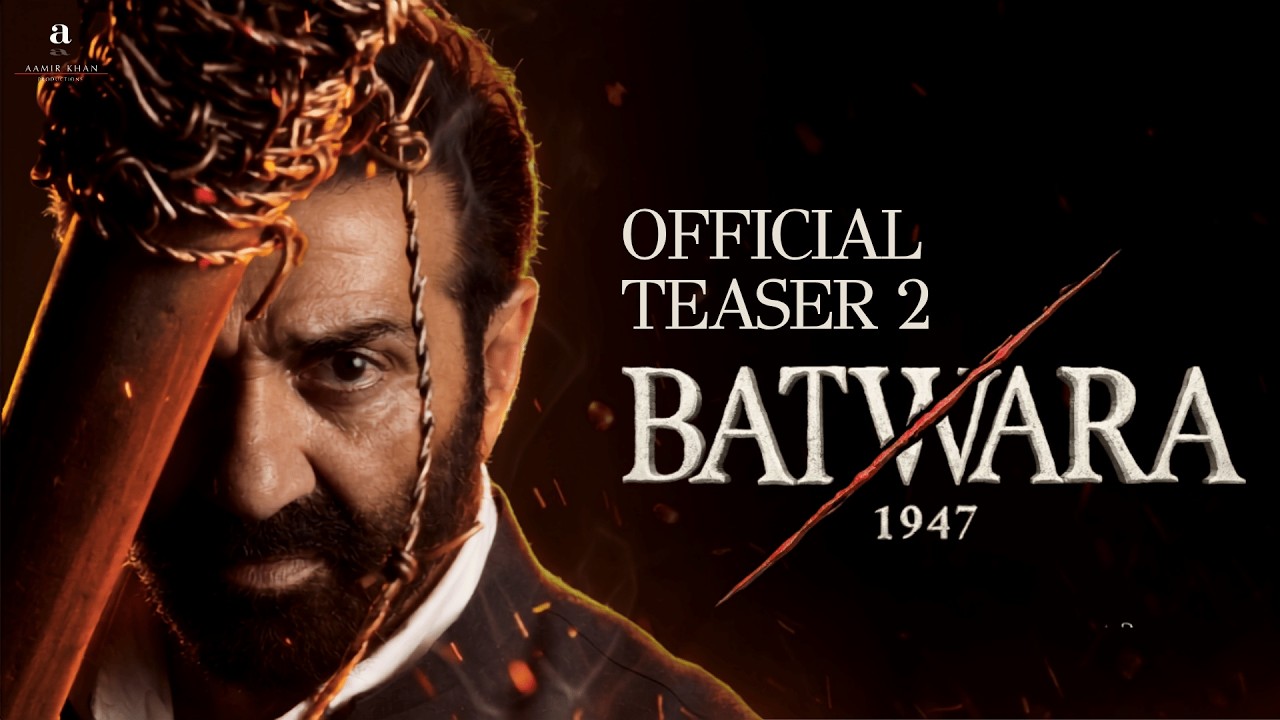








‘Batwara 1947’ showcases the powerful narrative of families caught in the throes of one of India's most tumultuous historical moments. The film, directed by Rajkumar Santoshi and featuring an ensemble cast that includes Sunny Deol, Preity Zinta, and Shabana Azmi, encapsulates the emotional depth of displacement during the Partition through the lens of Sikander Mirza and his family's newfound life in Lahore. The film balances personal stories with broader societal themes, creating a tapestry of human emotion that ranges from despair to resilience.
From the outset, the film immerses viewers in the tense atmosphere of a nation on the brink of change. The opening scenes, shot with a muted color palette, imbue the turbulent setting with an ominous tone that effectively echoes the struggles faced by the characters. As the story unfolds, we witness the interactions between Sikander’s family and the elderly Hindu matriarch, Mai, who clings to her memories and her home. The tension between the two families serves as a thoughtful metaphor for the broader cultural schisms that defined the era.
Sunny Deol delivers a notable performance as Sikander, bringing gravitas and warmth to his character. His portrayal is particularly striking in scenes where he grapples with the fear and uncertainty that accompany such a life-altering event. Preity Zinta complements him well, portraying the nuanced struggles of a woman caught between maintaining her family's dignity and adapting to a new life. Meanwhile, Shabana Azmi shines in her role as Mai, evoking sympathy even as she embodies the resistance of an older generation reluctant to let go of the past.
The film's screenplay, adapted from Asghar Wajahat's play, provides a strong foundation but occasionally falters in pacing. While the rich dialogue and character development often engage the audience, there are moments where the narrative feels bloated, leading to scenes that linger longer than necessary. This can detract from the overall momentum, leaving the viewer with a sense that some sequences could have been tightened to enhance emotional impact.
Technically, ‘Batwara 1947’ demonstrates high quality with its set design and cinematography. The period-accurate costumes and elaborate sets vividly evoke the historical setting, immersing viewers in the grandeur and turbulence of 1947 India. The film’s cinematographer meticulously captures the contrasting emotions within each scene, using shadows and light to evoke the characters' internal struggles against the backdrop of external chaos. However, the film does occasionally lean too heavily on cliché visuals, reminding the audience of its historical significance while also riskily bordering on melodrama.
The music, composed with care, complements the storytelling and often reflects the emotional states of the characters. However, there are moments where the background score competes with dialogue rather than enhancing it, pulling the audience out of critical emotional exchanges. Yet, when it works, it uplifts the narrative to a near-ethereal level, adding layers that resonate profoundly.
One cannot overlook some missed opportunities in ‘Batwara 1947’. While many characters are well-developed, a few secondary roles feel underexplored, leaving viewers wanting more from those who could have added depth to the narrative tapestry. This could have strengthened the impact of the communal tensions and personal conflicts present in the story, offering a richer exploration of the time's intricacies.
Overall, ‘Batwara 1947’ provides a powerful examination of the human impact of political upheaval, reflecting the emotional scars left by the Partition. Despite its pacing issues and occasional over-reliance on melodrama, the film stands strong in its commitment to portraying the personal over the political. It is a compelling, albeit uneven, exploration of resilience amidst chaos that should resonate not just with history enthusiasts but also with a broader audience seeking to understand the complexities of loss and identity in times of upheaval.