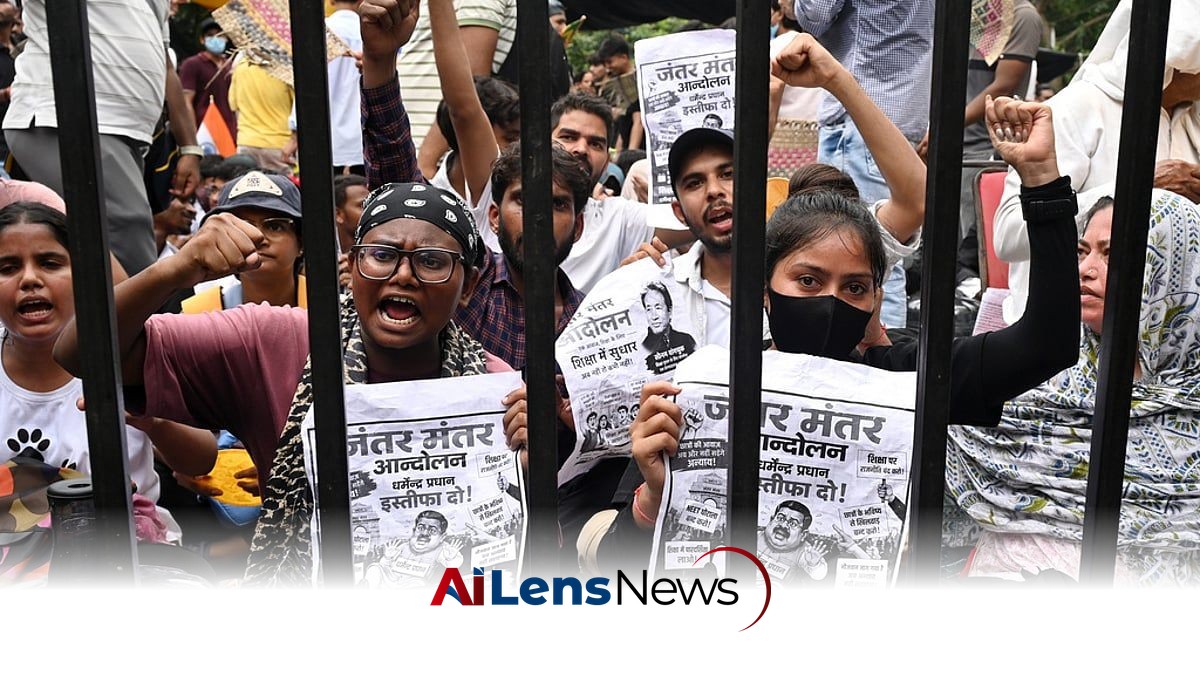


In emotional appeals, actors Ratna Pathak Shah and Seema Pahwa criticize Bollywood's silence on student protests against NEET paper leaks, calling for solidarity and humanity.
Doha, Qatar Jul 22, 2026 ALN: In recent weeks, the protests by students against the alleged leaking of National Eligibility Entrance Test (NEET) papers have garnered significant attention in India. The NEET is a critical examination for aspiring medical students, and any perceived irregularities can have serious implications for their educational and professional futures. The protests have sparked a national conversation about the integrity of educational assessments and the responsibilities of those in power to ensure a fair process.
Ratna Pathak Shah, a veteran actor known for her impactful performances in Indian cinema and television, has emerged as one of the prominent voices supporting the protesting students. Her emotional appeal on social media reflects a broader concern among several public figures regarding the treatment of young people in the current socio-political climate. Shah's remarks, which draw parallels to the ancient Indian epic Mahabharata, emphasize the sacrifices that young individuals are being asked to make in the name of political stability and power retention.
In her video, Shah references the story of Ekalvya, a character who is forced to sacrifice his potential by cutting off his thumb as a form of tribute to his teacher, Dronacharya. This allegory serves to highlight the moral dilemmas faced by students today, as they navigate an educational landscape that may prioritize political agendas over individual futures. By invoking this narrative, Shah challenges the current leadership to reflect on their responsibilities towards the youth, urging them to reconsider the ethical implications of their actions.
Shah's emotional apology to the students on behalf of her generation resonates with many who feel disillusioned by the state of affairs in the country. Her acknowledgment of the failures of older generations to protect the interests of the youth underscores a sentiment shared by many activists and educators. This generational divide speaks to a larger issue of accountability and the need for a more compassionate approach to governance that prioritizes the needs and aspirations of young people.
Seema Pahwa, another respected figure in the Indian film industry, echoed Shah's sentiments with her own heartfelt message. Pahwa's call for humanity in the face of adversity highlights the moral obligation of individuals, especially those in influential positions, to stand up for justice and support the vulnerable. Her critique of the silence from many in the entertainment industry speaks to a pervasive fear of retribution from those in power, which can stifle dissent and discourage public figures from advocating for change.
Pahwa's impassioned plea for empathy towards the students is a call to action for society as a whole. She emphasizes the importance of recognizing the struggles faced by young people, many of whom are fighting not just for their education but for their right to a future free from corruption and political manipulation. Her comments serve as a reminder that the consequences of inaction can be profound, potentially alienating future generations from those who fail to support them in their time of need.
Rajkummar Rao, another prominent actor, has also weighed in on the situation, advocating for dialogue and understanding between the authorities and the student body. His appeal for peaceful communication underscores the importance of listening to the voices of young people who feel marginalized and unheard. Rao's emphasis on dignity and respect in discourse reflects a growing recognition of the need for constructive engagement in addressing societal issues.
In contrast, Johnny Lever, a veteran comedian, expressed his distress over the visual reports of police action against the protesting students. His remarks highlight the emotional impact such events can have on public sentiment and the necessity for government responsiveness to the demands of its citizens. Lever's call for the government to address the students' concerns illustrates a broader expectation for leadership to prioritize the welfare of its people, particularly the youth, who represent the future of the nation.
The protests and the responses from these influential figures are part of a larger movement advocating for educational reform and transparency in India. As students take to the streets, they are not only fighting for their rights but also challenging the status quo, demanding accountability from those in power. The implications of these protests extend beyond the immediate concerns of NEET; they represent a growing awareness among young people of their agency and the importance of civic engagement in shaping their futures.
Historically, student movements in India have played a significant role in advocating for social change and reform. From the anti-corruption protests in the early 2010s to the more recent demonstrations against the Citizenship Amendment Act (CAA), students have often been at the forefront of challenging governmental policies that they perceive as unjust. This current wave of protests against NEET paper leaks is a continuation of that legacy, reflecting a deep-seated frustration with systemic issues within the education sector and beyond.
The involvement of public figures like Ratna Pathak Shah, Seema Pahwa, Rajkummar Rao, and Johnny Lever adds a layer of visibility to the students' plight, potentially galvanizing more support from the public and other sectors. As the protests evolve, the ongoing dialogue surrounding educational integrity, political accountability, and the rights of young people will likely continue to shape the narrative in India.
Ultimately, the events unfolding around the NEET protests serve as a crucial reminder of the power of youth activism and the importance of solidarity across generations. The calls for empathy, dialogue, and action from both the entertainment industry and the general public highlight a collective responsibility to advocate for a future that prioritizes fairness, justice, and opportunity for all students. As the situation develops, the hope remains that the voices of these young protesters will be heard and that meaningful change will ensue, fostering an environment where education is accessible, equitable, and free from corruption.
To learn more about the latest developments in Events & Award Shows, stay updated with our exclusive reports and analyses on AiLensNews.

