

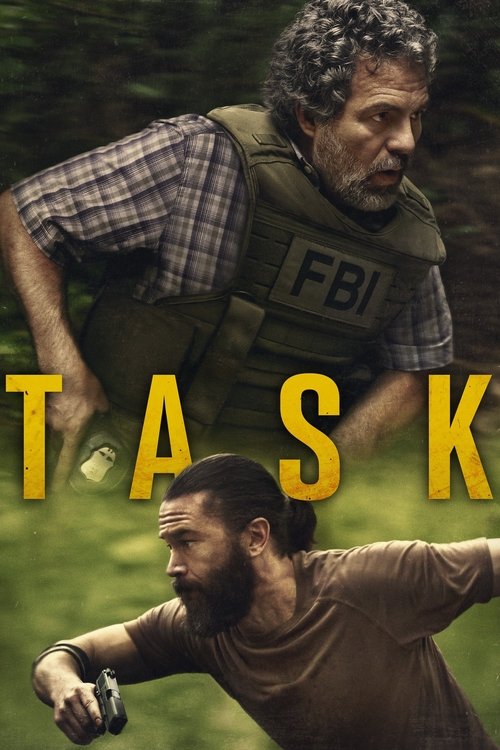






With 'Task,' we find ourselves navigating the dimly lit streets of Philadelphia, where the stark contrast between familial warmth and criminal undertow lays the groundwork for a tense narrative. At the center of this intricate tale is an FBI agent, portrayed with nuanced complexity by Mark Ruffalo, who heads a task force aimed at dismantling a series of violent robberies perpetrated by an unsuspecting family man. This duality—the seemingly mundane life of the family man contrasted with the violent criminal acts he orchestrates—creates a compelling tension that drives the series forward.
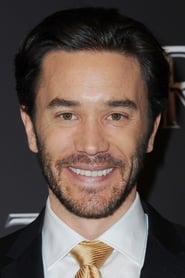
Ruffalo delivers a performance that is both evocative and relatable. His quiet intensity lends the character an air of authenticity that resonates deeply, showcasing a man torn between duty to the state and the moral implications tied to his job. Tom Pelphrey, playing the family man at the heart of this drama, complements Ruffalo wonderfully, bringing an unsettling charm that keeps viewers guessing about his true motives. Pelphrey’s ability to oscillate between vulnerability and menace is a key highlight, making the dynamic between the characters all the more electric.
One of the most interesting aspects of 'Task' is how it tackles moral ambiguity without offering simple resolutions. As the narrative unfolds, viewers are made to grapple with the ethical implications of law enforcement and their methods. The show does well to present the gray areas of justice, particularly in a post-modern landscape where black-and-white moral codes often fall short.
However, the execution is not without its flaws. While the series excels in character development and thematic exploration, the pacing occasionally falters. Some episodes drag, particularly in the middle of the season, where certain plot lines feel stretched, causing the viewer to lose momentum. This inconsistency in pacing detracts from the gripping moments often evident in the thrilling heist sequences. As tension builds towards the climax, the viewer may find themselves fidgeting, waiting for the narrative to resolve its slower arcs.
Visually, 'Task' excels in crafting a gritty realism that complements its heavy themes. The cinematography captures the essence of the working-class neighborhoods in Philadelphia, painting them both as places of community and desperation. The use of light and shadow effectively reflects the moral dilemmas faced by characters, elevating the storytelling to an almost poetic level. However, while the visuals are strong, the sound design lacks the same impact; moments that should feel heart-pounding instead fall flat, missing the auditory cues that could heighten tension.
The music, while beautifully composed, risks becoming forgettable in the background—a missed opportunity to punctuate dramatic moments. It often feels like it lacks the urgency that could have underscored the stakes at play, particularly during moments of confrontation or revelation.
Despite its shortcomings, 'Task' remains a riveting exploration of the complexities of crime, family, and the soul’s struggle for integrity amid chaos. It invites the audience to reflect not only on the characters’ choices but also on the larger implications of their actions. The moral quandaries presented linger long after the credits roll, making it a thought-provoking watch. However, it is precisely this heavy thematic weight that might not resonate with all viewers, especially those seeking a more straightforward narrative.
Ultimately, 'Task' stands as a strong contribution to the crime drama genre, marked by powerful performances and a commitment to exploring the gray areas of morality. It may falter in pacing and some technical aspects, but the rich performances and thematic depth certainly warrant attention. While it might not be universally appealing due to its uneven pacing, it still finds its footing as a noteworthy exploration of the intersection of crime and family, prompting viewers to examine their moral compasses in the process.