

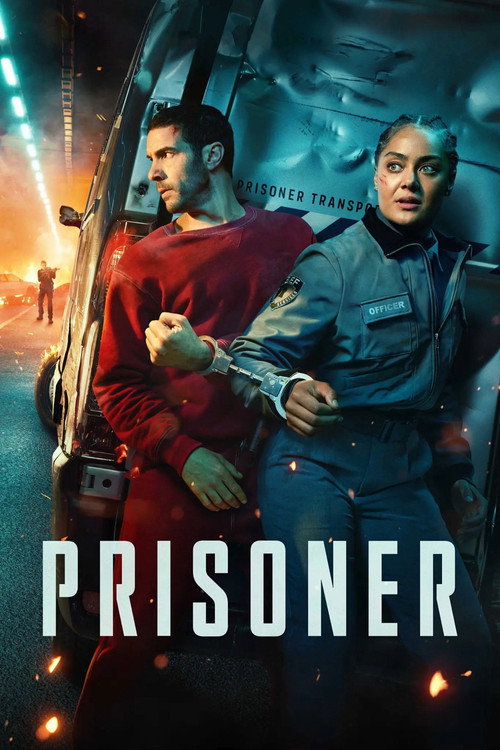





‘Prisoner’, which premiered on April 30, 2026, presents an intriguing premise that should feel fresh: a young and ambitious prison officer, caught in a web of crime and corruption, must grapple with her conflicting loyalties. This framework offers a rich ground for exploring themes of justice, morality, and personal growth. However, while the series attempts to engage with these complex ideas, it often betrays them with a plot riddled with implausibility and predictable twists that ultimately dilute its impact.
The strength of ‘Prisoner’ lies in the performances of its lead actors, Tahar Rahim and Izuka Hoyle. Rahim, portraying the conflicted criminal, brings a compelling depth to a character who oscillates between menace and vulnerability. Hoyle, in her role as the earnest prison officer, effectively embodies the tension of someone who must navigate an environment designed to strip away idealism. Their chemistry elevates several key scenes, particularly moments where unspoken bonds form amidst the chaos surrounding them. In these exchanges, the emotional stakes feel genuine, providing the viewer with glimpses of the moral dilemmas at play.
Despite these strong performances, the series suffers from a lack of originality in its narrative. The storyline often relies on familiar tropes from other crime dramas, with characters falling into archetypal roles that make them feel more like placeholders than fully-realized individuals. This predictability undermines the potential for suspense, leaving the audience to anticipate rather than engage with the unfolding drama. In scenes designed to be climactic or shocking, there’s a lingering sense that the audience has seen it all before, which diminishes the overall engagement.
Furthermore, some pivotal plot developments are executed in such a manner that they stretch credulity. Key motivations remain obscured or poorly articulated, which can be frustrating for viewers trying to invest in where these characters are headed. When a series is built around moral ambiguity, the stakes need to feel real, yet ‘Prisoner’ occasionally flouts this rule, undermining its otherwise engaging premise. The narrative fails at times to maintain a consistent tone, shifting between moments of gravitas and lighter, less serious exchanges, which can leave viewers disoriented.
Another area where ‘Prisoner’ stumbles is in its pacing. Episodes fluctuate between rapid-fire developments and drawn-out sequences that bog down the narrative momentum. This inconsistency can be jarring, detracting from the tighter storytelling that the premise demands. Key character arcs may feel rushed, particularly in their resolutions; a disservice to the complexity that the show initially promises.
Moreover, while the visual style of ‘Prisoner’ is competent, it lacks the artistic flair that could elevate its storytelling. The cinematography feels standard for a series set in a gritty environment, and while it does a serviceable job of immersing viewers in the prison setting, there’s little innovation in its construction. A stronger visual narrative could have accentuated the internal struggles faced by the characters, bringing an additional layer to the story.
Despite its flaws, it’s essential to acknowledge that ‘Prisoner’ offers moments of genuine tension and emotional resonance. The premise holds undeniable potential for a deeper exploration of the human condition in morally gray contexts. The interplay between the career ambitions of the protagonist and the ethical dilemmas that accompany them does create some poignant moments, though the resolution of these arcs often falls flat.
In an era filled with crime dramas rich in storytelling and character depth, ‘Prisoner’ aims high but often misses the target. The performances of Rahim and Hoyle anchor the series, providing glimmers of what it could have achieved if more time had been devoted to character development and narrative ingenuity. While some viewers may find the episodic challenges engaging, the overall execution leaves much to be desired, making ‘Prisoner’ a watch that might only resonate with fans of the genre rather than capturing a broader audience. Ultimately, this series stands as a reminder that, even with a promising setup, strong performances alone cannot compensate for a narrative that struggles to find its footing.