

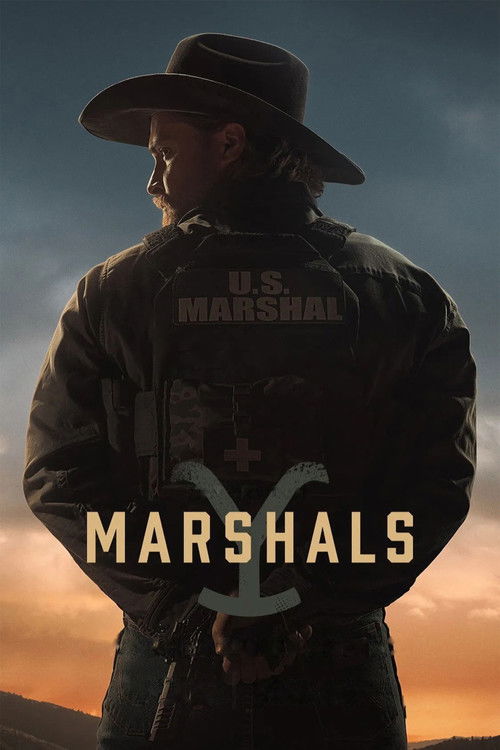








At its best, 'Marshals' offers a gritty examination of duty and family through the lens of Kayce Dutton, who transitions from a rancher’s life to an elite unit of U.S. Marshals. The show attempts to meld cowboy culture with the tense dynamics of modern law enforcement in Montana, creating a backdrop ripe with potential. However, while the premise suggests a thrilling exploration of ‘range justice,’ it falls short by not fully realizing that potential. The series often drifts into the familiar tropes of crime procedurals without offering the fresh twists needed to engage audiences beyond its established fan base from 'Yellowstone'.
One standout element of the series is the cast, particularly the performance by the lead, who embodies Kayce Dutton with an earnestness that makes his internal conflict palpable. Scenes that showcase his struggle between personal loyalties and professional duties shine, notably when tasked with making morally ambiguous decisions that pit his family against the law. Yet, these moments can feel overshadowed by derivative storytelling that edges toward predictability, failing to conjure the same riveting intensity fans might expect.
Visually, 'Marshals' has moments of genuine beauty. The cinematography captures the sweeping vistas of Montana, reinforcing the vast emotional landscape that mirrors Kayce’s internal battles. The action sequences are choreographed with a meticulous eye, delivering on the physicality expected from a series with Navy SEAL undertones. However, the editing often disrupts the narrative flow, giving way to pacing issues that can leave viewers scratching their heads. For instance, certain plot points appear disjointed, lacking the necessary build-up to evoke emotional resonance or tension.
The thematic ambition of the series is commendable, focusing on the psychological toll of service and the emotional burdens carried by those who protect their communities. Yet, many of its explorations often tread familiar territory without diving deeper into the characters’ motivations. For instance, secondary characters, while well-acted, are often underdeveloped, becoming mere placeholders in a broader arc rather than fully fleshed-out individuals with whom the audience can connect. This lack of depth leaves 'Marshals' feeling like a collection of impressive sequences rather than a cohesive narrative.
Moreover, the emotional stakes can feel diluted, especially given the high psychological costs teased in the premise. The show’s reliance on familiar plot structures detracts from its ability to weave a compelling narrative that resonates on more than a surface level. In a market increasingly filled with complex characters and innovative storytelling, 'Marshals' risks alienating those who are not die-hard fans of the 'Yellowstone' universe, as it provides insufficient context for newcomers to latch onto.
As the series progresses, the balance between duty, family, and justice hints at profound revelations but often settles into formulaic patterns that don’t fully engage. Although it offers bursts of creativity, it’s difficult to ignore how the formulaic approach undermines the potential for deeper storytelling. The dialogue occasionally flirts with depth yet often devolves into generic exchanges that lack impact, creating a dissonance between the show’s ambitious themes and its execution.
In conclusion, 'Marshals' attempts to meld the compelling ethos of 'Yellowstone' with the grit of law enforcement drama, but fails to carve out a distinct identity of its own. While there are certainly moments of strength, the uneven narrative, coupled with pacing issues and underdeveloped supporting characters, means the series ultimately struggles to justify its existence outside of its predecessor's shadow. Fans of the 'Yellowstone' franchise might find comfort in its familiar beats, but for those seeking innovation in storytelling, 'Marshals' may feel like an underwhelming follow-up.