

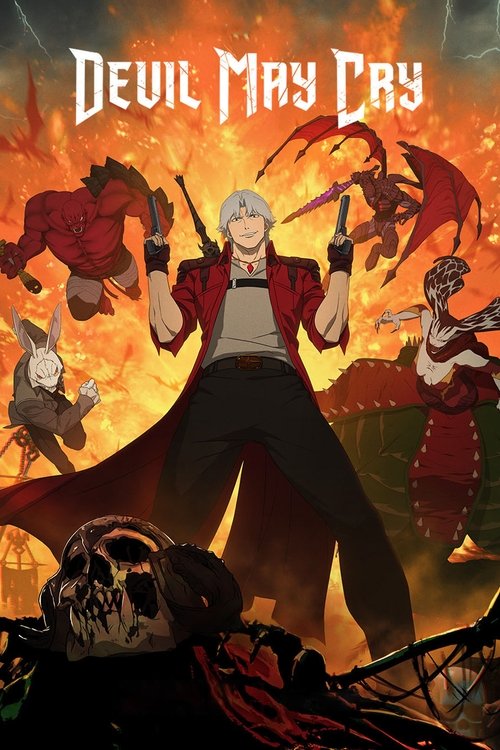







In the realm of video game adaptations, 'Devil May Cry' attempts a high-wire act but ultimately finds itself teetering between flair and substance. The series shines in its action sequences, truly capturing the visceral thrills of its gaming predecessor. Each fight scene is choreographed with a keen sense of dynamism, blending martial arts with supernatural powers, and often feels like a wild, cinematic ballet of bullets and blades. The visual style, marked by vibrant colors and slick effects, echoes the game's comic book roots, making it a feast for the eyes. However, beneath this glossy exterior lies a narrative struggle that diminishes the show's potential.
At the heart of the series is a devilishly charming protagonist, a demon hunter navigating a treacherous world where good and evil blur alarmingly. While this character has the charisma to carry the on-screen presence, the show too often leans on surface-level charm rather than allowing for genuine character exploration. The characters move through the plot more like avatars in a game than fully realized individuals, leading to a sense of disconnect with the audience. This issue is most pronounced in the supporting cast, who often feel like archetypes rather than authentic companions in the story.
The eight episodes of 'Devil May Cry' feature moments that are undeniably engaging but are frequently undercut by narrative choices that feel rushed or incomplete. The world-building lacks depth; audiences are fed snippets of lore that hint at a rich backstory yet fail to delve into it in any meaningful way. This results in scenes where the stakes feel insufficiently developed, leaving viewers craving emotional resonance that the action alone cannot satisfy. The adaptation does adhere to many of the original game's tonal elements, but it sometimes prioritizes style over substance, ultimately leaving its emotional arcs feeling thin.
Moreover, some die-hard fans of the series may find themselves at odds with the liberties taken. While adaptations often require certain deviations to fit a different medium, the changes made here can trigger dissatisfaction for those deeply invested in the original narrative. Key elements from the source material occasionally feel diluted or misrepresented, which may alienate a percentage of the fandom the show sought to engage.
Despite these criticisms, it's worth acknowledging that 'Devil May Cry' does achieve its objective of delivering exciting entertainment. The overall pacing, spanning 30 minutes per episode, keeps the action flowing efficiently, ensuring that there's rarely a dull moment. Additionally, the series taps into a release of adrenaline and escapism that action fans are likely to appreciate. There’s an unmistakable energy that runs through the episodes, even when the plot threatens to derail.
In terms of its technical execution, the craftsmanship behind the action is commendable, with high production values evident throughout. The cinematography captures the vibrant clashes between light and dark effectively, and the score complements the visual style, pulsating with the rhythm of the fight scenes. Yet, what could have been a truly exceptional experience remains curbed by its storytelling weaknesses.
In conclusion, while 'Devil May Cry' has the potential for a thrilling ride, it ultimately leaves viewers wanting more depth and connection, traits that could have elevated it to the status of a beloved adaptation. As it stands, it serves as a captivating visual showcase but one that struggles to craft a narrative as compelling as its aesthetic. Devil proportions shine on screen, yet they can't quite mask the hollowness beneath. Fans and newcomers alike might find reasons to enjoy its surface-level charms, but in the grand scheme of adaptations, it stands as a reminder that action alone does not make a riveting story.