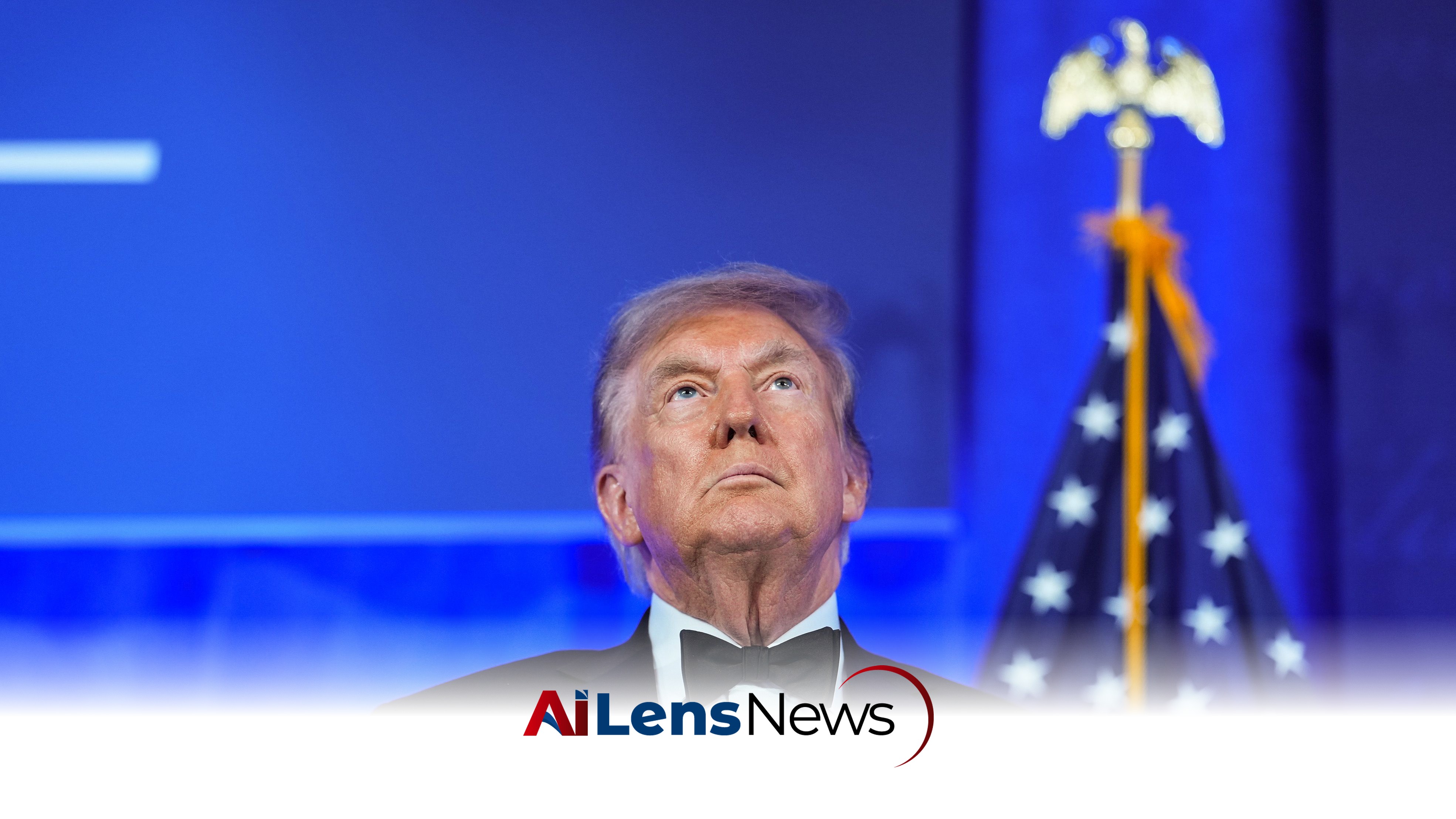


During his inaugural appearance at the White House Correspondents’ Dinner, Trump delivered a lengthy speech filled with pointed remarks aimed at journalists and politicians.
New Delhi, India Jul 25, 2026 ALN: President Donald Trump made headlines by attending his first-ever White House Correspondents’ Association Dinner, which took place on Friday evening in Washington, D.C. This rescheduled gala marked a significant moment in his presidency, as it was his first opportunity to address the media in such a formal setting. The dinner, an annual event that has been held since 1921, traditionally serves as a platform for journalists, politicians, and celebrities to come together in a spirit of camaraderie and humor. However, Trump's attendance was particularly noteworthy given his tumultuous relationship with the press.
In a speech that lasted just over an hour, Trump did not hold back. He delivered a series of pointed remarks directed at the gathered journalists, politicians, and celebrities. His comments were characterized by a mix of humor and sharp criticism, as he referred to the attendees as the "largest group of Trump Derangement Syndrome people ever put together at one time." This statement drew both laughter and gasps from the audience, illustrating the polarized reactions that often accompany Trump's public appearances. The term "Trump Derangement Syndrome" has been used by Trump and his supporters to describe what they perceive as an irrational hatred of the president and his policies by some members of the media and political opposition.
Despite the contentious nature of his comments, the event proceeded with a mix of humor and tension. Trump's presence at the dinner was notable, as he has often been critical of the media and their portrayal of his administration. His decision to attend the dinner was seen by some as a way to engage with the media on his own terms, while others viewed it as a provocative move that further entrenched the divide between the White House and the press corps.
The reactions to Trump's speech were mixed. Supporters praised him for his candidness and willingness to confront the media, viewing his remarks as a refreshing departure from the typical decorum expected at such events. Many of his backers see him as a champion of free speech, unafraid to speak his mind in front of a room full of critics. On the other hand, critics condemned his remarks as divisive and inappropriate for the occasion. The White House Correspondents’ Dinner has traditionally been a platform for humor and camaraderie among journalists and politicians, making Trump's approach a departure from the norm that many found unsettling.
In the wake of the dinner, political analysts noted that Trump's rhetoric further solidified the existing tensions between his administration and the media. This divide has implications not only for how the press covers the White House but also for how the public perceives both the media and the presidency. Trump's confrontational style has encouraged a more combative relationship with journalists, which some believe undermines the foundational principles of a free press in a democratic society.
The White House Correspondents’ Association Dinner has a long history of being a lighthearted affair, where journalists and politicians poke fun at each other while celebrating the role of the press in a democratic society. Past presidents have used the platform to showcase their sense of humor, often delivering self-deprecating jokes and light-hearted jabs at the media. However, Trump's approach diverged sharply from this tradition, reflecting the broader cultural and political battles that have come to define his presidency.
Trump's attendance at the dinner and his remarks can be seen as part of a larger narrative about the relationship between the presidency and the media. His administration has consistently framed the media as an adversary, which has led to a significant shift in how the public perceives journalists. The term "fake news" has become a rallying cry for Trump and his supporters, further polarizing the discourse around media coverage of politics. This adversarial stance raises questions about the implications for journalistic integrity and the public's trust in media institutions.
As the evening concluded, it was clear that Trump's attendance at the dinner would be remembered for its controversial nature and the stark divide it highlighted between the media and the current administration. The event, which has often been a celebration of the press's role in democracy, took on a different tone under Trump's leadership, reflecting the ongoing cultural and political battles that define his presidency.
In summary, Trump's first appearance at the White House Correspondents’ Dinner was marked by a lengthy, combative speech that underscored his ongoing conflict with the media and set the tone for future interactions between the White House and journalists. His remarks not only showcased his trademark style of mixing humor with criticism but also served as a reminder of the challenges that lie ahead in the relationship between the administration and the press. As the media landscape continues to evolve, the implications of Trump's rhetoric at such events will likely resonate far beyond the confines of the dinner, influencing public discourse and media practices in the years to come.
Moreover, the dinner's aftermath has prompted discussions among media professionals about the role of humor in political discourse. The ability to laugh at oneself is often seen as a hallmark of good leadership, and Trump's refusal to engage in self-deprecating humor during the dinner may reflect a broader reluctance to acknowledge any faults or missteps. This dynamic can create a more polarized environment, where dialogue becomes less about constructive criticism and more about winning battles in a partisan war.
In the coming years, as the political landscape continues to shift, the ramifications of Trump's approach to the media will likely be studied and debated. The relationship between the presidency and the press is a cornerstone of American democracy, and as such, it is crucial for both sides to navigate their interactions with care and respect. The White House Correspondents’ Dinner, once a symbol of unity and shared purpose, may require a reevaluation of its role in an increasingly divided political climate.
To learn more about the latest developments in Events & Award Shows, stay updated with our exclusive reports and analyses on AiLensNews.

