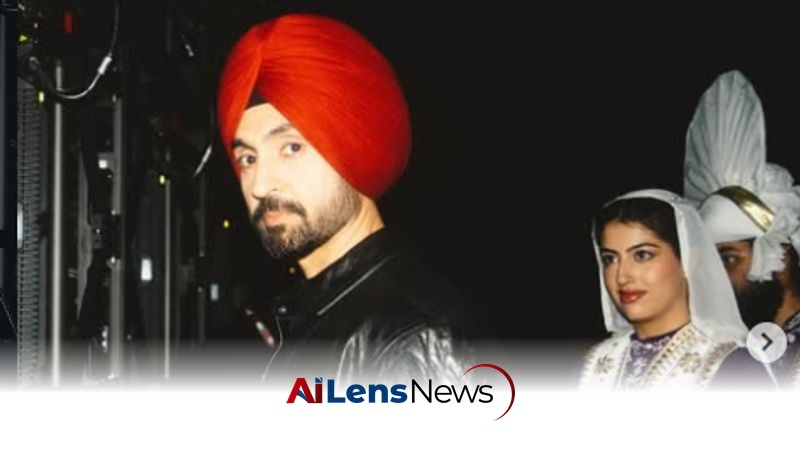


Diljit Dosanjh expresses solidarity with students protesting against the Citizenship Amendment Act, recalling past backlash for his activism.
Leh, India Jul 21, 2026 ALN: In a recent statement, popular singer and actor Diljit Dosanjh expressed his unwavering support for the students protesting against the Citizenship Amendment Act (CAA) and the National Register of Citizens (NRC). He emphasized the importance of standing up for justice, even in the face of potential backlash. This statement comes at a time when the CAA and NRC have sparked significant debate and controversy across India, with many citizens expressing concerns over their implications for secularism and social justice in the country.
The CAA, enacted in December 2019, provides a pathway to citizenship for non-Muslim refugees from neighboring countries, including Afghanistan, Bangladesh, and Pakistan, who entered India before December 31, 2014. Critics argue that this law undermines the secular fabric of the Indian Constitution by explicitly excluding Muslims, thereby creating a religious criterion for citizenship. The NRC, which seeks to identify and document all legal citizens of India, has raised fears among various communities, particularly Muslims, who worry about the potential for statelessness and discrimination. The combination of these two policies has led to widespread protests across the nation, with many citizens viewing them as an attack on the fundamental principles of equality and justice.
Dosanjh, who has previously faced criticism for his activism, particularly during the farmers' protests in 2020, reflected on the challenges that come with voicing dissent. He stated, "I know I’ll be called anti-national again, but I believe in standing up for what is right." His comments resonate with many who have faced similar challenges for speaking out against government policies. The farmers' protests, which saw thousands of farmers mobilizing against new agricultural laws, highlighted the struggles of rural communities and the need for equitable policies. Dosanjh's involvement in these protests positioned him as a prominent voice in the movement, leading to both support and backlash from various quarters of society.
The CJP protest, organized by the Citizens for Justice and Peace, aims to raise awareness about the perceived injustices of the CAA and NRC, which many argue discriminate against certain communities. This organization has been at the forefront of advocating for civil rights in India, challenging laws and policies that are seen as unjust. Dosanjh's support adds a significant voice to the ongoing discourse surrounding these contentious issues. His celebrity status amplifies the message of the protesters, bringing greater visibility to their cause and encouraging more individuals to engage in the conversation about citizenship, identity, and rights in India.
During the farmers' protests, Dosanjh faced legal issues and backlash for his outspoken stance, which has made him more cautious yet resolute in his current activism. He noted, "It’s important to remember that our voices matter, and we must continue to fight for justice, regardless of the consequences." This sentiment reflects a growing awareness among artists and public figures about the responsibilities that come with their platforms. In a country where dissent can sometimes lead to severe repercussions, many have chosen to remain silent; however, Dosanjh's commitment to social causes has endeared him to many fans, who appreciate his willingness to risk his career for the sake of justice. His actions serve as a reminder that artists can play a crucial role in shaping public opinion and advocating for change.
As the protests continue, Dosanjh's involvement highlights the intersection of art, activism, and social justice in contemporary India. His journey serves as a reminder of the power of celebrity influence in advocating for change. The role of artists in social movements is not new; throughout history, musicians, actors, and writers have used their platforms to challenge injustices and inspire collective action. In the context of India, where cultural narratives are often shaped by popular media, figures like Dosanjh can mobilize support and foster solidarity among diverse communities.
Moreover, the ongoing protests against the CAA and NRC have ignited a broader conversation about citizenship, identity, and belonging in India. Many citizens are grappling with the implications of these laws, questioning what it means to be an Indian in a rapidly changing socio-political landscape. The protests have also highlighted the voices of marginalized communities, who have long felt excluded from the national narrative. As more individuals, including influential figures like Dosanjh, lend their support to these movements, there is potential for a more inclusive dialogue about the future of the nation.
In conclusion, Diljit Dosanjh's support for the CJP protest underscores the ongoing struggle for justice and equality in India. His willingness to confront adversity for the sake of his beliefs resonates with many, inspiring a new generation of activists. As the discourse surrounding the CAA and NRC continues to evolve, the involvement of celebrities in social movements will likely remain a pivotal aspect of the fight for civil rights and social justice. The courage to speak out against perceived injustices, as demonstrated by Dosanjh, serves not only as a source of inspiration but also as a call to action for others to engage in the pursuit of a more equitable society.
To understand the full implications of Dosanjh's support, it is essential to consider the historical context of the CAA and NRC. The introduction of these laws has been viewed by many as a significant shift in India's approach to citizenship and national identity. Traditionally, India has prided itself on being a secular nation, where individuals are recognized for their citizenship irrespective of their religion. The CAA's exclusion of Muslims from its provisions has raised alarms about the potential erosion of this secularism, leading to fears of a divisive national identity based on religious lines.
Additionally, the NRC has sparked concerns over the bureaucratic processes involved in determining citizenship. Many fear that the implementation of the NRC could lead to widespread disenfranchisement, particularly among marginalized communities who may lack the necessary documentation to prove their citizenship. This situation has created an atmosphere of anxiety and uncertainty, with many individuals questioning their place within the nation. The protests against these laws have become a platform for diverse voices, uniting individuals from various backgrounds in a shared struggle for justice.
As artists like Dosanjh step forward to support these movements, they not only lend their voices but also their platforms to amplify the messages of those affected by these policies. The intersection of art and activism has the potential to foster greater empathy and understanding among the public, encouraging a more nuanced conversation about the complexities of identity and belonging in India. This engagement is crucial in a time when polarization and division threaten to undermine the fabric of society.
Furthermore, the role of social media in these protests cannot be overlooked. Platforms like Twitter, Instagram, and Facebook have enabled activists to share their messages widely, mobilizing support and fostering connections among individuals who may not have otherwise engaged with these issues. Dosanjh's involvement, particularly through his social media channels, allows him to reach a vast audience, encouraging dialogue and inspiring action among his followers.
In the broader context of Indian politics, the CAA and NRC have become emblematic of the current government's approach to governance and civil rights. The responses to these laws have revealed deep-seated divisions within society, with many citizens feeling that their rights are being threatened. The protests have become a vital space for individuals to express their dissent and advocate for a more just and equitable society.
As the struggle continues, the involvement of public figures like Diljit Dosanjh serves as a reminder of the importance of solidarity in the fight for justice. His willingness to stand up for marginalized communities and challenge oppressive policies resonates with many, inspiring a collective movement that seeks to uphold the values of equality and justice. The ongoing discourse surrounding the CAA and NRC will likely shape the future of citizenship and identity in India, making the role of artists and activists more crucial than ever in advocating for change.
To learn more about the latest developments in Events & Award Shows, stay updated with our exclusive reports and analyses on AiLensNews.

