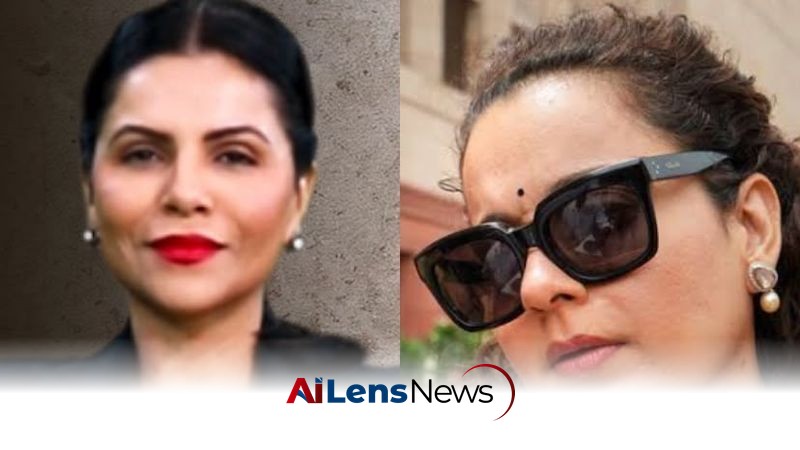


Journalist Preeti Choudhary's sharp response to Kangana Ranaut's comments on Gen Z women participating in protests has sparked widespread attention.
Chandigarh, India Jul 30, 2026 ALN: In a recent exchange that has captured public attention, senior journalist Preeti Choudhary delivered a pointed rebuttal to actress and BJP MP Kangana Ranaut. This confrontation arose after Ranaut made controversial remarks regarding young women who participated in student protests related to a paper leak issue. The incident has not only drawn attention to the specific comments made by Ranaut but has also sparked a wider debate about women's rights, activism, and the societal roles of public figures in India.
Ranaut's comments, which suggested that the protests were an expression of a desire for 'freedom to undress,' were met with significant backlash. Such remarks are particularly sensitive in the context of ongoing struggles for women's rights in India, where issues of sexual harassment, gender discrimination, and the right to education continue to be pressing concerns. Choudhary, known for her incisive commentary, took to social media to challenge Ranaut's views, emphasizing the importance of understanding the motivations behind the protests rather than trivializing them.
Choudhary's response resonated with many, as it highlighted the broader implications of Ranaut's statements. The journalist argued that such remarks undermine the serious issues at stake, including the right to education and the integrity of academic institutions. The protests in question were not merely about a paper leak; they represented a collective outcry against perceived injustices within the educational system, an area that has seen significant turmoil in recent years due to various scandals and administrative failures.
In India, student protests have historically been a powerful form of activism, often led by young people demanding accountability and change. The paper leak issue, which involved allegations of corruption and mismanagement, sparked widespread outrage among students and their supporters. Many viewed it as a betrayal of trust by the educational authorities, who are expected to uphold ethical standards and provide fair opportunities for all students.
Ranaut's comments can be seen as part of a larger trend where public figures often simplify or misinterpret complex social issues, which can lead to a misunderstanding of the motivations behind activism. This is particularly concerning in a country where women's rights are still a contentious topic. By framing the protests in a derogatory light, Ranaut risks undermining the serious discussions that need to take place regarding gender equality and the rights of young women in India.
The backlash against Ranaut's remarks has been significant, with many individuals and organizations coming forward to express their discontent. Social media platforms have become battlegrounds for this debate, with supporters of both Ranaut and Choudhary voicing their opinions. This incident serves to illustrate how social media can amplify voices and facilitate discussions around critical social issues, but it can also lead to polarization and conflict.
As the debate continues, it underscores the ongoing discourse around women's rights and representation in India. The incident has sparked conversations about how public figures address sensitive topics and the responsibility they hold in shaping public opinion. In a society where young women are increasingly vocal about their rights, the clash between Ranaut and Choudhary serves as a reminder of the challenges they face.
The dialogue surrounding this incident reflects a growing awareness and advocacy for women's issues, particularly in the context of activism and protest. Young women in India are increasingly asserting their rights and demanding a seat at the table in discussions that affect their lives. This shift in societal attitudes has been bolstered by various movements advocating for gender equality, such as the #MeToo movement, which has encouraged women to speak out against harassment and discrimination.
The implications of this incident extend beyond the immediate confrontation between Ranaut and Choudhary. It raises important questions about the role of celebrities and public figures in influencing societal norms and values. In a country where film stars often wield significant influence, their words can have far-reaching effects on public perception and discourse. Therefore, it is crucial for these individuals to approach sensitive topics with care and consideration.
Furthermore, the incident highlights the importance of media literacy and critical thinking among the public. As individuals consume news and commentary from various sources, it becomes essential to evaluate the motivations behind statements made by public figures. Understanding the context of activism and the complexities of social issues can empower individuals to engage in informed discussions and advocate for meaningful change.
As the story unfolds, it remains to be seen how both Ranaut and Choudhary will navigate the public's reaction and the implications of their statements on the ongoing conversation about gender and activism in India. The outcome of this confrontation may influence future discussions on women's rights and the representation of women in media and politics.
In conclusion, the exchange between Kangana Ranaut and Preeti Choudhary serves as a microcosm of the larger societal debates surrounding women's rights, activism, and the responsibilities of public figures. As India continues to grapple with these issues, it is vital for all stakeholders—be it activists, journalists, or the general public—to engage in constructive dialogue that fosters understanding and promotes equality. The incident also highlights the power of protest and the necessity of listening to the voices of young women who are demanding change in a rapidly evolving society.
The context of this incident is essential to understand the broader implications of Ranaut's remarks. India has witnessed a surge in student-led protests in recent years, driven by a combination of factors including educational reforms, corruption scandals, and the push for greater accountability from institutions. The youth, particularly women, have emerged as pivotal players in these movements, advocating for their rights and demanding systemic changes that address long-standing issues of inequality.
Moreover, the media landscape in India plays a crucial role in shaping public discourse. Journalists like Choudhary are not only tasked with reporting facts but also with interpreting events and providing critical analysis. Their responses to public figures' statements can influence public opinion and contribute to the broader narrative surrounding important social issues. In this case, Choudhary's rebuttal serves to remind the public of the need for thoughtful engagement with complex topics rather than sensationalism or reductionism.
Additionally, the conversation surrounding women's rights in India is evolving, with increasing recognition of intersectionality and the diverse experiences of women from different backgrounds. The protests sparked by the paper leak issue highlight the collective struggles faced by young women in the education system, where they often encounter systemic barriers that hinder their academic and professional aspirations. This incident, therefore, is not just about Ranaut and Choudhary; it is emblematic of a larger societal shift towards acknowledging and addressing the multifaceted nature of women's rights and activism.
As public discourse continues to unfold, it is imperative for both the media and public figures to engage responsibly with sensitive issues. The responsibility to foster an inclusive dialogue falls on all stakeholders, including celebrities, journalists, and the general public. By promoting understanding and empathy, society can move towards a more equitable future where the voices of young women are not only heard but also respected and valued in discussions that shape their lives.
In conclusion, the exchange between Kangana Ranaut and Preeti Choudhary serves as a microcosm of the larger societal debates surrounding women's rights, activism, and the responsibilities of public figures. As India continues to grapple with these issues, it is vital for all stakeholders—be it activists, journalists, or the general public—to engage in constructive dialogue that fosters understanding and promotes equality. The incident also highlights the power of protest and the necessity of listening to the voices of young women who are demanding change in a rapidly evolving society.
To learn more about the latest developments in TV Shows, stay updated with our exclusive reports and analyses on AiLensNews.

