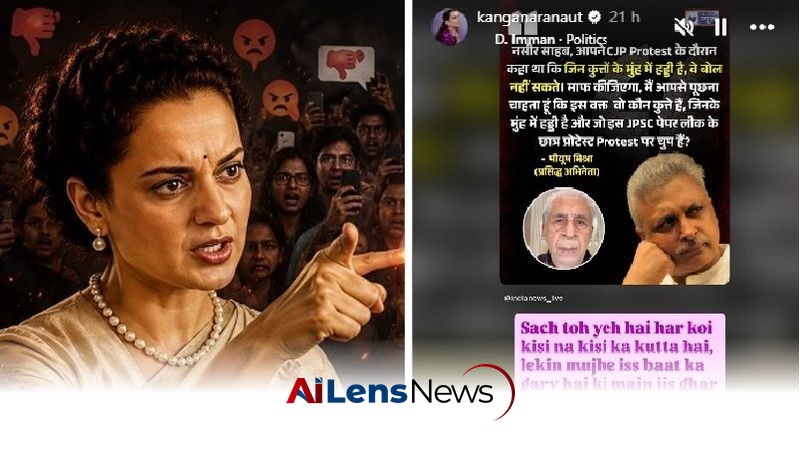


Kangana Ranaut and Piyush Mishra have publicly criticized Naseeruddin Shah for his silence regarding the ongoing protests in Jharkhand, highlighting the need for vocal support during social issues.
Chandigarh, India Aug 12, 2026 ALN: In a recent social media exchange, actress and BJP MP Kangana Ranaut took aim at veteran actor Naseeruddin Shah for his silence on the ongoing student protests in Jharkhand. This criticism was echoed by fellow actor Piyush Mishra, who questioned Shah's lack of commentary on the matter. The protests in Jharkhand have gained significant attention due to allegations surrounding a paper leak scandal affecting students, which has sparked widespread outrage and demands for reform.
The student protests in Jharkhand were ignited by claims of corruption within the state's educational system, specifically regarding the leak of examination papers that are crucial for students aspiring to secure government jobs. This scandal has raised serious questions about the integrity of the examination process and the fairness of opportunities available to students. As a result, many students and activists have taken to the streets, calling for accountability and transparency from the authorities. The protests have not only highlighted the immediate issues surrounding the paper leak but also broader systemic problems within the education sector in India.
Corruption in the educational system is a pressing issue in many parts of India, and the Jharkhand protests are emblematic of a larger struggle faced by students nationwide. Allegations of favoritism, bribery, and manipulation of exam results have plagued various state examinations, leading to a climate of distrust among students and their families. The paper leak scandal in Jharkhand, which reportedly involved the unauthorized distribution of exam papers prior to the tests, has intensified these concerns, prompting students to demand reforms to ensure a fair and transparent examination process.
Kangana's remarks came in response to a statement made by Mishra, who expressed disappointment over Shah's apparent indifference to the plight of the students. In her social media post, Kangana emphasized the importance of standing up for social justice, stating, "In today's time, it is essential for humans to be vocal about issues, rather than remain silent like a dog." This statement reflects a growing sentiment among many public figures who believe that silence in the face of injustice is complicity. The urgency of the protests has prompted many to call for solidarity among influential voices in the film industry and beyond.
This exchange has sparked a broader conversation about the responsibilities of public figures in addressing social issues. In an age where social media amplifies voices and enables rapid dissemination of information, many believe that celebrities have a platform that can influence public opinion and bring attention to pressing matters. There is a growing expectation that those with significant followings should leverage their influence to advocate for social change and support marginalized communities.
Naseeruddin Shah, known for his impactful performances and outspoken views on various topics, has faced criticism for not addressing the protests directly. His silence has been interpreted by some as a lack of empathy or awareness regarding the struggles faced by students in Jharkhand. Supporters of the protests argue that his silence undermines the seriousness of the situation and the struggles faced by the students. Shah's previous engagements in social commentary have led many to question why he has not yet spoken out regarding this particular issue.
The protests in Jharkhand are not an isolated incident but part of a larger pattern of student activism across India. Over recent years, student movements have emerged in response to various issues, including perceived injustices in educational policies, government policies affecting marginalized groups, and broader socio-political concerns. These movements have often been met with resistance from authorities, further fueling the desire for change among young people. The youth in India, particularly students, are increasingly aware of their rights and are willing to mobilize for change, reflecting a shift in the political landscape of the country.
As the protests continue, the dialogue surrounding the role of artists and public figures in activism remains crucial. The expectation for celebrities to lend their voices to social causes is growing, with many fans urging them to take a stand. Social media has played a significant role in this shift, allowing for more direct communication between fans and their idols. The pressure on public figures to respond to social issues can be seen as part of a larger cultural phenomenon where accountability and transparency are demanded from those in positions of influence.
Moreover, the implications of public figures' silence or vocal support extend beyond individual events. They can shape the narrative around social justice issues and influence public perception. In this context, Kangana Ranaut and Piyush Mishra's comments highlight the ongoing tension between public figures and their responsibilities towards societal issues. The expectation that artists and entertainers should engage with social issues has historical roots, as many have used their platforms to advocate for change. However, the dynamics of celebrity culture and activism are complex, and not all public figures are comfortable taking a stand.
In conclusion, the comments made by Kangana Ranaut and Piyush Mishra underscore the growing demand for accountability from public figures in the face of social injustice. As the situation in Jharkhand unfolds, the call for solidarity and support from influential voices in the industry becomes increasingly relevant. The ongoing protests serve as a reminder of the power of collective action and the importance of having diverse voices advocating for the rights of students and the integrity of the education system. The future of these protests and the responses from public figures like Naseeruddin Shah will likely continue to shape the conversation around activism and the responsibilities of those in the public eye.
As the protests gain momentum, it remains to be seen how the government and educational institutions will respond to the demands of the students. The outcome of these protests could have significant implications for the future of educational reforms in Jharkhand and potentially across India. The student community, galvanized by the events in Jharkhand, may continue to push for transparency and accountability, setting a precedent for future movements aimed at addressing systemic issues within the education sector.
In light of these developments, the role of public figures like Naseeruddin Shah will be closely watched by both supporters and critics alike. Whether or not he chooses to engage with the protests could influence the broader discourse surrounding celebrity activism and the expectations placed on those with significant public platforms. As the landscape of activism evolves, the intersection of art, politics, and social justice will continue to be a focal point of discussion in India and beyond.
To learn more about the latest developments in Events & Award Shows, stay updated with our exclusive reports and analyses on AiLensNews.

