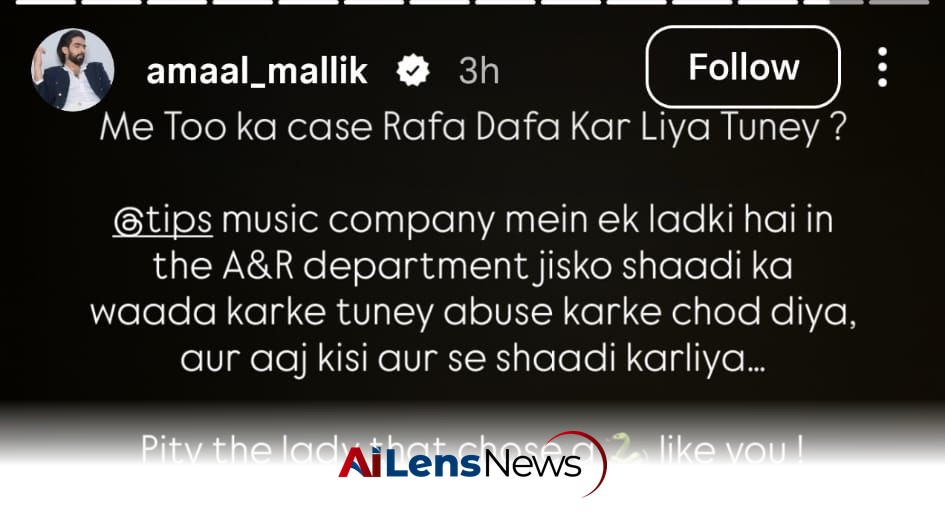


Composer Amaal Mallik has accused singer Tanishk Bagchi of misleading a woman with marriage promises and threatening him using political connections.
New Delhi, India Jul 24, 2026 ALN: Mumbai: The ongoing feud between composer Amaal Mallik and singer Tanishk Bagchi has taken a serious turn, with Amaal accusing Tanishk of not only plagiarizing music but also of misleading and abusing a woman by promising to marry her. This latest claim adds to the tension that has been brewing between the two artists in the Indian music industry.
Amaal Mallik, known for his work in Bollywood music, has been vocal about his grievances against Tanishk Bagchi, particularly accusing him of copying music and taking undue credit for the work of others. These accusations are not new, as the Indian music industry has seen its share of controversies related to originality and plagiarism. The issue of plagiarism in music is particularly contentious, as it raises questions about intellectual property rights, artistic integrity, and the creative process. Amaal's recent allegations, however, delve into more personal and serious territory, suggesting that Tanishk's actions may have caused emotional distress to an individual within their professional sphere.
In a recent Instagram post, Amaal claimed that Tanishk had made a marriage promise to a woman working in the A&R (Artists and Repertoire) department at Tips Music, only to later abandon her after allegedly abusing her. This revelation brings to light the often hidden personal dynamics that can exist within the music industry, where professional relationships can sometimes blur into personal ones. The music industry has a history of such dynamics, with power imbalances often leading to exploitative situations. Amaal's statement indicates that the woman in question is suffering from deep emotional distress, a situation that raises concerns about the treatment of women in the music industry.
Furthermore, Amaal alleged that he has been threatened in connection with these claims, specifically mentioning the name of Maharashtra Chief Minister Devendra Fadnavis. This accusation adds a layer of complexity to the situation, suggesting that there may be powerful influences at play. The invocation of a political figure in a personal dispute raises questions about the intersection of politics and the arts in India, and how such connections can impact the resolution of conflicts. In India, the relationship between political figures and artists can often lead to complicated dynamics, where support or opposition from political entities can significantly influence an artist's career.
In response to Amaal's allegations, Tanishk Bagchi took to social media to express his respect for Amaal as an artist, while also implying that he understood the emotional turmoil Amaal might be experiencing. His comment, "Brother, I know what you are going through, and I have a lot of respect for you as an artist. Get well soon," could be interpreted as an attempt to defuse the situation, or perhaps as a subtle dismissal of Amaal's claims. This kind of response is common in public disputes, where individuals may seek to maintain a semblance of professionalism while addressing accusations that could damage their reputation. However, Amaal's subsequent posts indicate that he feels strongly about the matter and is not willing to back down.
In his Instagram Stories, Amaal further escalated the situation by challenging Tanishk directly. He stated, "Me Too ka case Rafa Dafa Kar Liya Tuney?" which translates to questioning whether Tanishk managed to bury a Me Too case. This accusation is particularly serious, given the growing awareness and sensitivity surrounding issues of sexual harassment and abuse in various industries, including entertainment. The Me Too movement has had a profound impact on how allegations of misconduct are viewed and addressed, and Amaal's references to it suggest that he believes Tanishk's actions are part of a larger pattern of behavior that should not be overlooked. This kind of public challenge reflects the heightened scrutiny that individuals in the entertainment industry face regarding their treatment of colleagues, especially women.
Amaal continued to express his frustration, stating, "I’m not afraid when I’m not wrong…You wanna get dirty with me? Come at me?" This confrontational tone indicates that Amaal is prepared for a prolonged battle, whether legal or otherwise. He even went as far as to challenge Tanishk to meet him in court, suggesting that he is ready to take formal action if necessary. The use of such strong language underscores the seriousness of the allegations and the potential for a significant legal confrontation. Legal battles in the entertainment industry can be particularly complex, often involving issues of defamation, , and personal conduct, which can have lasting implications for all parties involved.
In another post, Amaal expressed his concern for the woman involved, stating that he would support her if she chose to come forward. This highlights the complexities of speaking out in situations of alleged abuse, where the victim may feel vulnerable or unsure about the repercussions of coming forward. Amaal's statement reflects a broader issue in society where victims of abuse often face significant barriers to speaking out, including fear of retaliation or disbelief. The cultural context in India, where social stigma can often discourage victims from coming forward, adds another layer of difficulty for individuals in similar situations.
On the professional front, Amaal Mallik has been busy with his music career, recently composing a recreated version of the song "Yeh Awarapan" for the upcoming film "Awarapan 2," featuring vocals by Arijit Singh. Despite the excitement surrounding the project, Amaal has claimed that there are "rival film industry elements" attempting to undermine his work through a "coordinated paid PR smear campaign." This assertion suggests that Amaal feels he is not only facing personal attacks from Tanishk but also professional ones from others within the industry, further complicating his position. The competitive nature of the Indian music industry can lead to such rivalries, where artists may feel threatened by each other's success, prompting them to engage in damaging tactics.
The implications of this feud extend beyond personal grievances, as it raises important questions about the treatment of women in the music industry, the role of power dynamics, and the impact of public perception on personal and professional relationships. The music industry in India, like many others, has been grappling with issues of accountability and transparency, particularly in light of the Me Too movement. Amaal's willingness to speak out against Tanishk may resonate with others who have faced similar situations, potentially encouraging more individuals to come forward with their own stories. The movement has empowered many to share their experiences, leading to a cultural shift in how such issues are addressed.
As this situation continues to unfold, it will be crucial to observe how the parties involved respond and whether any formal legal actions are pursued. The outcome may not only affect the individuals directly involved but could also have broader implications for the music industry as a whole, particularly in how it addresses issues of misconduct and supports those who come forward with allegations. In an industry that thrives on creativity and collaboration, the need for a safe and respectful environment for all artists remains paramount. The resolution of this dispute could set a precedent for how similar cases are handled in the future, influencing the culture of accountability within the industry.
In conclusion, the ongoing conflict between Amaal Mallik and Tanishk Bagchi highlights significant issues within the Indian music industry, particularly regarding the treatment of women and the dynamics of power and influence. As the situation develops, it will be essential for stakeholders in the industry to reflect on these issues and work towards fostering a more equitable and supportive environment for all artists, ensuring that personal grievances do not overshadow the collective responsibility to uphold ethical standards within the creative community.
To learn more about the latest developments in Events & Award Shows, stay updated with our exclusive reports and analyses on AiLensNews.

