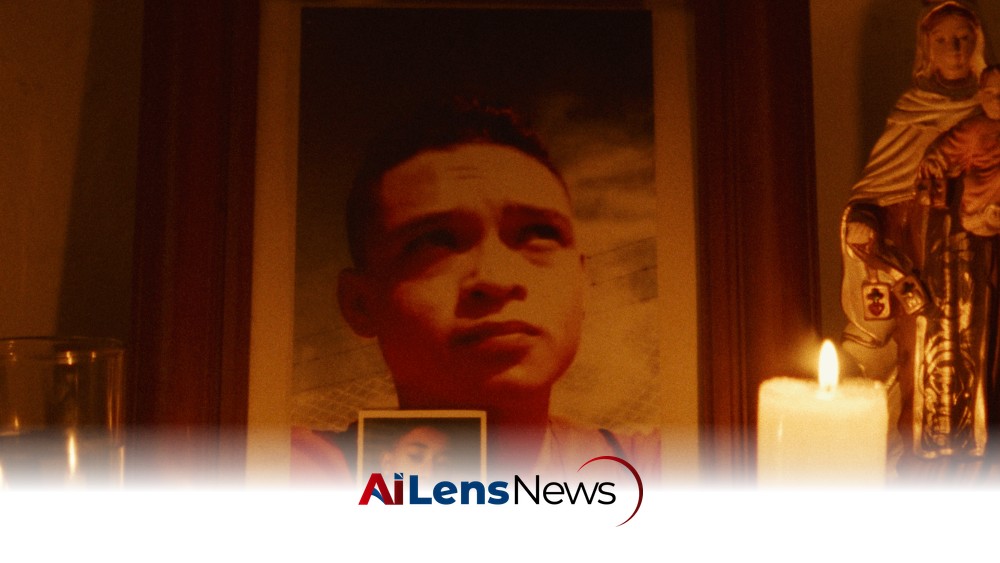


This poignant film explores the harrowing journey of a Colombian mother searching for her son, showcasing the emotional depth and tension of her experience.
New Delhi, India Jul 12, 2026 ALN: ‘Five Years, Four Months’ is the second feature film from the Colombian directing duo Juan Miguel Gelacio and Esteban Hoyos García. The film centers on Martha Baquero, a mother who embarks on a desperate search for her son, who was forcibly disappeared years ago. This narrative serves as a poignant exploration of grief, loss, and the relentless pursuit of answers in a society marked by violence and trauma.
The phenomenon of forced disappearances in Colombia is a tragic reality that has persisted since the mid-1960s. This period marks the onset of intense conflicts involving the Colombian government, various paramilitary groups, and guerrilla factions such as the FARC (Revolutionary Armed Forces of Colombia) and the ELN (National Liberation Army). The practice of forcibly disappearing individuals has been used as a tactic to instill fear, suppress dissent, and eliminate perceived threats. As a result, countless families have been left in a state of anguish, grappling with the absence of their loved ones. The emotional toll of these disappearances is particularly heavy on mothers, who often bear the brunt of the societal and psychological impact of such losses.
The film captures the essence of this pain, illustrating how the passage of time does not necessarily lead to healing. Instead, it often deepens the chasm between those who suffer loss and those who have not faced similar tragedies. The narrative emphasizes the isolation that accompanies grief, showcasing how the world continues to move forward while the bereaved remain trapped in their sorrow.
Gelacio and García employ a range of understated yet effective filmmaking techniques to create a profound sense of alienation throughout Martha's journey. The film premiered in the Crystal Globe competition at the Karlovy Vary International Film Festival, where it garnered attention for its emotional depth and compelling storytelling. The directors demonstrate an impressive command over cinema's emotional and visceral powers, engaging viewers in a narrative that is both harrowing and hopeful.
The film's aesthetic is grounded in realism, chronicling Martha's long and arduous bus journeys across Colombia as she searches for her son’s remains. These scenes, while seemingly mundane, serve to evoke the emotional landscape of her life, emphasizing the in-between moments that define her existence. The cinematography captures the stark contrasts of the Colombian landscape, juxtaposing the beauty of the scenery with the darkness of Martha's quest.
Martha's character is portrayed with a palpable sense of loneliness and detachment, which is further accentuated by the meticulous sound design. The ambient noises around her—such as the hum of bus engines, the chatter of fellow passengers, and the distant sounds of nature—create a backdrop that reflects her internal state of turmoil. As the tension builds throughout the film, it often borders on the horrific, as Martha navigates her haunting dreams and the harsh reality of her search for her son.
One of the film's most striking aspects is its largely wordless performance by actress Jenny Nava, who embodies Martha's complex emotions with remarkable subtlety. Her expression, often blank or distant, invites viewers to ponder her inner turmoil, raising questions about her unexpressed feelings and the depth of her grief. This silence speaks volumes, effectively conveying the weight of her sorrow and the emotional barriers she faces in her search for closure.
In her quest for solace, Martha joins a dance therapy class for grieving mothers, where she finds a community of support among those who share her pain. This group serves as a vital lifeline, offering a space for connection and understanding in the midst of overwhelming grief. However, even within this supportive environment, Martha's fixed expression reveals her struggle to accept the possibility of never finding answers about her son. The film poignantly captures her dual existence—putting on a brave face for others while grappling with profound sorrow in private.
As Martha embarks on a bizarre journey led by another mother who is also seeking her son, the tension shifts from ambient to acute. The narrative explores the risks involved in her search, raising questions about the nature of hope and desperation. This journey not only serves as a physical quest but also as a metaphorical exploration of the lengths to which a mother will go to find her child, highlighting the universal themes of love and loss.
The film culminates in a heart-wrenching scene where Martha finally speaks about her son, revealing the depth of her love and loss. This moment is powerful, as it encapsulates the emotional core of the film. The lush nature surrounding them vibrates with the essence of her son, emphasizing the connection between grief and the beauty of life. The climax serves as a reminder that while loss is an inescapable part of life, the love for those who are gone endures, shaping the identities of those left behind.
‘Five Years, Four Months’ is not just a personal story; it is a powerful exploration of loss, resilience, and the enduring hope for answers. Gelacio and García's film resonates deeply, inviting viewers to reflect on the experiences of those who continue to search for their loved ones amidst the shadows of violence and disappearance. The narrative compels audiences to confront the harsh realities faced by many families in Colombia, as well as the broader implications of forced disappearance on society as a whole.
In a world where such tragedies continue to unfold, ‘Five Years, Four Months’ serves as a poignant reminder of the need for justice and accountability. It underscores the importance of remembering those who have been lost and advocating for the rights of the families left behind. The film ultimately calls for a collective acknowledgment of the pain caused by violence and the necessity of finding ways to heal and move forward, both individually and as a society.
To learn more about the latest developments in Movies, stay updated with our exclusive reports and analyses on AiLensNews.

