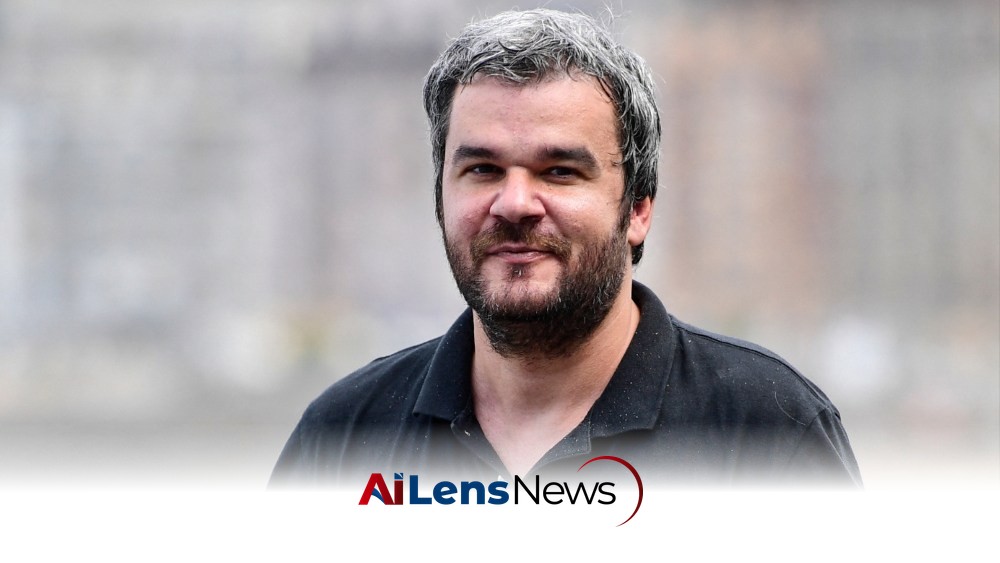


At the Karlovy Vary Film Festival, Christos Nikou shared insights on filmmaking, emphasizing the importance of finding one's voice and creating authentic cinema.
New Delhi, India Jul 12, 2026 ALN: At the Karlovy Vary Film Festival this week, a gathering of emerging talent took place as the ten participants of Future Frames, a program dedicated to young European directors, were joined by acclaimed Greek filmmaker Christos Nikou as their mentor. Nikou, who has garnered international attention for his films “Apples” and “Fingernails,” took the opportunity to share insights from his own artistic journey, emphasizing the critical importance for filmmakers to "find their voice" in an increasingly competitive and formulaic industry.
During his session, Nikou articulated a sentiment that resonates deeply within the filmmaking community: “The best compliment I have ever heard about the things I’m doing is that they have a very unique tone and identity.” This statement reflects not only his personal philosophy but also the broader struggle many filmmakers face in a landscape dominated by commercial imperatives. He noted, “It’s not what I’m trying to do, but it’s what somehow comes from my heart, my soul.” This connection between personal authenticity and creative expression is a recurring theme in Nikou's work and serves as a guiding principle for aspiring filmmakers.
Nikou posed a thought-provoking question to the young directors: “How can you find your voice?” He expressed concern that many filmmakers feel pressured to conform to the expectations of film funds and festival organizers, which can lead to a dilution of their unique perspectives. This observation highlights a significant tension in the film industry, where artistic integrity often clashes with commercial viability. He further elaborated, “I never call myself a director; I call myself a cinephile, and the reason why I’m doing this is because I love watching films.” This self-identification as a cinephile underscores Nikou's passion for cinema and his belief that a genuine love for film can inform and enhance one's storytelling ability.
Nikou, known for his voracious consumption of cinema, shared that he enjoys watching three movies a day. He noted that even if he is unaware of a film's director before viewing, he can often identify their unique style within the first five to ten minutes. This ability to discern directorial voices speaks to his acute sensitivity as a viewer and a creator. He remarked, “I love to discover really unique voices, and unique identities.” This quest for originality is not just personal; he sees it as a collective goal for filmmakers: “That’s our goal: to create unique voices.”
Reflecting on his own experiences, Nikou recounted the challenges he faced with his debut feature, “Apples,” which encountered significant hurdles during its development. Despite its eventual success, he revealed that the film had been rejected by various funds and festival workshops across multiple countries due to a misunderstanding of its tone. “It’s a movie that is subtle,” he explained. “They could understand the idea, but the tone, it’s very difficult to describe it in the script.” This experience illustrates the complexities of translating artistic vision into a form that is comprehensible to gatekeepers in the industry, and it serves as a cautionary tale for young filmmakers about the importance of persistence and clarity in their storytelling.
Nikou also shared his observations regarding the influences of popular filmmakers on the aspirations of young directors. He noted that while many emerging filmmakers cite icons like Martin Scorsese and Quentin Tarantino as their favorites, their pitches often resemble what he termed “poverty porn,” which he found “so, so, so boring.” This critique points to a broader issue within the industry, where certain narratives are perpetuated at the expense of more diverse and imaginative storytelling. He emphasized the need for filmmakers to explore narratives that resonate with their personal experiences and passions, stating, “We can tell more interesting stories. We can tell stories that are not only about what we see, but also about what we love.” This encouragement to draw from personal affinity rather than industry trends is a vital lesson for the next generation of filmmakers.
Interestingly, Nikou's path to becoming a filmmaker was unconventional; he did not attend film school and is largely self-taught. He cited his three favorite filmmakers, who also lacked formal training, as sources of inspiration. “My school was the movies that I was watching,” he said, illustrating how immersive viewing can serve as an educational experience. His eclectic taste in cinema ranges from the gritty realism of “The Killing of a Chinese Bookie” to the poetic storytelling of “The Lovers on the Bridge.” However, it was “The Truman Show” that ignited his desire to become a filmmaker. He described it as “the movie that I feel has the perfect balance between comedy and drama, and how you can make something that is conceptual but also really grounded.” This film’s influence on Nikou encapsulates his belief in the power of balancing emotional depth with narrative innovation.
As he reflected on the current state of cinema, Nikou lamented a perceived decline in originality over the past 15-20 years. He attributed this stagnation to the influence of executives who prioritize commercial success over artistic vision. “The reason is that all these stupid executives think that they know what they’re doing, but actually they have no idea, and they’re just trying to play it safe,” he remarked. This critique resonates with many filmmakers who feel constrained by industry norms and the pressure to produce commercially viable content. Nikou advocates for filmmakers to remain true to their artistic instincts, stating, “We don’t have to listen to them; we have to keep what we have in our heart, and that’s the most tricky thing.” This call to action urges filmmakers to embrace risk and innovation in their work, even in the face of industry pressures.
Nikou also emphasized the importance of audience engagement in filmmaking. He expressed a clear disdain for filmmakers who create works solely for their own gratification or for a niche audience. “I’m not a big fan of filmmakers who are doing stuff that is for them and their friends, and they are so self-centered,” he said. Instead, he believes that filmmakers should strive to connect with audiences, suggesting that creators must balance their personal vision with the expectations and experiences of viewers. “You have to have yourself as a filmmaker and yourself as audience, and to combine these two,” he advised, highlighting the duality of the creator's role.
In his quest for a more heartfelt approach to filmmaking, Nikou expressed a desire for what he terms “tender cinema.” He articulated a longing for films that resonate emotionally and come from a place of sincerity. “There are filmmakers that just want to challenge the audience and to feel very provocative, but to be honest, what I’m missing with cinema is tender cinema, and cinema that comes from the heart.” This yearning for tenderness in storytelling speaks to a broader cultural need for empathy and connection in a world often characterized by division and conflict.
Turning to his recent project, “Fingernails,” which was acquired by Apple TV, Nikou shared insights into the production process and the importance of creative control. He noted that he had final cut on “Fingernails,” a privilege he encouraged young filmmakers to advocate for. This level of creative autonomy is often hard-won in the industry, and Nikou's experience underscores the importance of asserting one's vision in the face of external pressures. He contrasted the budgetary constraints of “Apples,” which was produced for just $250,000, with the significantly larger budget of $10 million-$12 million for “Fingernails.” He acknowledged that while the financial resources in North America are substantial, they come with additional costs related to union regulations that can complicate production. This observation brings to light the varying landscapes of film production across different regions and the implications these differences have for filmmakers.
As Nikou navigates the transition from Greece to North America, he credited his management team, including manager Jerome Duboz and CAA as his agency, for facilitating this shift. He recognized that while he is not particularly fond of film awards, the financial support he received from accolades for “Apples” played a crucial role in allowing him to continue pursuing his passion for filmmaking. “I think that there is nothing more stupid than awards. It doesn’t make sense that we’re competing with each other in a way, because we all love films,” he stated. This perspective challenges the traditional view of awards as a measure of success, suggesting instead that the true value lies in the shared love for cinema among filmmakers.
In conclusion, Christos Nikou’s insights offer a refreshing perspective on the art of filmmaking, emphasizing the importance of authenticity, audience connection, and emotional depth. He encourages filmmakers to embrace their unique voices and to find joy in the journey of storytelling. As he aptly put it, true fulfillment comes from creating authentic and heartfelt cinema, a sentiment that resonates deeply in an era where the pressures of commercial success often overshadow the creative spirit. Through his work and mentorship, Nikou continues to inspire a new generation of filmmakers to pursue their passions with sincerity and courage.
To learn more about the latest developments in Movies, stay updated with our exclusive reports and analyses on AiLensNews.

