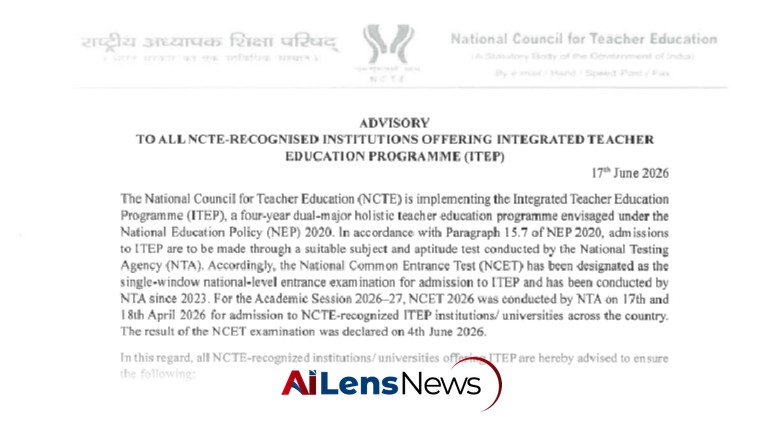


The NCTE has mandated that ITEP admissions for 2026-27 must be through NCET 2026, with unauthorized admissions facing penalties.
New Delhi, India Jul 6, 2026 ALN: The National Council for Teacher (NCTE) has taken a significant step in shaping the future of teacher in by issuing an advisory regarding the admissions process for the Integrated Teacher Programme (ITEP) for the academic year 2026-27. This advisory is particularly noteworthy as it mandates that all admissions for the ITEP must be conducted exclusively through the National Common Entrance Test (NCET) 2026. This directive aims to standardize the admission process across various al institutions, ensuring that only qualified candidates are selected for teacher training programs.
The NCET is a pivotal examination that assesses the aptitude and competency of aspiring teachers. The results for NCET 2026 were officially declared on June 4, 2026, setting the stage for the upcoming admissions cycle. The implementation of a common entrance test is intended to create a level playing field for candidates from diverse backgrounds and regions, allowing for a more equitable selection process. The NCTE's decision reflects a broader commitment to enhancing the quality of teacher in the country, which is crucial given the vital role teachers play in shaping the al landscape.
One of the primary reasons behind this advisory is the NCTE's ongoing efforts to streamline the admissions process. In recent years, the admissions landscape for teacher programs has been criticized for its lack of uniformity and transparency. By consolidating the admissions process under the NCET framework, the NCTE aims to mitigate issues of discrepancies and unfair practices that may have plagued previous admissions cycles. This move aligns with the National Policy (NEP) 2020, which emphasizes the importance of a robust and transparent admission process in fostering high standards in teacher .
Moreover, the advisory issued by the NCTE is accompanied by stern warnings for institutions that fail to comply with the new regulations. The Council has made it clear that any admissions conducted outside the established framework will be considered invalid. Institutions that disregard this directive may face serious consequences, including punitive actions from the NCTE. Such measures are intended to reinforce the importance of adhering to the guidelines set forth by the Council and to ensure that the integrity of the admissions process is maintained.
The implications of this advisory extend beyond just the admissions process. By ensuring that all prospective teachers undergo a standardized assessment, the NCTE is taking steps to enhance the overall quality of teacher in . The quality of teacher training programs directly impacts the effectiveness of teaching in schools, which in turn influences student learning outcomes. Therefore, by implementing a rigorous admissions process, the NCTE aims to cultivate a new generation of educators who are well-equipped to meet the challenges of modern classrooms.
Furthermore, this advisory is expected to have a ripple effect on the teacher institutions themselves. Institutions will need to prepare adequately for the upcoming admissions cycle, ensuring that they are aligned with the NCET framework. This may involve revisiting their admission policies, training staff to understand the new processes, and communicating effectively with prospective students about the changes. The NCTE's advisory serves as a reminder that institutions must prioritize compliance with national standards to maintain their credibility and reputation in the field of teacher .
The NCTE's directive also highlights the importance of collaboration between various stakeholders in the sector. By standardizing the admissions process, the NCTE is fostering a sense of unity among al institutions, policymakers, and educators. This collaborative approach is essential for addressing the challenges faced by the teacher system and for implementing reforms that can lead to meaningful improvements in teacher quality and student learning experiences.
In summary, the NCTE's advisory regarding ITEP admissions for the academic year 2026-27 is a critical development in the realm of teacher in . By mandating that all admissions be conducted through the NCET 2026, the NCTE is taking significant steps to enhance the quality and transparency of the admissions process. This initiative aligns with the broader goals outlined in the National Policy 2020 and underscores the importance of maintaining high standards in teacher training programs. Institutions are urged to take this advisory seriously and ensure that all admissions for the upcoming academic year are conducted in accordance with the guidelines set forth by the NCTE. The implications of this advisory are far-reaching, with the potential to positively influence the quality of in for years to come.
To understand the impact of this advisory, it is essential to consider the historical context of teacher in . The NCTE, established in 1995, was tasked with the responsibility of overseeing the regulation and proper functioning of the teacher system in the country. Since its inception, the NCTE has made numerous attempts to enhance the quality of teacher , but challenges such as inconsistent admission practices, varying curricula across institutions, and a lack of uniform standards have persisted.
With the introduction of the NCET, the NCTE aims to rectify these longstanding issues by providing a standardized assessment that all aspiring teachers must undertake. This move is not only about selecting candidates based on merit but also about ensuring that the teacher system is equipped to produce educators who can adapt to the evolving needs of the sector.
Moreover, the requirement for candidates to qualify through a common entrance test reflects a growing recognition of the need for accountability in teacher . In recent years, there has been a heightened focus on the performance of teachers and their impact on student outcomes. By establishing a common benchmark for admissions, the NCTE is signaling that teacher quality is paramount and that only those who meet the required standards should be entrusted with the responsibility of educating future generations.
As institutions prepare for this new admissions landscape, they will also need to consider the broader implications on their academic programs. The NCET not only serves as a gateway for admissions but may also influence the curriculum and pedagogical approaches adopted by teacher programs. Institutions may need to align their offerings with the competencies assessed in the NCET, ensuring that their graduates are not only successful in passing the entrance exam but are also equipped with the skills and knowledge necessary for effective teaching.
In addition, the advisory may lead to increased competition among teacher institutions. As they strive to attract the best candidates, institutions may innovate their programs, enhance faculty development, and improve their infrastructure to create a more conducive learning environment. This competition, if managed well, could lead to a significant uplift in the quality of teacher across the country.
In conclusion, the NCTE's advisory regarding ITEP admissions for the academic year 2026-27 represents a pivotal moment in the evolution of teacher in . By mandating a common entrance test, the NCTE is not only striving to ensure equity and transparency in the admissions process but is also laying the groundwork for a more robust and high-quality teacher system. The implications of this move are extensive, affecting not only the institutions and candidates involved but also the broader al landscape in , ultimately aiming to enhance the quality of for all students.
To learn more about the latest developments in Education News, stay updated with our exclusive reports and analyses on AiLensNews.

