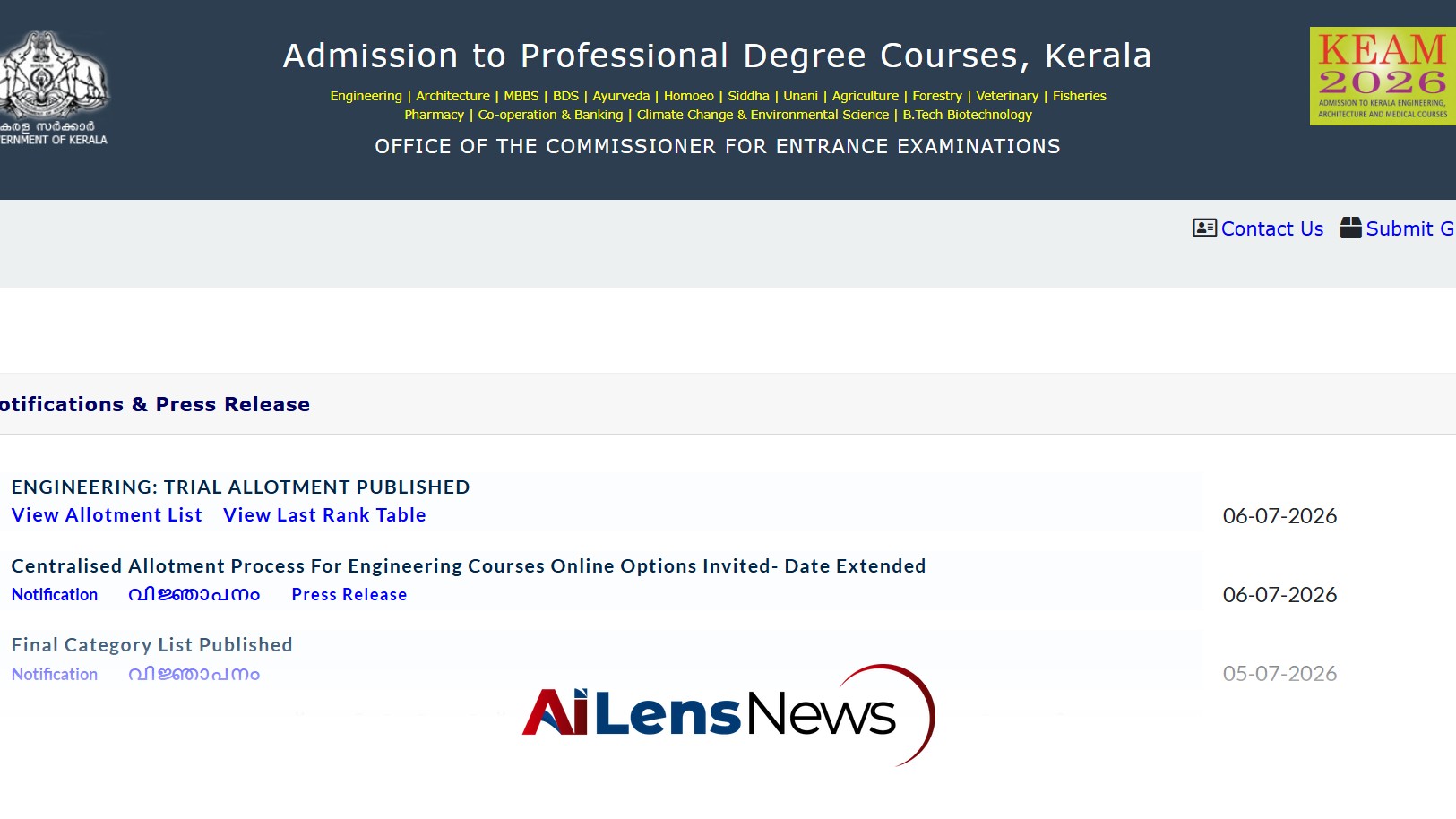


The Kerala Commissioner for Entrance Examinations has published the KEAM 2026 trial allotment result, allowing candidates to preview their college allocations.
New Delhi, India Jul 7, 2026 ALN: The Kerala Commissioner for Entrance Examinations (CEE) has officially released the KEAM 2026 trial allotment result, a significant development in the admission process for various professional courses in the state of Kerala. This announcement is particularly important for students who have participated in the Kerala Engineering Architecture Medical (KEAM) entrance examination, as it provides them with their provisional college and course allocations based on their submitted preferences.
The KEAM examination is a crucial entrance test for students aspiring to pursue undergraduate courses in engineering, architecture, and medical fields in Kerala. Conducted annually, the exam assesses candidates' knowledge in subjects such as Physics, Chemistry, and Mathematics. The results of this examination play a vital role in determining the future paths of thousands of students across the state. Given the competitive nature of these fields, the stakes are high, and students often invest significant time and resources in preparing for this examination.
The trial allotment is designed to give students a preview of their potential seat assignments, allowing them to evaluate their options before the final allotment takes place. This process is essential as it enables candidates to understand where they stand in terms of their preferred courses and institutions based on their performance in the entrance examination. The trial allotment is not a final decision but rather a guide that helps students make informed choices about their higher journey.
One of the key features of the trial allotment is the flexibility it offers students. Candidates are allowed to edit their preferences until July 7, 2026. This adjustment period is particularly beneficial for those who may wish to reconsider their choices based on the trial results. For instance, a student who was initially interested in a specific engineering branch may decide to opt for a different specialization or institution after reviewing the trial allotment results. This ability to refine their choices is crucial in helping students align their preferences with their academic strengths and career aspirations. The opportunity to reassess their options can also alleviate some of the anxiety that comes with making decisions about higher .
Furthermore, the admission process is structured in such a way that it provides multiple rounds of allotment. In addition to the trial allotment, the provisional Round 1 seat allotment will be announced on the same date, offering further clarity on the admission process. This systematic approach ensures that students have multiple opportunities to secure a seat in their desired program, thereby increasing their chances of admission into reputable institutions. The phased allotment process helps in managing the large number of applicants and allows institutions to better plan their intake based on the demand for various courses.
The implications of the trial allotment are significant for the students and the al institutions involved. For students, this is a moment of anticipation as they await the results that could shape their future. The trial allotment results can serve as a motivating factor for students to perform better in their studies and prepare for the next stages of the admission process. Additionally, it allows them to seek guidance from teachers, mentors, or al counselors to make well-informed decisions regarding their academic journey. Engaging with mentors can provide students with insights into the pros and cons of different courses and institutions, helping them to make choices that align with their long-term goals.
On the institutional side, the release of the trial allotment results plays a critical role in managing the admission process efficiently. al institutions can gauge the demand for various courses and make necessary adjustments to their offerings based on student preferences. This can lead to better resource allocation, ensuring that institutions are prepared to accommodate the needs of incoming students. Additionally, understanding student preferences can help institutions enhance their programs and facilities, ultimately improving the quality of they provide.
Moreover, the KEAM admission process is not just about securing a seat in a college; it is also about fostering a competitive environment that encourages students to excel. The trial allotment serves as a reminder of the importance of academic performance and the need for students to stay focused on their studies, particularly those who are still in the process of completing their higher secondary . The competitive nature of the KEAM examination encourages students to develop strong study habits and time management skills, which are essential for success in higher and beyond.
In summary, the KEAM 2026 trial allotment result marks a significant milestone for candidates, providing them with valuable insights into their potential college placements. It allows students to make informed decisions regarding their academic paths while also highlighting the importance of flexibility in the admission process. The opportunity to edit preferences until July 7, 2026, empowers students to take charge of their al futures and make choices that align with their aspirations. This flexibility can also lead to a more personalized al experience, as students can select programs that truly resonate with their interests and career goals.
As the final allotment date approaches, students are encouraged to stay updated on any announcements from the Kerala Commissioner for Entrance Examinations and to utilize the resources available to them, including guidance from al counselors and peer discussions. The trial allotment is just one step in a larger journey, and the decisions made during this time can have lasting effects on students' academic and professional trajectories. The choices made now could influence not only their immediate al experiences but also their long-term career paths, making it imperative for students to engage thoughtfully with the process.
To learn more about the latest developments in Entrance Exams, stay updated with our exclusive reports and analyses on AiLensNews.

