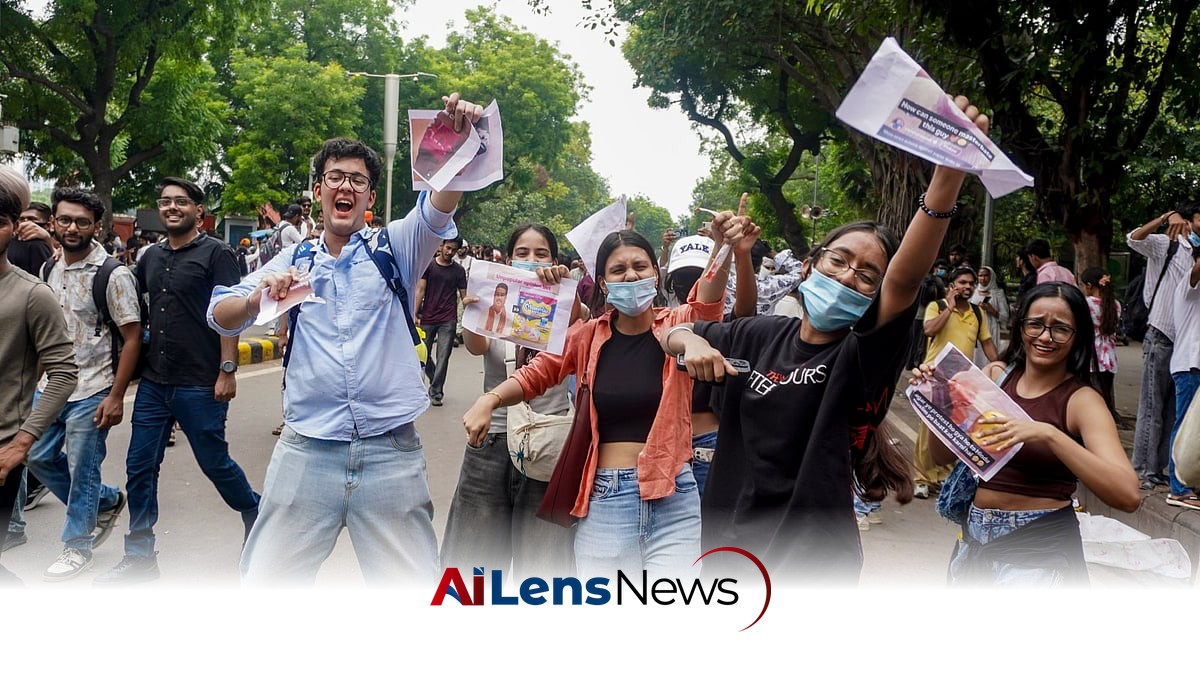


Following the resignation of Union Education Minister Dharmendra Pradhan over the NEET paper leak, student organizations vow to continue their protests until all demands are met.
New Delhi, India Jul 25, 2026 ALN: Student organisations cutting across party lines on Saturday celebrated the resignation of Union Education Minister Dharmendra Pradhan over the NEET paper leak, asserting that their protests would continue until their other demands are met. The ongoing protests have highlighted significant issues surrounding the National Eligibility cum Entrance Test (NEET), a crucial examination for students aspiring to enter medical colleges in India. The NEET paper leak has raised questions about the integrity of the examination process, leading to widespread unrest among students and educational activists.
Pradhan earlier announced that he was stepping down from his post to prevent “anti-national forces from exploiting it, preserving national unity, ensuring that not a single Indian student's future gets entangled in legal complexities.” His resignation was perceived as a response to the mounting pressure from student groups who have been vocal about their grievances regarding the NEET exam and the broader educational policies in place. The NEET paper leak incident has not only tarnished the credibility of the examination but has also fueled larger discussions about the quality and fairness of education in India.
Neha Bora, a PhD scholar at Jawaharlal Nehru University (JNU) and one of the three members of the All India Students' Association (AISA) who were on indefinite hunger strike along with activist Sonam Wangchuk, expressed her jubilation on X, saying, "Congratulations on the defeat." This statement encapsulates the sentiment among many students who feel that their persistent efforts have led to a significant political shift. The hunger strike, which aimed to draw attention to the students' demands, has been a focal point of the protests, symbolizing the desperation and determination of the student body.
However, many student organisations have made it clear that they would continue their movement until the National Testing Agency (NTA) is scrapped, and the National Education Policy (NEP), 2020, is withdrawn. The NTA, established to conduct entrance examinations for various higher education institutions, has faced criticism for its handling of the NEET exam and other assessments. Critics argue that the agency has not adequately addressed issues of transparency and fairness, leading to calls for its dissolution.
The National Education Policy (NEP), 2020, has also been a contentious topic among students and educators. While the policy aims to overhaul the Indian education system and promote holistic learning, many students believe that it does not adequately address the concerns of the current educational landscape, particularly regarding accessibility and quality. The protests have thus become a platform for students to voice their dissatisfaction not only with the NEET examination but also with the overarching educational framework that governs their academic journeys.
Activists of the Congress-affiliated student body, National Students' Union of India (NSUI), announced a "victory march" from the organisation's headquarters on Raisina Road to mark Pradhan's resignation. This march serves as a symbolic gesture of triumph for the students, showcasing their collective power and the impact of their activism. In a post on X, former national president of NSUI Varun Choudhary stated, "This is the victory of millions of Gen Z and young Indians who stood up against a failed Modi Government." His remarks highlight the political implications of the protests, as they reflect a broader discontent with the current administration's policies and governance.
Choudhary further emphasized that while Pradhan's resignation was a significant step, it was not the end of their struggle. He added, "Students want accountability for those who ordered and carried out the brutal crackdown on peaceful protesters." This call for accountability points to the police action that occurred during the protests, which many students and activists view as an infringement on their right to peaceful assembly and expression. The heavy-handed response from law enforcement has further galvanized the student movement, as they demand justice not only for the NEET paper leak but also for the treatment of protesters.
The Students' Federation of India (SFI) and the All India Students' Association (AISA) reiterated their commitment to continue their movement until the National Testing Agency (NTA) is scrapped, the National Education Policy (NEP), 2020, is withdrawn, and cases against protesters are dismissed. Their determination underscores the interconnectedness of various educational issues and the students' resolve to seek comprehensive reforms. The protests have become a rallying point for students across the nation, uniting various factions in a common cause.
The celebrations at the Cockroach Janata Party (CJP) protest site at Jantar Mantar, where founder Abhijeet Dipke announced Pradhan's resignation, were marked by loud cheers and a sense of unity among the demonstrators. Dipke referred to Pradhan's resignation as the first breakthrough in the outfit's 36-day agitation against the NEET paper leak, indicating that the struggle has been long and arduous. The protest, which began on June 20, intensified after police action against protesters on July 20, leading to increased support from various student groups and activists, including environmentalist Sonam Wangchuk, who undertook a prolonged hunger strike in solidarity with the movement.
The implications of this protest movement extend beyond the immediate resignation of a minister. It reflects a growing awareness among young people regarding the importance of their voices in shaping educational policies and governance. As students mobilize and express their discontent, they are not only advocating for their rights but also challenging the status quo of the educational system in India. This movement may inspire further activism among youth, potentially influencing future elections and policy decisions.
In conclusion, while the resignation of Union Education Minister Dharmendra Pradhan marks a significant moment in the ongoing protests surrounding the NEET paper leak and broader educational reforms, the student organisations remain steadfast in their demands. The movement has united students from various backgrounds and ideologies, emphasizing the need for accountability, transparency, and reforms in the Indian education system. As the protests continue, the outcome will likely have lasting effects on the political landscape and the future of education in India.
To learn more about the latest developments in Education News, stay updated with our exclusive reports and analyses on AiLensNews.

