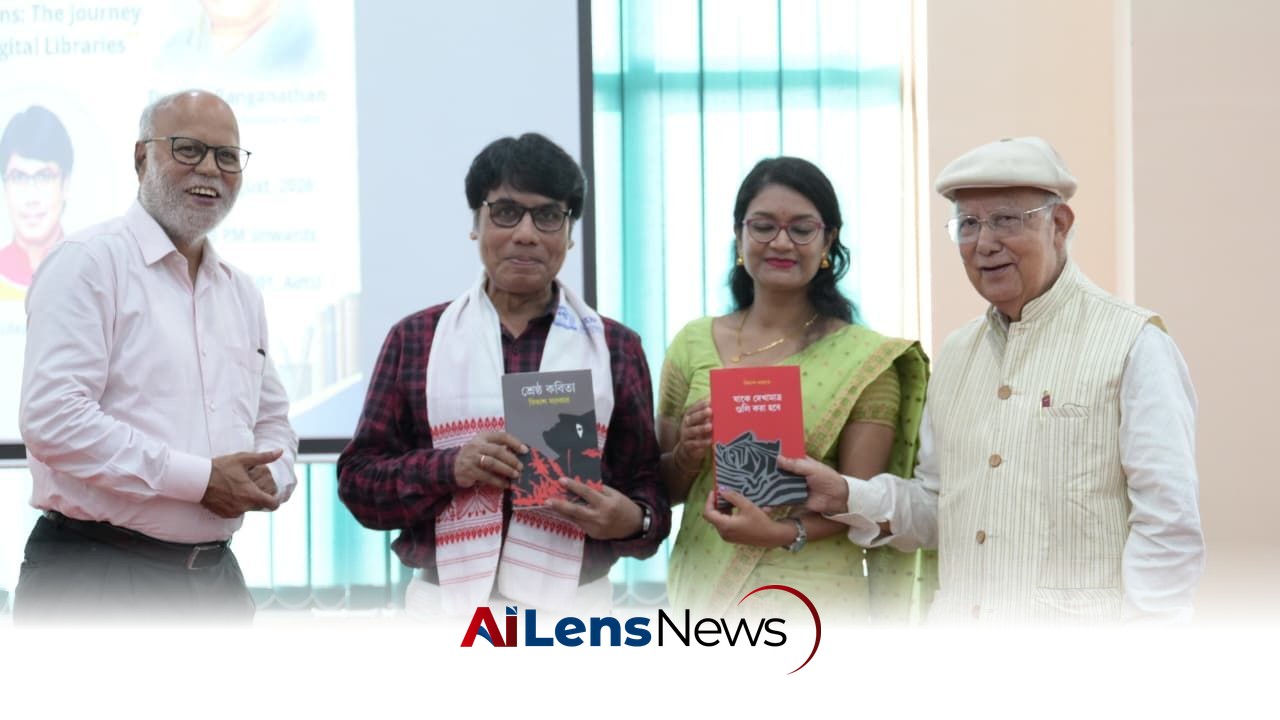


On National Librarians’ Day, Bikash Sarkar highlights the timeless significance of libraries amidst technological advancements, emphasizing their role in preserving knowledge.
Gangtok, India Aug 12, 2026 ALN: “Books are a driving force of human civilisation. With the advancement of technology, the world of books has also undergone significant changes. However, the essence of books and their appeal remain unchanged. Libraries have continued to play an important role in preserving this continuity. A library is a temple of books, and librarians are the custodians of that temple.” – Eminent writer and journalist Bikash Sarkar made these remarks while delivering the keynote address at a special programme organised at the Harinarayan Dattabaruah Central Library of Assam down town University, Guwahati, on the occasion of National Librarians’ Day.
National Librarians’ Day is celebrated annually in India on August 12, marking the birth anniversary of Dr. S. R. Ranganathan, who is widely regarded as the father of library science in the country. His contributions to the field have had a lasting impact on how libraries are structured, managed, and perceived. Ranganathan's Five Laws of Library Science serve as foundational principles for librarianship, emphasizing the importance of access to information and the role of libraries in society. The observance of this day serves not only to honor Ranganathan's legacy but also to promote awareness about the vital role libraries play in fostering education, research, and community engagement.
Dr. Ranganathan's influence extends beyond the confines of traditional library practices; he was a visionary who understood the evolving nature of information dissemination and the necessity for libraries to adapt accordingly. His Five Laws—1) Books are for use, 2) Every reader his book, 3) Every book its reader, 4) Save the time of the reader, and 5) The library is a growing organism—remain relevant as they encapsulate the essence of what libraries strive to achieve: accessibility, relevance, and growth in service to the community.
During the event, the University Librarian, Dr. Ruby Goswami, spoke about the life and contributions of Dr. S. R. Ranganathan. She elaborated on his pioneering work in the field of library science, which transformed libraries into more than just repositories of books; they became dynamic spaces for learning, collaboration, and community engagement. Ranganathan's vision of libraries as places that cater to the diverse needs of their users remains relevant today, as libraries increasingly adapt to the digital age while still maintaining their traditional functions. This adaptability is crucial as libraries face the challenge of competing with digital platforms that provide instant access to information.
The event also served to highlight the increasing importance of libraries in the digital era. With the rise of the internet and digital media, libraries have found themselves at a crossroads. They are tasked with not only preserving traditional media but also integrating new technologies to better serve their communities. This includes offering e-books, online databases, and virtual programming, which are essential for engaging users who may not visit physical locations. The shift towards digital services complements traditional library functions, ensuring that libraries continue to meet the needs of diverse populations.
At the beginning of the program, Vice Chancellor of the University, Dr. Narayan Chandra Talukdar, felicitated the keynote speaker, Bikash Sarkar. Talukdar's acknowledgment of Sarkar's contributions to literature and journalism underscored the importance of intellectual discourse in contemporary society. Sarkar's emphasis on the enduring essence of books in the face of technological advancement resonates with many educators and students who recognize the value of physical books and the experiences they provide. This sentiment reflects a broader societal trend where there is a growing appreciation for the tactile experience of reading a physical book, as opposed to the often impersonal nature of digital reading.
Addressing the students, University Chancellor Dr. Narendranath Dutta highlighted the importance and relevance of libraries in their academic and personal development. He urged students to utilize the resources available in libraries not only for academic pursuits but also for personal enrichment. Dutta's remarks reflect a growing recognition of the multifaceted role that libraries play in the lives of individuals, providing access to a wealth of information, fostering critical thinking, and promoting lifelong learning. This call to action is particularly significant in an age where information overload can lead to confusion and misinformation.
Dr. Santosh Mohan Upadhyay delivered the vote of thanks, expressing gratitude to all the participants and organizers of the event. His closing remarks encapsulated the spirit of the occasion, emphasizing the need for continued support for libraries and the professionals who manage them. The event also featured a cultural performance, with Saraswati Vandana performed by Brishti Mousam Kashyap, showcasing the intersection of culture and education that libraries often represent. Such cultural events are vital as they not only enrich the library experience but also reinforce the idea that libraries are community hubs that celebrate local heritage and knowledge.
The programme, organised in observance of National Librarians’ Day, highlighted once again the enduring importance of libraries in promoting reading habits and nurturing a culture of knowledge and learning. In an era characterized by rapid technological change, the role of libraries has evolved, but their fundamental mission remains unchanged: to provide access to information and to serve as community hubs for learning and engagement. This dual role is increasingly critical as societies grapple with issues related to misinformation and the digital divide.
The implications of this evolving role are far-reaching. As digital platforms increasingly dominate the landscape of information consumption, libraries are finding innovative ways to remain relevant. Many libraries are not only expanding their digital collections but are also offering workshops and programs that teach digital literacy skills. This educational role is crucial, especially in a time when misinformation can spread rapidly through social media and other digital channels. Librarians are becoming educators in their own right, guiding users in how to navigate the complexities of the information age.
The celebration of National Librarians’ Day serves as a reminder of the critical role that libraries and librarians play in society. They are champions of knowledge, advocates for literacy, and facilitators of community engagement. The event at Assam down town University is a testament to the ongoing commitment to uphold the values that Ranganathan espoused and to adapt them to the challenges and opportunities of the modern world. The commitment to libraries is not merely a nod to tradition but a recognition of their vital role in shaping informed and engaged citizens.
In conclusion, as we reflect on the significance of libraries and the contributions of librarians, it is essential to recognize the ongoing need for support and investment in these institutions. Libraries are more than just buildings filled with books; they are vital community resources that foster education, promote literacy, and enhance the quality of life for individuals and communities alike. The observance of National Librarians’ Day not only honors the legacy of Dr. S. R. Ranganathan but also reaffirms our collective commitment to ensuring that libraries continue to thrive in the years to come. As we move forward, it is imperative that we advocate for the necessary resources and policies that will allow libraries to adapt and flourish in an ever-changing world.
To learn more about the latest developments in Education News, stay updated with our exclusive reports and analyses on AiLensNews.

