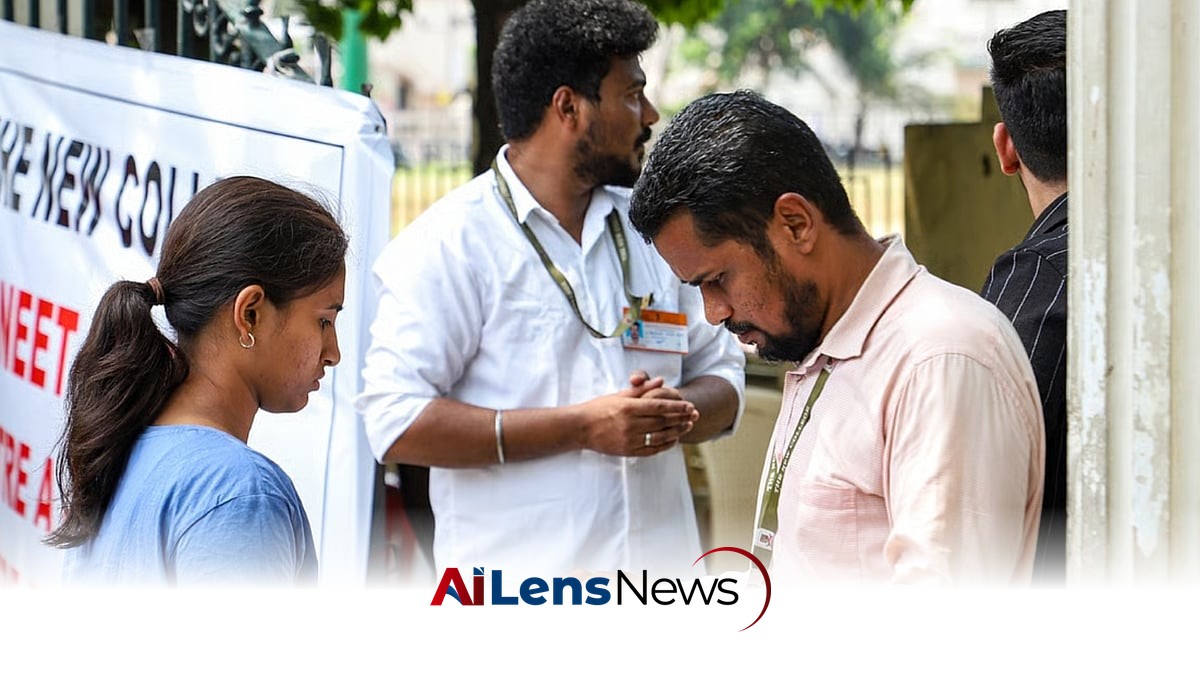


Aryan Gupta and Panshul Bansal emerge as top scorers in NEET-UG, with over 11 lakh candidates qualifying for medical admissions this year.
New Delhi, India Jul 16, 2026 ALN: Punjab's Aryan Gupta and Haryana's Panshul Bansal topped the NEET-UG for medical admissions with 11.21 lakh candidates qualifying the entrance exam this year, the National Testing Agency announced on Thursday.
While Gupta and Bansal scored 715 each out of 720, 19 candidates scored 700 and 138 obtained 690 marks. A total of 1,492 candidates scored 650 or above, while 10,160 candidates scored 600 or more, according to the National Testing Agency (NTA). The NEET-UG, or National Eligibility cum Entrance Test for Undergraduates, is a pivotal examination for aspiring medical students in India, determining their eligibility for admission into various medical colleges across the nation.
In a notable trend, more than 58 percent of the qualifying candidates this year are women, reflecting a growing interest among female students in pursuing careers in medicine and healthcare. This statistic is particularly significant in the context of gender representation in professional fields that have traditionally been male-dominated. The increasing number of women qualifying for NEET-UG may indicate broader societal changes in attitudes towards women's education and career choices, as well as the impact of various governmental and non-governmental initiatives aimed at empowering women in education.
The crucial exam was originally conducted on May 9 but faced significant controversy when it was cancelled just days later, on May 12, amid allegations of a paper leak. This incident raised serious concerns regarding the integrity of the examination process, prompting an investigation by the Central Bureau of Investigation (CBI). Such allegations not only undermine public trust in the examination system but also affect the candidates who had prepared extensively for the test. The exam was re-conducted on June 21, allowing candidates another opportunity to demonstrate their knowledge and skills.
Last year, the results were announced on June 25, and amidst concerns about potential delays due to the re-examination, the NTA assured stakeholders that the results would be declared on schedule. The agency emphasized that the results were processed efficiently through a re-engineering of their operational processes, which allowed for parallel processing of various stages rather than a sequential approach. This innovative method included the de-linking of the OMR sheet challenge from the release of the answer key, ensuring transparency and efficiency in the evaluation process.
The NEET-UG is recognized as the largest undergraduate entrance exam in India, with nearly 25 lakh candidates appearing for this critical test each year. The sheer scale of the examination underscores the intense competition among students vying for limited seats in medical colleges. The NTA conducts NEET every year for admission into medical colleges, with a total of 1,08,000 seats available for the MBBS course. Of these, approximately 56,000 seats are in government hospitals and about 52,000 are in private colleges. This distribution highlights the ongoing challenge of access to quality medical education, particularly in government institutions, which are often preferred due to their lower tuition fees compared to private colleges.
In addition to MBBS, NEET results are also utilized for admissions into undergraduate courses in dentistry, Ayurveda, Unani, and Siddha, thereby catering to a wide range of medical and health-related fields. This broad applicability of the NEET-UG results illustrates the exam's critical role in shaping the future of healthcare professionals in India. The diverse range of courses available through NEET reflects the multifaceted nature of healthcare, which encompasses various disciplines and specialties.
In response to the recent controversies surrounding the examination process, the Centre has announced a significant shift in how the NEET-UG will be conducted in the future. The exam will now transition to a computer-based test (CBT) format, moving away from the traditional pen-and-paper mode. This decision is likely influenced by the growing adoption of technology in education and assessment, as well as the need to enhance security and reduce the risk of malpractice associated with physical exam papers. Detailed deliberations have been ongoing for several years between the education and health ministries regarding the mode of conducting NEET-UG, reflecting the complexities involved in standardizing such a high-stakes examination.
The implications of these changes are profound. Moving to a computer-based format could streamline the examination process, making it more efficient and secure, while also potentially accommodating a larger number of candidates. However, it also raises questions about the readiness of all candidates to adapt to this new format, particularly those from rural or underprivileged backgrounds who may have less access to technology. The shift to a CBT format may necessitate additional training and resources to ensure that all candidates can compete on an equal footing. This transition could also lead to the development of new preparatory materials and resources tailored to the CBT format, further influencing how students approach their studies.
As the NEET-UG continues to evolve, it remains a focal point of discussion among educators, policymakers, and students alike. The examination not only influences the academic trajectories of millions of aspiring healthcare professionals but also has broader implications for the healthcare system in India as it strives to meet the growing demands of its population. Ensuring a fair, transparent, and efficient examination process is crucial in maintaining the integrity of medical education and, by extension, the quality of healthcare services provided to the public. Stakeholders must remain engaged in dialogues about the examination process, seeking to address concerns and adapt to changing educational landscapes.
In conclusion, the results of the NEET-UG this year, marked by the impressive performances of Aryan Gupta and Panshul Bansal, highlight both the challenges and opportunities within the Indian education system. The increasing representation of women among the qualifiers signifies a positive shift towards inclusivity in the medical field. As the landscape of medical education continues to change, stakeholders must remain vigilant in addressing issues of accessibility, equity, and integrity to foster a robust and capable healthcare workforce for the future. This ongoing evolution of NEET-UG not only shapes the future of individual students but also plays a critical role in the broader context of India's healthcare infrastructure and societal progress.
To learn more about the latest developments in Education News, stay updated with our exclusive reports and analyses on AiLensNews.

