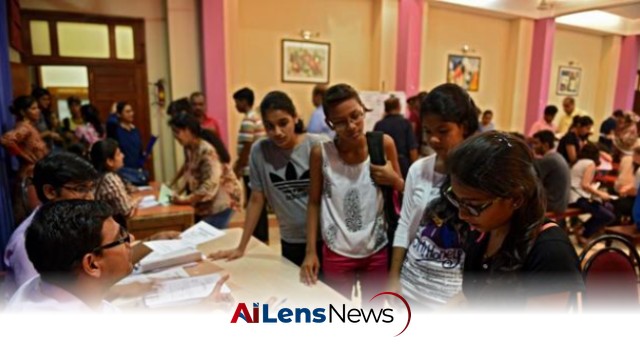


The Odisha Higher Education Department has announced the second merit list for undergraduate admissions, selecting 41,578 students for the academic session 2026-27.
Bhubaneswar, India Jul 20, 2026 ALN: Bhubaneswar: The Odisha Higher Education Department on Monday released the second selection merit list for admission to Undergraduate (+3 Degree) courses for the academic session 2026-27. This announcement is significant for students seeking higher education in the state, as it marks an important milestone in the admission process for various degree programs.
The release of the second merit list is part of a multi-phase admission process designed to accommodate a large number of applicants and ensure that students have ample opportunities to secure a place in their desired courses. According to the list published by the department, a total of 41,578 students have been selected in the second round of Phase-I admissions. This figure reflects the ongoing demand for undergraduate education in Odisha, which has been steadily increasing over the years.
As per the data provided by the Odisha Higher Education Department, there are a total of 2,87,519 seats available across higher education institutions in the state. This includes a variety of colleges and universities that offer diverse programs in arts, science, commerce, law, and other fields. The substantial number of applicants—2,37,200 students during the Phase-I admissions—indicates a competitive environment for securing a seat in undergraduate courses. This growing interest in higher education can be attributed to various factors, including a rising awareness of the importance of education in improving career prospects and socio-economic conditions.
In the first round of selection, which occurred prior to the release of the second merit list, 1,78,782 students were shortlisted. Out of these, 88,480 students completed their admissions, while 48,614 students opted for the Slide/Float option, allowing them to be considered for subsequent rounds of admissions. This option is particularly beneficial for students who may not have received their first-choice institutions or courses, as it provides them with additional chances to secure a spot in a program that aligns with their academic goals. The Slide/Float option reflects the department's commitment to ensuring that students have multiple pathways to access higher education, thereby reducing the pressure associated with a single admission cycle.
The demographic breakdown of the students selected in the second round reveals some interesting insights. Out of the 41,578 students selected, 23,839 are female candidates, 17,737 are male candidates, and two are transgender candidates. This data underscores the growing participation of women in higher education in Odisha, reflecting broader societal changes regarding gender equality in education. The increasing number of female students entering higher education is a positive trend, indicating shifts in cultural attitudes towards women's education and empowerment. It also aligns with national policies aimed at enhancing female literacy and educational attainment.
Ravenshaw University, located in Cuttack, continued to dominate the cut-off chart across major streams, reinforcing its reputation as one of the leading educational institutions in the state. In the Arts stream, the highest cut-off was recorded at an impressive 99.67% in Economics at Ravenshaw University. Such high cut-offs indicate the university's rigorous academic standards and the competitive nature of its programs. The high cut-off percentages not only reflect the quality of education provided by the university but also the aspirations of students aiming for prestigious institutions.
In the Science stream, Ravenshaw University recorded the highest cut-offs in both categories — 96.17% for Physics under Physical Science and 94.33% for Botany under Biological Science. The university also topped the Commerce stream with a cut-off of 93.67%. These statistics highlight the institution's strength in various academic disciplines and its ability to attract high-achieving students. The competition for these programs is indicative of the growing importance placed on scientific and commercial education in today’s job market, where technical and analytical skills are increasingly in demand.
Among self-financing courses, Buxi Jagabandhu Bidyadhar (Autonomous) College in Bhubaneswar recorded the highest cut-off of 92% in Computer Science, reflecting the growing interest in technology-related fields. In the Law stream, Madhusudan Law University in Cuttack registered the highest cut-off of 88.83% for the five-year integrated B.A. LL.B course, indicating the competitive nature of legal studies in the state. The rising cut-offs in these fields also suggest a shift in student preferences, as more individuals recognize the potential for lucrative careers in technology and law.
Stream-wise, the distribution of selected students in the second round shows that the highest number of candidates belonged to the Arts stream, with 23,815 candidates selected. This is followed by the Science stream with 13,331 candidates, Commerce with 2,915 selections, and self-financing courses with 1,168 students. Additionally, 286 students were selected in Shastri courses, while 63 students secured admission in Law courses. The preference for the Arts stream may reflect the cultural and educational trends in Odisha, where many students pursue humanities and social sciences. This trend can also be linked to the state's rich cultural heritage and the importance placed on arts and literature in local education systems.
Following the release of the second merit list, the department has advised students who have opted for the Freeze option to report to their allotted higher education institutions between July 21 (10 am) and July 23 (5 pm) to complete admission formalities. This step is crucial for students to secure their places and begin their academic journey in higher education. The adherence to deadlines is essential in maintaining the integrity of the admission process, ensuring that institutions can manage enrollment effectively and provide adequate resources for incoming students.
The admission process in Odisha is structured to ensure transparency and fairness, providing students with clear guidelines and timelines. The phased approach allows for a more organized admission process, helping both institutions and students manage the large volume of applications effectively. As the academic session approaches, it is essential for students to adhere to the deadlines and requirements set by the Odisha Higher Education Department. This structured approach not only benefits students but also allows educational institutions to prepare adequately for the incoming cohort, ensuring a smooth transition for new students.
Overall, the release of the second merit list for undergraduate admissions in Odisha marks a significant development in the state's higher education landscape. With a growing number of applicants and a wide array of available courses, the educational institutions in Odisha are poised to play a crucial role in shaping the future of its youth. The competition for seats in prestigious universities like Ravenshaw University highlights the importance of academic excellence and the need for students to be well-prepared for their higher education pursuits. This competitive environment fosters a culture of excellence, encouraging students to strive for their best and pursue their academic interests passionately.
The implications of this admission process extend beyond just securing a seat in college; they also reflect broader trends in educational access, gender representation, and the evolving job market in Odisha and India as a whole. As students navigate their educational paths, the choices they make during this critical period will undoubtedly influence their future careers and contributions to society. The importance of higher education in today’s economy cannot be overstated, as it not only equips individuals with knowledge and skills but also plays a pivotal role in driving economic growth and social development. Furthermore, as the state continues to develop its educational infrastructure and increase access to quality education, it is likely that we will see further improvements in educational outcomes and opportunities for the youth of Odisha.
To learn more about the latest developments in Professional & Continuing Education, stay updated with our exclusive reports and analyses on AiLensNews.

