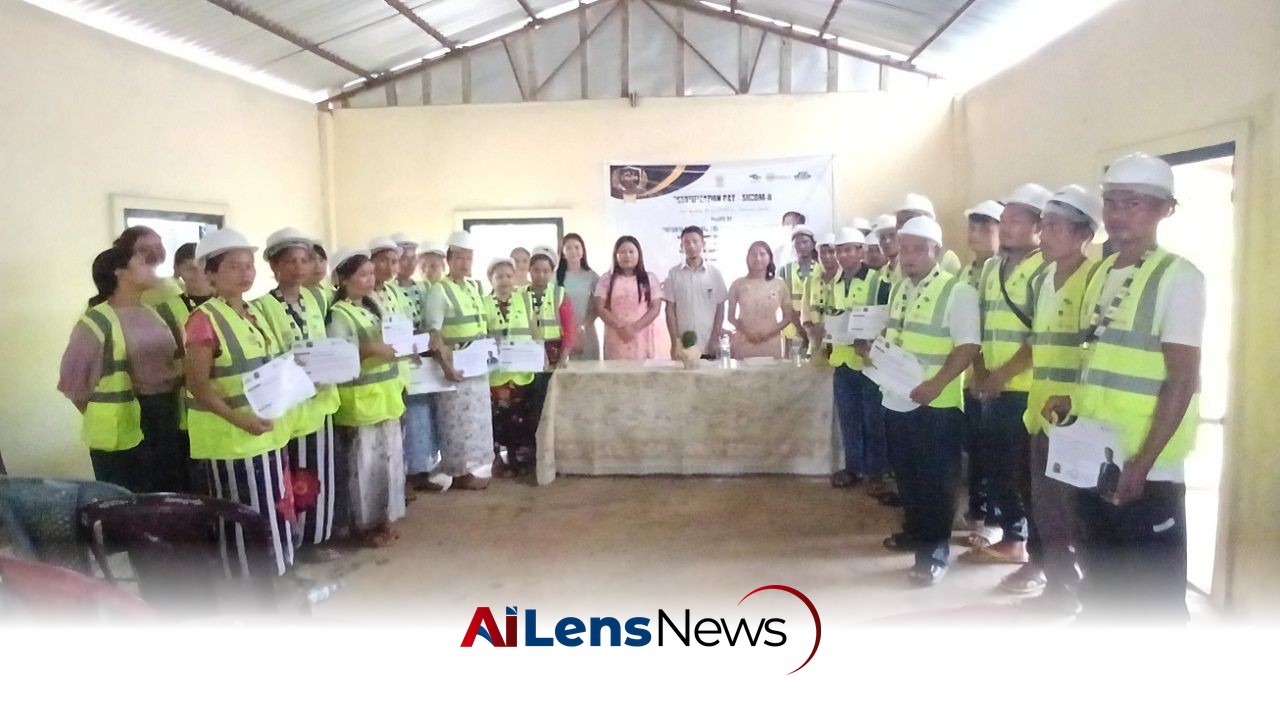


Thirty trainees from Niangbarithem village received certificates after completing an eight-month Mason Tiling, Marble, Granite, and Stone Training program aimed at enhancing employability.
Shillong, India Jul 21, 2026 ALN: Thirty trainees from Niangbarithem village in Ri Bhoi district were awarded certificates on Monday after successfully completing an eight-month Mason Tiling, Marble, Granite and Stone Training programme aimed at enhancing employability and promoting self-employment among local youth.
The skill development programme was implemented by the Northeast Institute of Professional Studies (NIPS) with financial support from the State Skill Development Society (MSSDS) under the Government of. This initiative is part of a larger framework established by the state government to address the challenges of unemployment and underemployment among the youth in the region.
The training programme is particularly significant in the context of, where the youth population constitutes a substantial portion of the demographic. With limited job opportunities in traditional sectors, the state government has recognized the need to foster vocational skills that can lead to self-sustaining careers. The Mason Tiling, Marble, Granite and Stone Training programme specifically targets the construction sector, which has been identified as a growing industry in the region.
The certificate distribution ceremony was attended by notable figures, including Marba Shangpliang, representative of the State Skill Development Society (MSSDS); Monica Lyngdoh, Head of Centre, Ri Bhoi District; Nibahun Khymdeit, Assistant In-charge; and Sharis Lyngdoh, Rangbah Shnong of Niangbarithem. Their presence underscored the importance of community support and governmental backing in such initiatives.
During her address at the ceremony, Marba Shangpliang congratulated the trainees on their accomplishment and encouraged them to make productive use of the skills they acquired during the training. She emphasized that the state government’s skill development initiatives have opened new avenues for many young people, providing high-quality vocational training free of charge. This approach not only alleviates the financial burden on participants but also empowers them to pursue careers in lucrative fields.
Shangpliang further elaborated on the broader implications of such training programmes, noting that they are designed to meet the evolving demands of the job market. As the construction industry continues to expand, skilled workers are increasingly sought after. The training in masonry, tiling, and stonework equips trainees with practical skills that are directly applicable in the field, enhancing their employability.
Moreover, she highlighted that several beneficiaries of MSSDS programmes have successfully transitioned into entrepreneurship, establishing their own businesses and contributing to the local economy. This success story serves as an inspiration for the current batch of trainees, who hope to follow in their footsteps and create sustainable employment opportunities for themselves and others.
The trainees themselves expressed profound gratitude to the Government of, MSSDS, and the implementing agency, NIPS, for providing them with this valuable opportunity. Many of them articulated their hopes that the skills they have gained will not only improve their individual livelihoods but also benefit their families and communities. The training has instilled a sense of confidence and ambition among the participants, motivating them to explore various avenues in the construction sector.
In addition to the immediate benefits of skill acquisition, the programme also aims to foster a culture of entrepreneurship among the youth. By encouraging trainees to consider self-employment as a viable option, the government is promoting a mindset that values innovation and initiative. This is particularly important in regions where traditional employment opportunities may be limited, and where entrepreneurship can serve as a catalyst for economic development.
The impact of such skill development initiatives extends beyond individual trainees. As more young people acquire vocational skills, the overall workforce becomes more competitive and capable of meeting the demands of the construction industry. This, in turn, can lead to increased investment in the region, as businesses seek skilled labor to support their operations. The ripple effect of this initiative could contribute significantly to the economic growth of Ri Bhoi district and the state of as a whole.
Looking ahead, the government plans to expand similar training programmes to encompass a wider range of skills and industries. As part of its long-term strategy for economic development, there is a focus on integrating technology into vocational training, ensuring that the youth are not only skilled in traditional crafts but also equipped to handle modern tools and techniques. This will enhance their adaptability and resilience in an ever-changing job market.
In conclusion, the successful completion of the Mason Tiling, Marble, Granite and Stone Training programme by the thirty trainees from Niangbarithem village marks a significant step forward in addressing youth unemployment in. With the support of the government and the commitment of the trainees, there is potential for transformative change in the local economy, paving the way for a future where young people can thrive through skill acquisition and entrepreneurship.
The broader context of this initiative is rooted in the ongoing efforts by various state governments in India to tackle youth unemployment, which has been a persistent challenge across the country. With a rapidly growing population, especially among young people, there is an urgent need for effective skill development programmes that can prepare them for the workforce. The construction sector is one of the largest employers in India, and by focusing on this industry, the government aims to create a pathway for sustainable employment.
Moreover, the training programme aligns with national policies that emphasize skill development as a key driver of economic growth. The Skill India Mission, launched by the Government of India, aims to train over 400 million people in various skills by 2022. Initiatives like the one in Ri Bhoi district contribute to this national goal, ensuring that local youth are not left behind in the larger economic narrative.
Furthermore, the emphasis on entrepreneurship is crucial in a region where traditional job markets may not be able to absorb the growing number of job seekers. By equipping young people with the skills needed to start their own businesses, the government is fostering a culture of self-reliance and innovation. This not only helps individuals achieve financial independence but also stimulates local economies, as new businesses can create jobs and provide services that meet community needs.
As the trainees embark on their career paths, the community's role in supporting their endeavors will be vital. Local businesses and established entrepreneurs can play a significant part in mentoring the new graduates, providing guidance, and sharing experiences that can help them navigate the challenges of starting a new venture. In this way, the community can collectively benefit from the skills developed through such training programmes.
In summary, the successful completion of the Mason Tiling, Marble, Granite and Stone Training programme is not just an individual achievement for the thirty trainees; it represents a collective step toward economic empowerment for the entire Ri Bhoi district. With continued support from the government, community, and educational institutions, the potential for growth and development in the region is promising. This initiative serves as a model for similar programmes across the state and the country, highlighting the importance of skill development in creating a brighter future for youth.
To learn more about the latest developments in Vocational & Skill Education, stay updated with our exclusive reports and analyses on AiLensNews.

