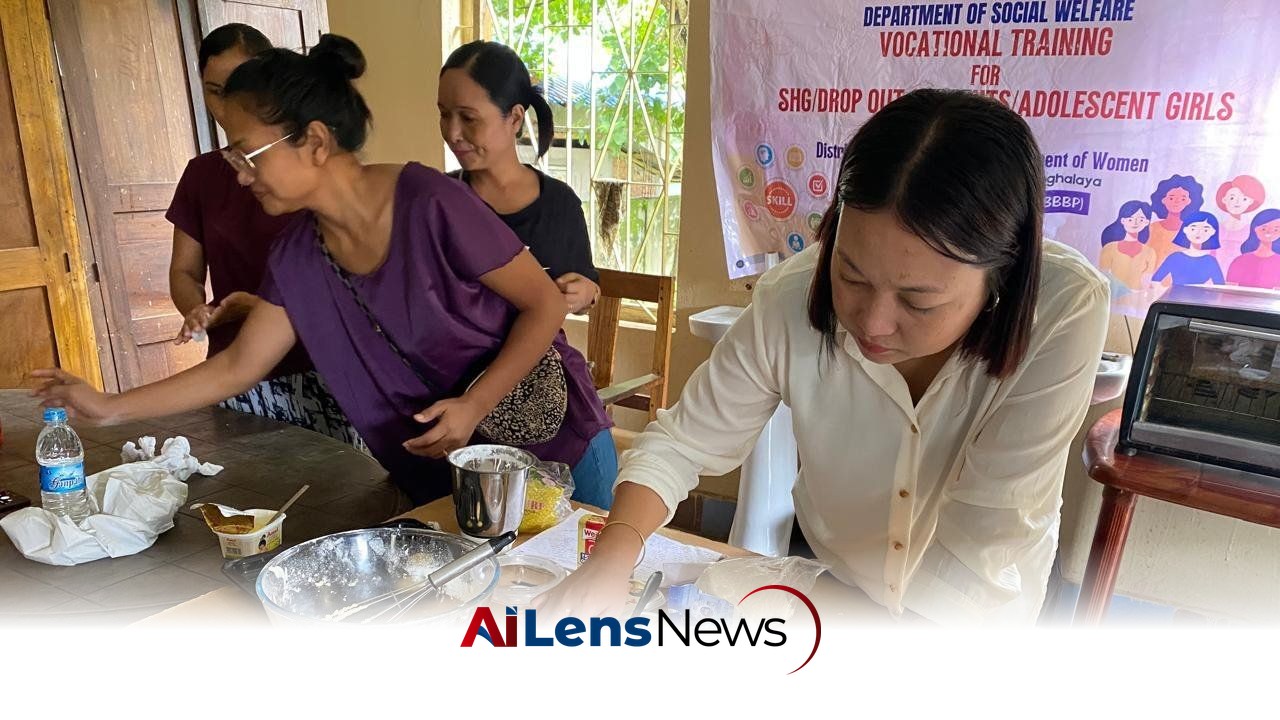


The District Sankalp Hub in East Garo Hills conducted a vocational training program aimed at empowering women by enhancing their baking skills, enabling them to generate income.
Shillong, India Jul 24, 2026 ALN: With a focus on turning kitchen skills into income, the District Sankalp Hub for Empowerment of Women, East Garo Hills, conducted a one-day vocational training on cooking and baking. This initiative is part of a larger movement in India aimed at empowering women, particularly in regions where traditional gender roles often restrict their economic participation.
Organised by the Department of Social Welfare, the programme specifically targeted Self Help Group (SHG) members, school dropouts, and adolescent girls from across Williamnagar. The aim is to equip them with practical food-processing skills that can help them start small, sustainable livelihoods. The training is designed not only to impart technical skills but also to inspire confidence and independence among participants, essential traits for any aspiring entrepreneur.
The session was led by Cheno Ch Marak, an Instructor for Food Processing and Baking Confectionery at Williamnagar College. Participants were taken through hands-on practice in mixing ingredients, baking techniques, and food safety, rather than being confined to theoretical knowledge. This practical approach is crucial as it allows participants to immediately apply what they learn, making the training more effective and relevant.
Officials indicated that this training is part of a broader effort to upskill women and youth in the district and reduce dependence on limited wage work. By learning baking and confectionery, participants can explore various options, such as establishing home-based bakeries, catering for local events, and supplying their products to shops and schools. These avenues not only provide income but also foster a sense of accomplishment and self-worth among women.
The District Sankalp Hub has announced that more skill-building programmes will be rolled out in the coming months to support women and girls in building independent, income-generating ventures. This initiative aligns with the national agenda to promote women's economic empowerment and enhance their role in the workforce, particularly in rural areas where opportunities are often scarce.
This vocational training initiative is set against the backdrop of ongoing efforts to empower women economically in India. The concept of vocational training has gained traction as a means of providing individuals with the skills needed to create their own employment opportunities. By focusing on baking, a skill that combines creativity with practicality, the programme aims to open new avenues for women in the region, allowing them to leverage their culinary heritage while also meeting market demands.
The significance of this vocational training extends beyond immediate economic benefits. It also aims to foster a sense of community and collaboration among participants. Self Help Groups (SHGs) have been instrumental in providing women with a platform to share experiences, learn from each other, and build networks that can support their entrepreneurial ventures. In many cases, women who undergo such training not only gain skills but also develop confidence and leadership abilities that can positively impact their families and communities.
In the context of Shillong and the broader Garo Hills region, where agriculture is a primary source of livelihood, diversifying income sources is crucial. The training in baking and cooking aligns with the region's rich culinary traditions, allowing participants to incorporate local flavors and ingredients into their products. This not only enhances the appeal of their offerings but also promotes the use of locally sourced materials, which can contribute to the sustainability of local agriculture.
Moreover, the hands-on approach of the training session, led by an experienced instructor, ensures that participants gain practical knowledge that can be immediately applied. Cheno Ch Marak's expertise in food processing and baking is particularly valuable, as it allows participants to learn industry-standard techniques that can elevate the quality of their products. This focus on quality is essential for those looking to enter competitive markets, whether through home-based businesses or by supplying to local shops.
In addition to the skills acquired during the training, the programme also emphasizes the importance of food safety and hygiene. As participants learn to prepare baked goods, understanding safe food handling practices is critical, especially in light of increasing consumer awareness regarding food safety standards. This knowledge not only protects consumers but also enhances the credibility of the participants as budding entrepreneurs, enabling them to build trust with their customers.
The long-term implications of such training initiatives are significant. By empowering women with skills that can lead to economic independence, the programme contributes to breaking the cycle of poverty that often affects marginalized communities. Economic empowerment is closely linked to improved health, education, and overall well-being, creating a ripple effect that can uplift entire families and communities. As women gain financial independence, they can invest in their children's education and health, further contributing to the development of their communities.
Furthermore, as more women enter the workforce and contribute to the economy, there is potential for shifting societal norms regarding gender roles. As women gain financial independence and become decision-makers in their households, the dynamics within families can change, leading to greater gender equality both at home and in the community. This shift is essential for fostering a more equitable society, where both men and women can contribute to and benefit from economic growth.
The District Sankalp Hub's commitment to rolling out additional skill-building programmes in the coming months underscores the recognition of the need for continuous support in this area. It reflects a strategic approach to addressing the challenges faced by women and girls in the region, ensuring that they have access to the resources and training necessary to succeed. Such initiatives are crucial for creating a supportive ecosystem that nurtures women's entrepreneurship and economic participation.
As these initiatives unfold, it will be important to monitor their impact and effectiveness. Collecting data on the number of women who successfully start their own businesses or gain employment as a result of the training will provide valuable insights into the programme's success. Additionally, feedback from participants can help refine future training sessions, ensuring that they meet the evolving needs of the community and adapt to changing market dynamics.
In conclusion, the vocational training conducted by the District Sankalp Hub in Shillong represents a vital step towards empowering women through skill development in baking and cooking. By equipping participants with practical skills, fostering community support, and promoting entrepreneurship, such initiatives hold the promise of transforming lives and contributing to the economic development of the region. The emphasis on food safety and quality further enhances the potential for success, as participants embark on their journeys as skilled bakers and entrepreneurs in their own right. This training not only empowers individuals but also has the potential to uplift entire communities, creating a brighter future for generations to come.
To learn more about the latest developments in Vocational & Skill Education, stay updated with our exclusive reports and analyses on AiLensNews.

