

More
Checking your session
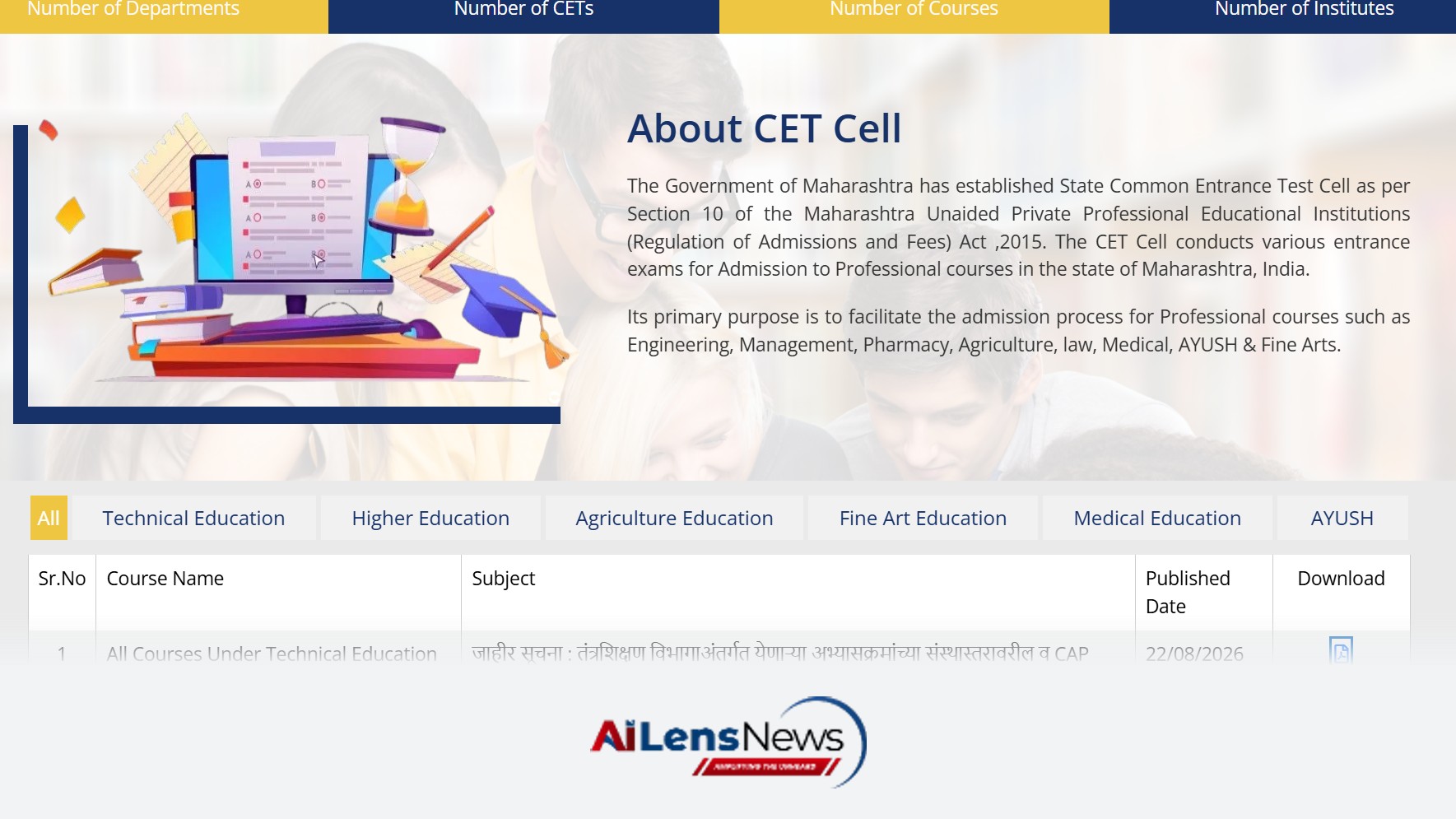



The CET Cell has outlined new guidelines for institutional-level admissions to vacant seats following the Centralised Admission Process in Maharashtra.
New Delhi, India Aug 23, 2026 ALN: The Maharashtra Common Entrance Test (CET) Cell has announced new regulations regarding the filling of vacant seats in colleges after the conclusion of all Centralised Admission Process (CAP) rounds for 2026. These guidelines aim to streamline the admission process and ensure transparency, which is crucial in a state where higher plays a significant role in shaping the future of its youth.
The Maharashtra CET is a pivotal examination for students aspiring to enter various professional courses such as engineering, pharmacy, and management in the state. With a large number of candidates participating each year, the CET serves as a gateway for many students to secure a place in reputable institutions. However, the process of filling vacant seats has often been mired in confusion and a lack of clear communication, leading to frustration among candidates and their families. The new regulations seek to address these issues directly.
According to the CET Cell, colleges are now permitted to fill any remaining vacant seats strictly based on the inter-se merit of eligible candidates. This means that admissions will be determined by the rank of candidates rather than arbitrary selection criteria. The focus on merit-based admissions is a significant shift aimed at ensuring fairness and equality in the selection process. By prioritizing candidates' ranks, the CET Cell hopes to eliminate practices that may have favored certain individuals or groups over others, thereby promoting a more equitable al environment.
In addition to merit-based admissions, colleges are required to publish their admission rules and procedures on their official websites. This transparency is intended to provide candidates with clear information on how to apply for these vacant seats. The requirement for colleges to disclose their admission policies is a crucial step in fostering an environment of trust and accountability. It empowers candidates with the knowledge they need to navigate the admissions landscape effectively, allowing them to make informed decisions about their applications.
Furthermore, candidates have the option to apply directly to the colleges or through their CAP portal login. This flexibility is designed to make the application process more accessible, catering to the varied needs and preferences of students. By allowing direct applications, the CET Cell acknowledges that not all candidates may be comfortable or familiar with the digital interface of the CAP portal, thus accommodating different levels of technological proficiency among applicants.
In light of these changes, the CET Cell has issued a warning against the use of admission agents and the dissemination of misleading information online. Candidates are encouraged to rely on official sources for accurate information regarding the admission process. This advisory is particularly important in an age where misinformation can spread rapidly through social media and other platforms. By urging candidates to seek information from verified channels, the CET Cell aims to protect students from potential scams and ensure they have access to accurate, up-to-date information.
These new rules are expected to facilitate a smoother admission process and ensure that deserving candidates have the opportunity to secure their desired seats in professional courses across Maharashtra. The implications of these changes are significant, as they not only aim to improve the efficiency of the admission process but also enhance the overall integrity of the al system in the state.
Moreover, the introduction of these regulations comes at a time when the demand for higher is on the rise in Maharashtra. With an increasing number of students seeking professional degrees, the pressure on colleges to manage admissions effectively has never been greater. The CET Cell's proactive approach in implementing these guidelines reflects a commitment to addressing the challenges faced by both candidates and institutions.
As the landscape continues to evolve, it is essential for regulatory bodies like the CET Cell to adapt and innovate. The new rules for filling vacant seats not only align with best practices in admissions but also resonate with the broader goals of enhancing al access and equity. Stakeholders, including students, parents, and al institutions, are likely to welcome these changes as a positive step forward.
In conclusion, the Maharashtra CET Cell's new regulations regarding the filling of vacant seats in colleges represent a significant advancement in the admission process for 2026. By emphasizing merit, transparency, and accessibility, these guidelines aim to create a more equitable and efficient system for all candidates. As students prepare to navigate this new landscape, the CET Cell's efforts to provide clear communication and discourage misinformation will be vital in ensuring a successful admission cycle.
To learn more about the latest developments in Admissions & Scholarships, stay updated with our exclusive reports and analyses on AILensNews.

The Bihar School Examination Board has released the first selection list for DEl…

In response to the ongoing flood situation, Odisha's Higher Education Department…

Delhi University has announced the availability of 13,433 vacant seats for the C…

IGNOU has extended the application deadline for its July 2026 Open and Distance …

The Bihar School Examination Board has started the application process for Class…