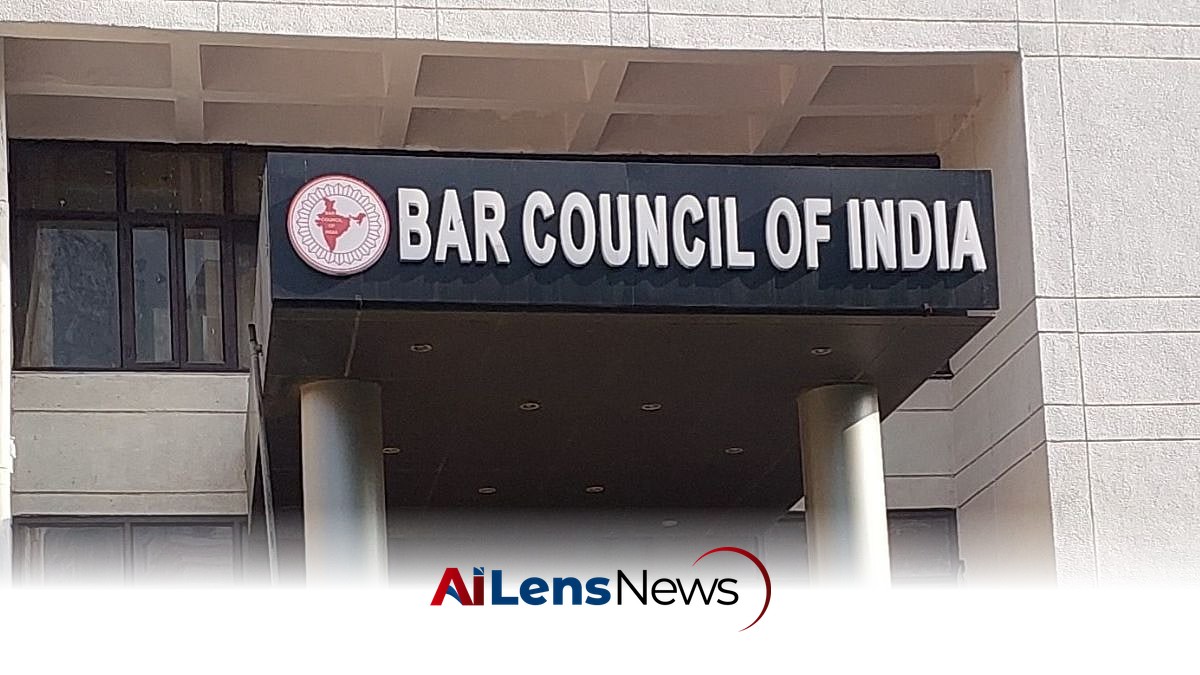



The Bar Council of India has revised its directive, allowing NALSAR University graduates of 2026 to seek enrolment with State Bar Councils.
New Delhi, India Aug 14, 2026 ALN: The Bar Council of India (BCI) on Thursday made a significant modification to its earlier directive concerning the enrolment of graduates from NALSAR University of Law, Hyderabad. This change allows all students who graduated from the university in 2026 to seek enrolment with the State Bar Council of their choice. This decision marks a pivotal moment for the students, who had previously faced uncertainty regarding their legal careers due to the BCI's earlier directive.
The BCI's original directive had instructed all State Bar Councils not to enrol any 2026 law graduates from NALSAR as advocates until further notice. This decision was taken amidst an inquiry into allegations of an organized campaign related to the participation or invitation of Chief Justice of India Surya Kant at the university's convocation ceremony. The inquiry raised concerns about the conduct of certain individuals associated with the university and their potential influence on the proceedings of the convocation.
BCI Chairman Manan Kumar Mishra announced the modification through a post on his official X handle, stating that the Council had reached this decision after "detailed deliberation." He emphasized the importance of ensuring that students who were not involved in the alleged misconduct would not suffer due to the actions of others. Mishra specifically stated, "No student shall be made to suffer without any fault on his or her part," signaling the Council's intent to protect the rights and futures of innocent students amidst the ongoing inquiry.
Despite the modification allowing enrolment, the BCI's factual inquiry will persist. The Council had previously sought an authenticated report from the NALSAR Vice-Chancellor regarding the individuals allegedly instrumental in initiating, drafting, circulating, coordinating, or mobilizing the campaign against the Chief Justice's participation in the convocation. This inquiry is crucial as it seeks to uncover the motivations behind the actions taken by certain groups within the university.
In its investigation, the BCI has requested that NALSAR identify individuals involved in organizing meetings, communicating with media outlets, administering social media groups, or proposing any form of boycott or disruption regarding the convocation or any events associated with the Chief Justice. This thorough examination aims to clarify the extent of involvement by various stakeholders, including students, faculty, and alumni, in the alleged campaign.
The BCI has also requested detailed information about any student body, Student Bar Council, Students' Union, or other recognized student organizations that may have been involved in initiating, approving, coordinating, or circulating the campaign. Furthermore, the Council is interested in understanding the role of faculty members, research scholars, or any outsiders who may have participated in the organization or facilitation of the campaign.
To support the inquiry, NALSAR has been asked to provide copies of relevant resolutions, minutes, agendas, and other official records of meetings related to the matter. The university must clarify whether permission was sought or granted for any protests or organized activities and whether any university rules regarding student conduct or official functions were invoked during these events.
In its earlier communications, the BCI had made it clear that merely signing or supporting a representation would not automatically disqualify individuals from enrolment. The Council distinguished between those who only expressed support for a representation and those who allegedly organized or coordinated a campaign aimed at mobilizing a boycott or disruption. This nuanced understanding underscores the BCI's commitment to upholding the principles of natural justice while addressing the complexities of the situation.
The BCI also emphasized the importance of legal education in fostering critical reasoning, debate, and analysis of judicial decisions. It highlighted the need to differentiate between reasoned criticism and conduct that could involve intimidation, obstruction, or organized disruption of institutional responsibilities associated with the legal profession. This distinction is vital as it reflects the BCI's commitment to maintaining the integrity of the legal profession while also recognizing the rights of students to express their views.
The Council has set a timeline for the inquiry, indicating that it will consider the matter on August 19, 2026, after receiving the Vice-Chancellor's report. This timeline provides a framework for addressing the concerns raised and ensuring that a thorough investigation is conducted. The outcome of this inquiry could have significant implications for the students involved, the reputation of NALSAR, and the broader legal education landscape in India.
The implications of the BCI's decision extend beyond the immediate context of NALSAR. It raises critical questions about the role of legal education institutions in fostering democratic discourse and the responsibilities of students and faculty in navigating complex political and social issues. As legal professionals, graduates are expected to uphold the rule of law and engage meaningfully in societal debates, and this incident serves as a reminder of the delicate balance between advocacy and institutional integrity.
Furthermore, the inquiry into the alleged campaign against the Chief Justice highlights the challenges faced by educational institutions in managing dissent and ensuring that students can express their views without compromising the institution's reputation or the integrity of its events. The BCI's approach to this situation will likely set a precedent for how similar cases are handled in the future, emphasizing the need for transparency, accountability, and respect for the rights of all stakeholders involved.
As the situation unfolds, the legal community will be closely watching the outcomes of both the inquiry and the enrolment process for the 2026 graduates of NALSAR. The BCI's ability to navigate this complex issue will not only impact the future of the affected students but also influence the broader discourse on the intersection of law, education, and civic engagement in India.
To learn more about the latest developments in Education News, stay updated with our exclusive reports and analyses on AILensNews.

