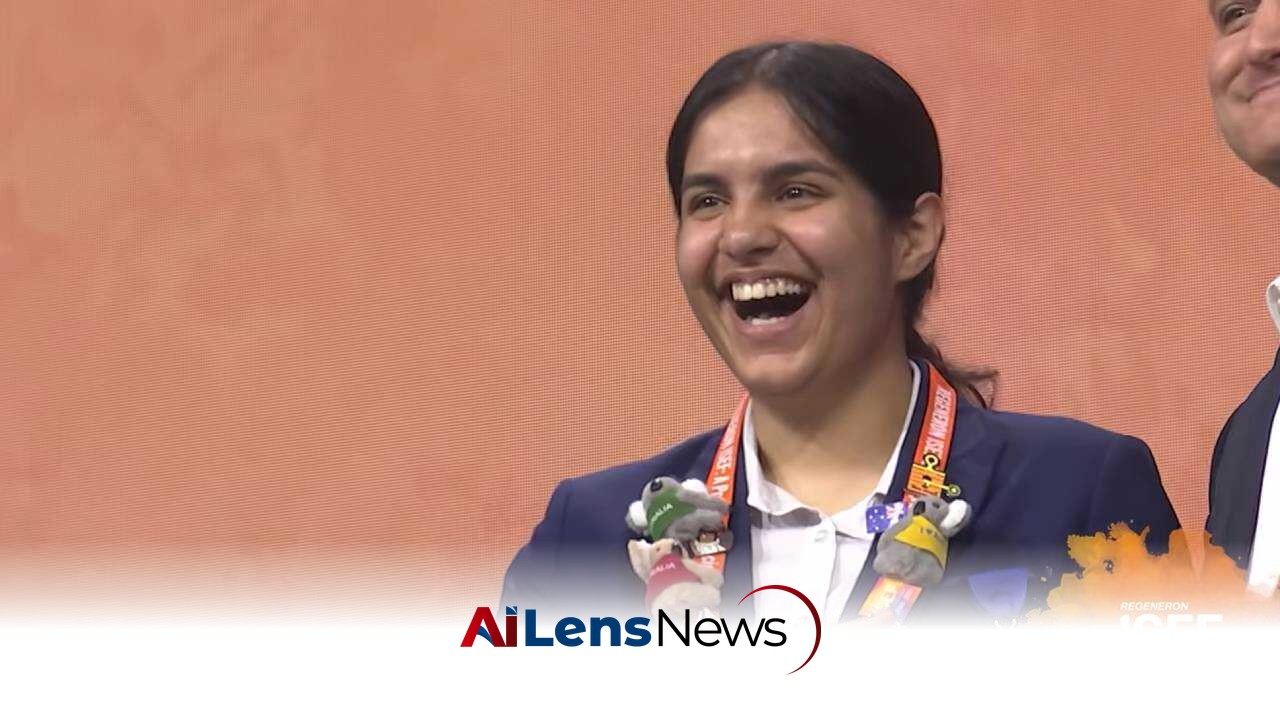


Anusha Arora, a 15-year-old from Bellevue, Washington, has developed an AI music therapy platform called Harmony, winning $50,000 at Regeneron ISEF 2026.
New Delhi, India Aug 15, 2026 ALN: Anusha Arora, a 15-year-old student from Bellevue, Washington, has made headlines by winning $50,000 at the Regeneron International Science and Engineering Fair (ISEF) 2026. Her innovative project, named Harmony, is an AI-powered music therapy platform designed to enhance emotional well-being. This recognition at such a prestigious science fair places her among a select group of young innovators who are making significant contributions to the field of science and technology.
The Regeneron ISEF is one of the largest and most prestigious pre-college science competitions globally, attracting thousands of students from various countries to showcase their research and projects. Established in 1950, ISEF has long been a platform for young scientists to present their findings and innovations, often leading to further academic and professional opportunities. Winning such an award is a remarkable achievement for any student, particularly one so young. It emphasizes the importance of nurturing scientific inquiry and creativity among youth, encouraging them to address real-world problems through innovative solutions.
Arora's innovative project, Harmony, utilizes advanced technology to address mental health challenges, an area that has gained increasing attention in recent years. Mental health issues, including anxiety and stress, have become more prevalent, particularly among adolescents and young adults. According to the World Health Organization, one in six people aged 10-19 experiences a mental disorder, highlighting the urgent need for effective therapeutic solutions. The COVID-19 pandemic has further exacerbated these issues, leading to a surge in demand for effective therapeutic solutions. By integrating artificial intelligence with music therapy, Harmony offers a novel approach to emotional well-being.
Using advanced finger sensors and 11 AI programs, Harmony is capable of detecting a user's emotions in real-time. The platform generates personalized music and visuals tailored to the user's emotional state, aiming to provide therapeutic benefits. Arora's inspiration for this project stemmed from her desire to help others, particularly influenced by her mother’s experiences with stress and anxiety. This personal connection adds depth to her project, showing how individual experiences can drive innovation. In a world where mental health is often stigmatized, Arora's work represents a compassionate response to a pressing issue.
The technology behind Harmony integrates cutting-edge AI algorithms with sensory input to create a unique therapeutic experience. The finger sensors track physiological responses such as heart rate and skin conductivity, allowing the platform to adapt its output based on the user's emotional needs. This innovative approach not only aims to reduce stress and anxiety but also enhances user engagement through interactive music and visual elements. The ability to provide real-time feedback and personalized experiences sets Harmony apart from traditional music therapy methods.
Music therapy has long been recognized for its potential to aid in emotional healing. Research has shown that music can have a profound effect on mood, stress levels, and overall emotional health. A study published in the Journal of Music Therapy found that music interventions can significantly reduce anxiety and improve mood among various populations. By harnessing the power of AI, Arora’s Harmony seeks to personalize this experience, making it more effective for individual users. The combination of real-time emotion detection and customized music selection is a significant advancement in the field of music therapy.
Moreover, the use of AI in mental health applications is a growing area of interest within the tech community. Various studies have indicated that AI can play a crucial role in developing tools that can assist mental health professionals in diagnosing and treating patients. For instance, AI algorithms can analyze speech patterns and emotional cues to provide insights into a patient’s mental state. Harmony represents a step forward in this direction, demonstrating how technology can be leveraged to create accessible and effective mental health resources. This aligns with a broader trend of integrating technology into health care, which has the potential to enhance the quality of care and improve patient outcomes.
Arora's work has garnered significant attention, highlighting the potential of AI in mental health applications. She believes that music can be a powerful tool for emotional healing and aims to further develop Harmony to reach a wider audience. Her success at ISEF is a testament to the impact young innovators can have in the field of technology and mental health. As her project gains traction, it has the potential to inspire others to explore similar intersections of technology and health.
As she continues her journey, Arora hopes to collaborate with mental health professionals to refine her platform and explore its applications in various therapeutic settings. This collaboration is crucial, as it would provide her with valuable insights into the practical needs and challenges faced by mental health practitioners. By working with experts in the field, she can ensure that Harmony is not only innovative but also grounded in established therapeutic practices. Such partnerships can also facilitate clinical trials, which are essential for validating the efficacy of her platform.
In addition to her aspirations for Harmony, Arora's achievement serves as an inspiration for young students interested in combining technology with social impact. Her story underscores the importance of STEM (Science, Technology, Engineering, and Mathematics) and the role of young innovators in addressing pressing societal issues. By pursuing projects that merge technology with humanitarian goals, students can contribute to meaningful change in their communities. al initiatives that promote innovation and creativity are critical in fostering the next generation of problem solvers.
In conclusion, Anusha Arora's achievement at the Regeneron ISEF 2026 not only highlights her talent and creativity but also underscores the importance of innovation in addressing mental health challenges. With projects like Harmony, the future of music therapy looks promising. As mental health continues to be a critical issue worldwide, the integration of technology in therapeutic practices may offer new hope for those seeking emotional support. Arora's commitment to this cause exemplifies the potential of youth to lead the way in developing solutions that can positively impact society. Her work not only reflects her personal journey but also resonates with a global audience facing similar challenges, making her a beacon of hope in the realm of mental health and technology.
To learn more about the latest developments in Research & Innovation, stay updated with our exclusive reports and analyses on AiLensNews.

