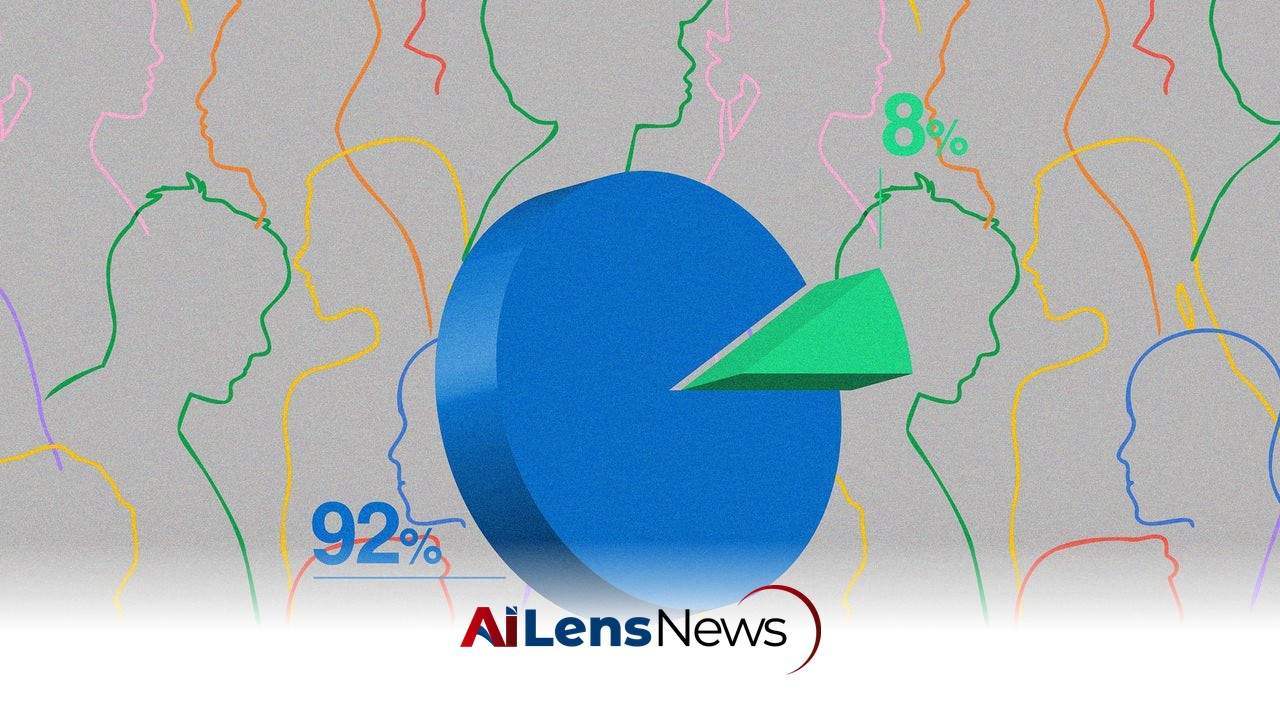


Data reveals that companies with fewer than 1,000 employees accounted for nearly 93% of hires in May, highlighting a shift in the job market towards smaller businesses.
Washington DC, United States Jul 30, 2026 ALN: In recent months, the landscape of employment in the United States has shown a significant shift, particularly with respect to the hiring practices of small businesses. The data from the Bureau of Labor Statistics underscores a critical trend: small businesses are driving the majority of hiring activity, particularly in May. This revelation prompts job seekers to reconsider their strategies, especially if they have been focusing primarily on larger corporations.
According to the Bureau of Labor Statistics, nearly 93% of hires for privately held companies in May originated from business establishments with fewer than 1,000 employees. This statistic highlights the vital role that smaller enterprises play in the job market. Among these, companies with 10 to 49 employees accounted for the largest share of hiring, followed closely by those employing between 50 and 249 individuals. This trend is not merely a statistical anomaly; it reflects a broader shift in the employment landscape that could have lasting implications for both job seekers and the economy as a whole.
Analyzing data compiled by Business Insider, we find that companies with 5,000 or more employees have historically accounted for only about 1% to 2% of hires over the past two decades. This is particularly noteworthy given that these larger firms tend to post a significant number of job openings yet hire far fewer candidates relative to their postings. In May, for instance, large companies posted around 3% of job openings but managed to secure less than 2% of hires. In contrast, businesses employing between 50 and 999 individuals represented approximately 39% of job openings while accounting for about 43% of hires. This disparity raises questions about the effectiveness and efficiency of larger corporations in translating job postings into actual hires.
It is important to note that the hiring dynamics of larger employers may be influenced by their organizational structures. As one economist pointed out, some large companies may operate under multiple entities, which could skew the data. Nevertheless, the overarching trend remains clear: hiring in recent years has predominantly occurred within businesses that employ 1 to 49 individuals. This trend is indicative of a shifting economic landscape where smaller firms are becoming increasingly vital to job creation.
Several factors may be contributing to the rise of small business hiring. One significant element is the wave of mass layoffs that have impacted many of the world's largest companies. In recent months, firms like Visa and Meta have announced substantial workforce reductions, with Visa laying off 2,600 employees and Meta cutting 8,000 jobs. Other major players, including Oracle and Amazon, have also engaged in significant layoffs. These actions may reflect a broader trend of course-correcting after periods of overhiring during the pandemic, as companies reassess their staffing needs in light of changing market conditions.
Moreover, the advent of artificial intelligence (AI) has been breaking down traditional barriers for entrepreneurs, enabling more individuals to establish their own small businesses. A recent analysis by CNBC of U.S. Census Bureau data revealed that entrepreneurs filed 1.56 million business applications between November 2025 and January 2026, marking the highest number for any three-month period since at least 2004. Many of these entrepreneurs attributed their ability to launch startups to the facilitative role of AI, which has streamlined various processes and reduced the need for extensive resources.
As smaller businesses expand, they often face heightened pressure to fill vacancies, especially in environments where employee turnover can significantly impact operations. This need for staffing solutions may further incentivize small employers to hire more aggressively. A survey conducted by Pipedrive last year among 1,000 small and medium-sized company owners revealed that nearly 60% of respondents planned to hire additional employees in 2026. Furthermore, about half of those surveyed indicated they would increase their recruitment and payroll budgets to support this hiring initiative. This commitment to growth suggests a positive outlook for the small business sector in the near future.
However, not all trends within small businesses are entirely positive. A recent survey by the Polish tech research firm Omni Calculator indicated that nearly a third of employees at small businesses reported experiencing what is termed "ghost downsizing." This phenomenon refers to the practice of not filling vacated roles, resulting in an increased workload for remaining staff, often supplemented by AI solutions. While this may help companies save on costs in the short term, it raises concerns about employee morale and long-term sustainability.
Despite the challenges, smaller employers are increasingly recognized for fostering better work cultures. For instance, when Glassdoor released its 2026 list of Best Places to Work, the top position was not secured by a tech giant or a corporate behemoth. Instead, Crew Carwash, a chain based in Indianapolis with 1,500 employees, topped the list. This recognition highlights the potential advantages of working for smaller companies, which may offer a more personalized and supportive work environment compared to their larger counterparts.
For job seekers who may be feeling disillusioned or frustrated with the current job market, this data suggests a strategic pivot may be beneficial. Shifting focus toward recently launched startups or smaller companies could increase the chances of finding meaningful employment opportunities. Smaller firms not only tend to hire more frequently but may also provide a more enriching work experience, characterized by closer-knit teams and a greater sense of community.
In conclusion, the data indicating that small businesses are driving the majority of hiring in the U.S. signals a transformative moment in the labor market. As larger companies grapple with layoffs and restructuring, small businesses are stepping up to fill the gaps, providing opportunities for job seekers and contributing to economic growth. This trend underscores the importance of supporting small businesses as they navigate the challenges of a rapidly evolving economic landscape, and it offers a hopeful outlook for those seeking employment in a competitive job market.
To learn more about the latest developments in Employment & Labor, stay updated with our exclusive reports and analyses on AiLensNews.

