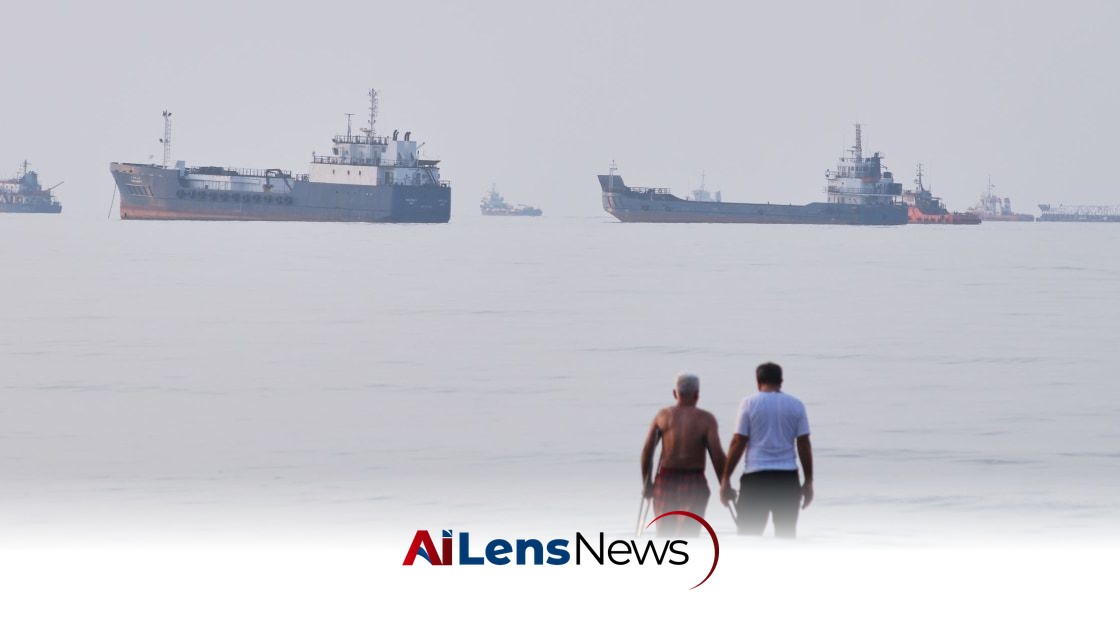


Oil prices soared after President Trump announced the reimposition of a blockade on Iran, impacting global markets and raising concerns over shipping fees.
Washington DC, United States Jul 13, 2026 ALN: The recent surge in oil prices, following President Donald Trump’s announcement regarding the U.S. blockade on Iran, has sent ripples through global markets, highlighting the intricate relationship between geopolitical tensions and energy prices. On Monday morning, Trump took to social media to declare that the U.S. would resume its blockade on Iran, asserting that the country would be “reimbursed” for helping ships transit through the strategically crucial Strait of Hormuz. This announcement caused U.S. crude oil prices to jump by 7.4%, nearing $77 per barrel, while international Brent crude oil saw an increase of 7.5%, approaching $82 per barrel. The spike in oil prices has notably halted the recent decline in gasoline prices across the United States.
The implications of this price surge extend beyond just the oil market. Stock markets reacted negatively, with the S&P 500 index falling by 0.8% in early afternoon trading. The technology-heavy Nasdaq, which was already experiencing a downturn, hit its lowest point of the day, down 1.6%. Such market reactions underscore the interconnectedness of energy prices and broader economic indicators, with fluctuations in oil prices often influencing investor sentiment and market performance.
In his announcement, Trump specified that the reimbursement for transit through the Strait would be “at the rate of 20% on all cargo shipped.” However, the mechanics of this reimbursement remain unclear, raising questions among industry experts and stakeholders. Energy and shipping companies have previously voiced strong opposition to similar proposals from Iran, which suggested that ships pay tolls to pass through the vital waterway. This raises concerns about the potential for escalating tensions in the region, particularly given the strategic importance of the Strait of Hormuz, through which approximately 20% of the world's oil supply flows.
The U.S. Treasury Department has issued warnings that any entity paying Iran for passage through the Strait of Hormuz could face severe sanctions, labeling such actions as “maritime extortion.” This stance reflects the broader U.S. strategy of exerting maximum pressure on Iran, particularly in light of ongoing tensions over Iran's military activities and its alleged attacks on commercial vessels in the region.
In a swift response to Trump's announcement, the International Maritime Organization (IMO) rejected the idea of charging fees for passage through international straits. IMO Secretary-General Arsenio Dominguez stated, “We have always been consistent on our stance on fees — IMO stands firmly against charging fees for passage through straits used for international navigation.” His remarks highlight the legal and ethical complexities surrounding navigation rights in international waters and the potential ramifications of introducing tolls in such critical maritime routes.
Trump's references to what he termed “THE IRANIAN BLOCKADE” seem to allude to a recent U.S. naval blockade aimed at preventing ships from entering or exiting Iranian ports. However, this blockade has not obstructed non-Iranian commercial vessels from transiting the Strait of Hormuz, which raises questions about the effectiveness and enforcement of such measures. The latest escalation in rhetoric and military posturing comes on the heels of U.S. military actions targeting Iranian interests, which have been framed as retaliation for Iran's aggressive actions against commercial shipping in the region.
The Strait of Hormuz is not just a crucial chokepoint for oil shipments but also a barometer for global energy security. The potential for increased military presence and the threat of conflict in this area could have far-reaching consequences for energy markets and international trade. Any disruptions in this waterway could lead to significant increases in oil prices, affecting economies worldwide, particularly those heavily reliant on oil imports.
Industry leaders have expressed concerns that the introduction of fees or tolls in the Strait of Hormuz could set a dangerous precedent. In a previous interview, Chevron CEO Mike Wirth firmly rejected the notion of paying fees to Iran for ship transit, emphasizing that “freedom of navigation through international waterways is a very well-established principle.” He warned that allowing countries adjacent to international waterways to impose transit fees could lead to a domino effect, prompting similar demands in other strategic maritime routes globally, such as the Strait of Malacca in southern Asia.
The broader geopolitical context surrounding these developments cannot be overlooked. The U.S. has maintained a hardline stance against Iran since the withdrawal from the Joint Comprehensive Plan of Action (JCPOA) in 2018, reimposing stringent sanctions aimed at crippling Iran's economy and curbing its regional influence. The situation has been further complicated by Iran's response, including its military actions that have targeted commercial vessels and increased tensions with U.S. allies in the region.
As the situation unfolds, the potential for escalation remains high. The U.S. military's presence in the region and its commitment to protecting shipping lanes are likely to increase, which could lead to further confrontations with Iranian forces. The international community is watching closely, as any significant military engagement could disrupt global oil supplies and lead to a broader conflict in the Middle East.
In conclusion, the announcement by President Trump regarding the blockade on Iran and the proposed reimbursement for transit through the Strait of Hormuz has significant implications for oil prices, stock markets, and international maritime law. The rejection of these ideas by the IMO and the potential for increased tensions in the region highlight the complexities of navigating geopolitical challenges in a globalized economy. As stakeholders in the energy and shipping industries grapple with the fallout from these developments, the world remains on edge, awaiting the next move in this high-stakes geopolitical chess game.
To learn more about the latest developments in Economic Reports, stay updated with our exclusive reports and analyses on AiLensNews.

