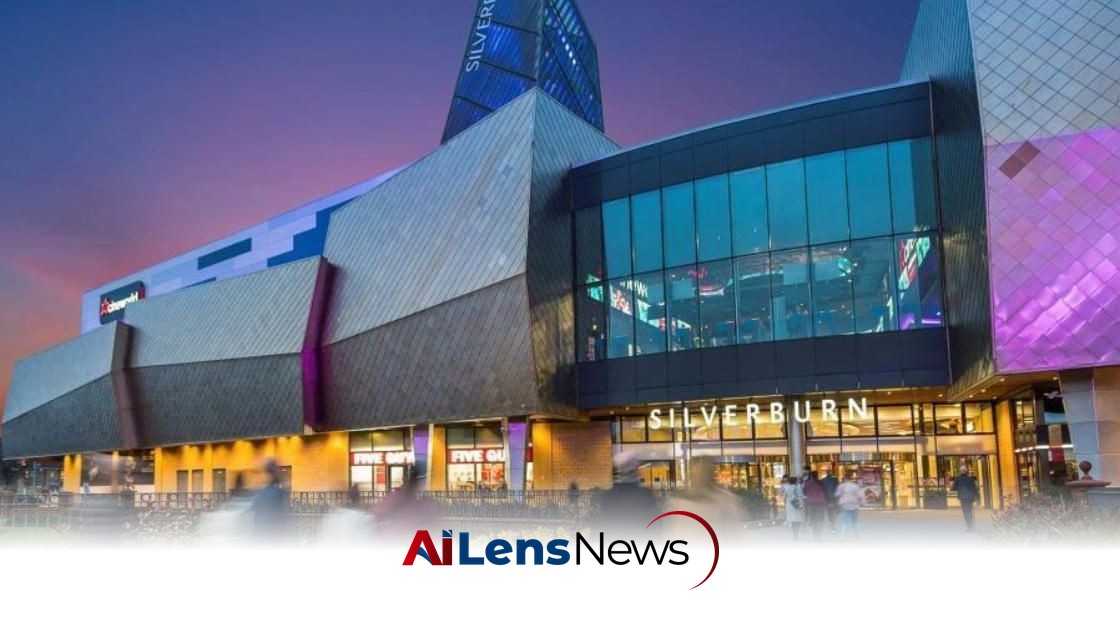


Silverburn shopping centre's economic contributions are significant, but its success raises questions about the decline of Glasgow's city centre.
London, United Kingdom Jul 13, 2026 ALN: I’ve just been looking at the latest figures on the economic impact of the Silverburn shopping centre in Glasgow and I’m remembering a trip I did there with Mrs Stewart, Mrs Gladstone and Mrs Grant. Mrs Stewart, Mrs Gladstone and Mrs Grant worked in shops during the heyday of British retail, at some of Glasgow’s most celebrated – now disappeared – stores, and I went to Silverburn with them and asked them what they thought of it. They had strong opinions, which isn’t surprising: when the bright, shining out-of-town beacons of shopping such as Silverburn opened, things were never quite the same again.
The figures are impressive: according to analysis by the economic consultants EY, in 2025 Silverburn generated £414 million of economic activity. The EY report says that not only does the centre support 8,713 direct and indirect jobs, every £1 spent generates a further £5.70 of economic activity and EY says the figures reinforce the role of Silverburn as a regional economic engine for West Central Scotland. The owners, Eurofund Group and Henderson Park, say they’ve been able to unlock economic benefits for the wider Glasgow area, support thousands of jobs and generate hundreds of millions of pounds of activity across the country.
The last few months would appear to back them up. New retailers have been moving into the centre, including Space NK, Stradivarius and Oliver Bonas, bringing it close to full occupancy at a time when physical shopping is still a challenge. According to the most recent figures, footfall is also good: there were 16.5 million visits in 2025, making it the centre’s busiest ever year. As for indirect effects, plans were announced this month for 140 new houses near Silverburn; the plans are from Persimmon, who’ve already built 500 homes in the area since 2016.
All of this is undoubtedly a success for Silverburn, but five miles down the road, it’s another story: much of Glasgow city centre is tatty and half-empty, which raises the question of the part that Silverburn and places like it have played in that. The report from EY demonstrates that out-of-town shopping centres can absolutely be a catalyst for growth, but the question is to what extent they also suck growth from other places. Is it a coincidence that Silverburn has thrived as Glasgow city centre has struggled?
The answer is an unequivocal no. Shopping centres like Silverburn have huge catchment areas – people come from all over Greater Glasgow and beyond to shop there. Places like Silverburn and Braehead also have a disproportionate effect on city centres for the simple reason that they are usually built close to city centres: in the north-east of England for example, £1 in every £20 spent in the region is spent at the Metrocentre. In other words, successful though Silverburn is – and we should celebrate success – some of it has come at a cost for the centre of Glasgow.
But the upside is that city centres can learn lessons from places like Silverburn, which brings us back to Mrs Stewart, Mrs Gladstone and Mrs Grant. Mrs Stewart worked for Goldbergs, the department store in Candleriggs; for Mrs Gladstone, it was the Colosseum on Jamaica Street; and for Mrs Grant, Hector Powe, the gents' tailor on Gordon Street. All gone now: the Colosseum shut in the 50s, Hector Powe in the 70s, and Goldbergs in the 90s, and the one thing the ladies blamed more than anything was the rise in the 70s of self-service. It’s a reminder not only that retail has always been subject to change but that (even though it feels like it sometimes) the internet isn’t to blame for everything.
Given their experience of retail in its pomp, the ladies’ assessment of Silverburn was interesting. Mrs Stewart remembered there were two Mr Goldbergs at Goldbergs in Glasgow and every morning they were there at the front desk at 8.30 on the dot opening the mail, while Mrs Grant remembered that for its regular customers, Hector Powe – “for men who know good clothes” – would keep your measurements so you were already measured up for your suits. The service was formal but personalised.
Not so at Silverburn. The first thing Mrs Stewart noticed when we went into one of the big stores was that there wasn’t a single member of staff in sight but she could also see why shopping centres had replaced the kinds of places in which she used to work. "It's drier, it's cleaner, it's more convenient," she said. "You can come here and get everything you want under one roof. In our day you had to go from one shop to the other." Mrs Grant agreed. “The impersonality bothers me, you could wander in and wander out and no-one would know,” she said. “But I like the fact everything is under one roof.”
Mrs Stewart’s assessment in particular is spot on: drier, cleaner, more convenient. It’s easy to get to Silverburn, there are hundreds of free parking spaces, and it’s clean and pleasant, which is more than can be said for the centre of Glasgow; what can be said for the centre of Glasgow is faded, tatty, dirty, charred. And if you want to take your car in, it’ll cost you: easily £20-30 for few hours (if you can bring your car in at all that is: the LEZ means it isn’t an option for lots of people). So what do people do? They go to Silverburn or Braehead instead.
Sauchiehall Street
Naturally, there are limits to the ways the city centre can respond to out-of-town centres – there are no vast tracts of land to turn over to free parking – but one of the reasons the Merchant City for example has thrived is because, like Silverburn, it’s developed a cohesive identity and people know what it’s about, what it’s got and what it’s for. Blythswood Hill has similar potential but lacks a cohesive plan and while there are good signs elsewhere – in Laurieston for example – the factors that work for Silverburn – clean, convenient – are still working against the city centre.
A rethink on parking would certainly help – Glasgow City Council eventually backed down on its plans in 2024 to charge for parking after 6pm but I fear it won’t be long before the plans are revived. The short-term thinking is the council can raise money from tickets but the long-term thinking should be that free parking encourages people to come into the centre, which is good for businesses, which is good for the city. Charging after 6pm would drive a nail into one of the sectors that’s still working OK for the city centre: restaurants and hospitality. Businesses in the city centre are also still taxed disproportionately more than businesses in out-of-town locations which is something else that needs fixed.
We should be realistic about how things have changed of course, often for the better: even the grand ladies of retail told me that a lot is much better than it was 50 years ago. There’s also a danger in nostalgia: Mrs Gladstone told me all about the Colosseum on Jamaica Street and how she’d worked in ladieswear then the toy department and what a beautiful store it was, but she knew it wasn’t coming back. And the ladies recognised that part of the reason the old stores disappeared is that they weren’t prepared for change.
But the reasons Silverburn is doing so well, and is generating £414m and supporting 8,713 jobs, does hold clues for Glasgow’s revival. Silverburn: convenient. City centre: inconvenient. Silverburn: clean. City centre: dirty. Silverburn: parking free. City centre: parking expensive. Fix some of that and suddenly, the city centre trumps Silverburn every time because the city centre has what Silverburn never can. The grand old stores like Goldbergs and the Colosseum and Hector Powe may be long gone, but the streets their customers walked are still there: chipped, scarred, burned but beautiful and still there.
To learn more about the latest developments in Economic Reports, stay updated with our exclusive reports and analyses on AiLensNews.

