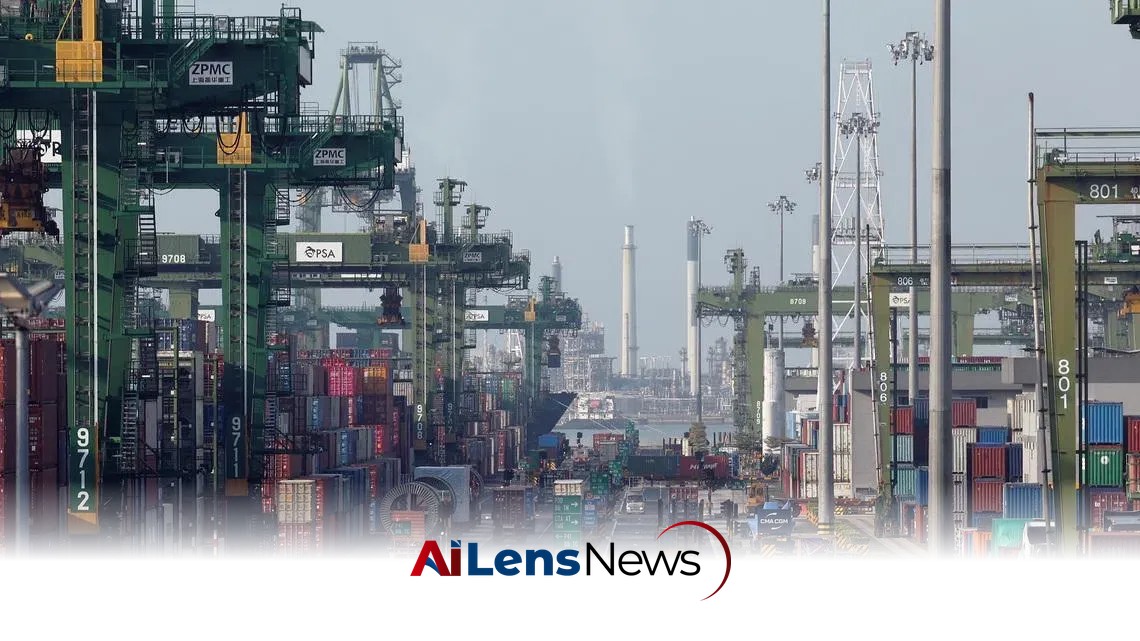


Singapore's economy expanded by 5.7% in Q2 2026, slowing from the previous quarter due to eased growth in construction and trade, influenced by global tensions.
Singapore, Singapore Jul 14, 2026 ALN: SINGAPORE – Singapore’s economy continued to benefit from the AI boom, but grew at a slower pace in the second quarter of 2026 as expansion in construction and wholesale trade eased. The Ministry of Trade and Industry (MTI) reported that the economy expanded 5.7 percent on a year-on-year basis in the April to June period, a decrease from the 6.3 percent growth achieved in the previous quarter. On a seasonally adjusted quarter-on-quarter basis, the economy expanded by 1.1 percent, which is weaker than the first quarter’s growth of 1.3 percent.
The slower pace of expansion was mainly attributed to sectors such as construction, which grew by 6.2 percent year on year in the second quarter, compared to 12.9 percent in the previous quarter. MTI noted that wholesale and retail trade, along with transportation and storage sectors, collectively grew by 6.3 percent in the second quarter, moderating from the 9.3 percent growth in the previous quarter. Conversely, the manufacturing sector recorded robust growth, expanding by 12.2 percent year on year, an acceleration from the 8 percent growth in the previous quarter. This growth was largely driven by increases in the electronics and precision engineering clusters, fueled by strong AI-related demand for semiconductors and semiconductor manufacturing equipment.
The construction sector's slowdown can be attributed to various factors, including labor shortages and rising costs of materials, which have plagued the industry in recent years. Additionally, the government has been focusing on ensuring that construction projects comply with stricter safety and environmental regulations, which can further delay progress. As a result, while the sector is still growing, it is not at the pace that was previously observed.
In contrast, the manufacturing sector's performance has been buoyed by the global demand for technology and innovation, particularly in the field of artificial intelligence. The ongoing digital transformation across industries has led to increased investments in technology, which in turn has driven demand for related manufacturing outputs. The electronics cluster, which encompasses semiconductors and related components, has been a significant contributor to this growth, as companies worldwide seek to enhance their technological capabilities.
However, the chemicals and biomedical clusters faced contraction due to feedstock disruptions arising from the ongoing conflict in the Middle East. On a quarter-on-quarter seasonally adjusted basis, the manufacturing sector grew by 5.3 percent, recovering from a 2.2 percent contraction in the first quarter. This recovery indicates that while some sectors are struggling, others are managing to adapt and thrive amid challenging global conditions.
Singapore’s non-oil domestic exports expanded by 38.4 percent in May compared to the previous year, extending April’s 24.4 percent rise, as strong AI-related demand continued to drive trade momentum. This surge in exports highlights Singapore's strategic position as a global trade hub, particularly in technology and manufacturing. The city-state's ability to pivot and cater to emerging demands in the technology sector has been crucial for its economic resilience.
Analysts suggest that it may be challenging to maintain the pace of growth recorded in the first quarter unless the volatile energy markets stabilize. The economic outlook has become more uncertain following the recent escalation of hostilities between the US and Iran, which jeopardizes the 60-day ceasefire agreed upon in mid-June. The geopolitical tensions in the Middle East have far-reaching implications, not only for energy prices but also for global trade routes and supply chains that are critical for Singapore's economy.
Crude oil prices, which had previously fallen to a low of US$71 a barrel after the ceasefire was announced, have rebounded to levels above US$80 a barrel. Although this is still below the peak of US$120 reached after the US and Israel attacked Iran in late February, the rise in oil prices has led to increased electricity tariffs in Singapore. Higher energy costs can have a cascading effect on the economy, impacting everything from manufacturing to consumer prices.
The conflict has also caused shortages in crude oil and petroleum products, contributing to contractions in the fuels and chemicals segment of the wholesale trade sector and the chemicals cluster of the manufacturing sector. As energy prices fluctuate, businesses face increased uncertainty regarding their operational costs, which can lead to reduced investment and slower growth.
Sheana Yue, a senior economist at Oxford Economics, stated that while AI-related exports are expected to remain a key growth driver, the spillover effects from the Middle East conflict and uncertainties surrounding energy and freight costs are likely to moderate domestic demand in the second half of the year. The interconnectedness of global economies means that events in one region can have significant repercussions elsewhere, particularly for a trade-dependent economy like Singapore's.
MTI has indicated that the ongoing conflict has affected the global economic outlook, leading to disruptions in the supply of energy and other key inputs, such as fertilizer and aluminum, amid the blockade of the Strait of Hormuz. The Strait is a vital shipping lane for oil and gas, and any disruption can lead to significant increases in shipping costs and delays in delivery, which can further exacerbate inflationary pressures.
Core inflation, which excludes private transport and accommodation to better reflect household expenses, remained at 1.4 percent in May, unchanged from April. However, economists warn that rising energy costs are expected to increase production and transport costs for a wide range of imported goods and services over time, potentially weighing down growth prospects. Inflationary pressures can erode consumer purchasing power, leading to a decrease in overall demand, which can create a feedback loop that further slows economic growth.
Oxford Economics anticipates that the Singapore economy will expand by 3.4 percent for the entirety of 2026, which is at the higher end of MTI’s estimate of 2 percent to 4 percent growth. Barnabas Gan, RHB Bank’s group chief economist, noted that while the ongoing AI investment cycle continues to support Singapore’s trade and manufacturing sector, there are inherent risks. The reliance on a single sector for growth can create vulnerabilities, especially in times of global economic uncertainty.
“A sharper-than-expected slowdown in AI investment could dampen global demand for semiconductors and electronics, negatively impacting Singapore’s exports and broader external demand,” he added. As Singapore navigates these complexities, policymakers will need to remain vigilant and adaptable, ensuring that the economy can withstand external shocks while continuing to foster innovation and growth in emerging sectors.
To learn more about the latest developments in Economic Reports, stay updated with our exclusive reports and analyses on AiLensNews.

