

More
Checking your session
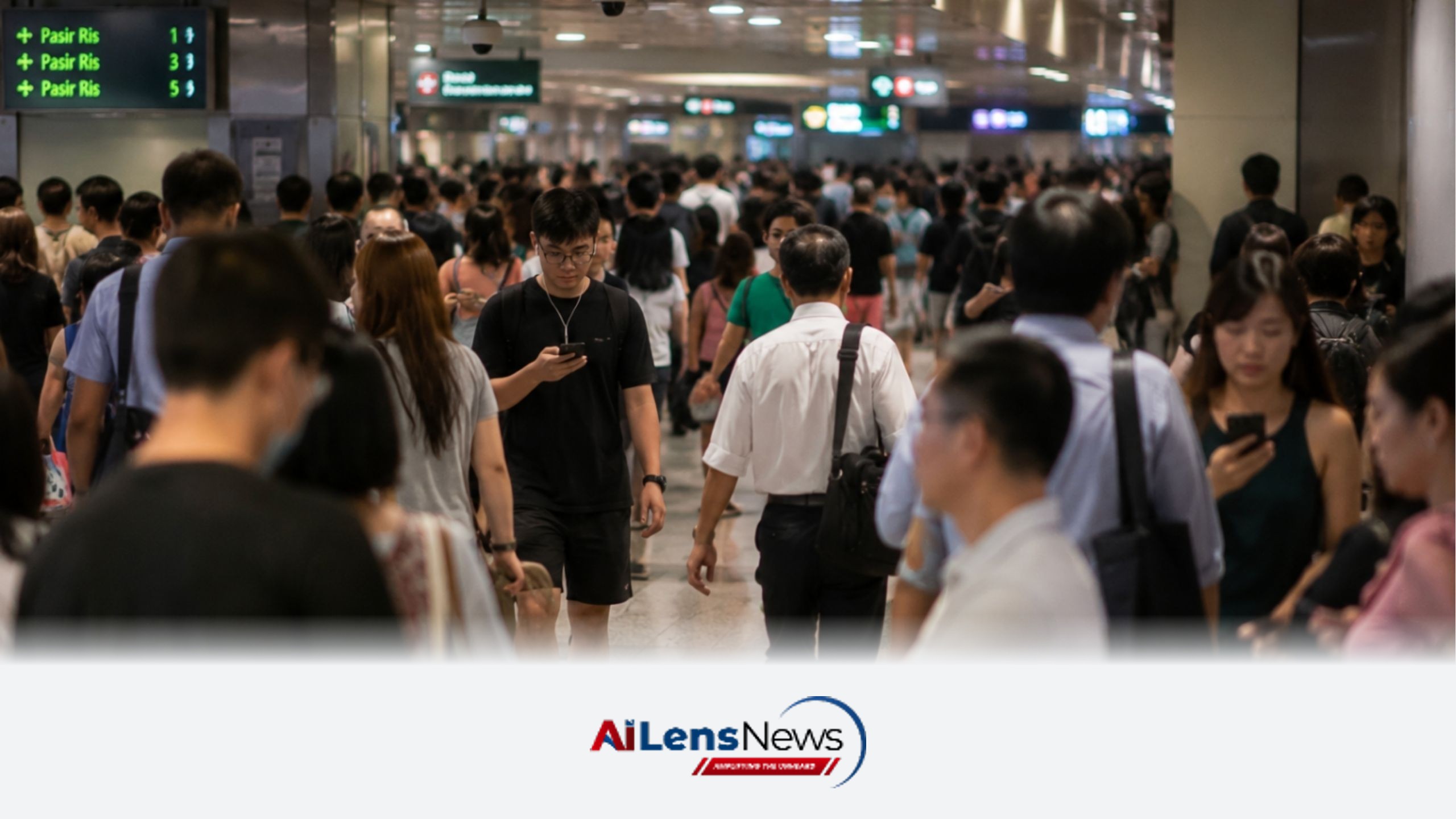



Experts highlight the disparity in Singapore's economic growth, with technology sectors thriving while traditional industries lag, impacting workers' experiences.
Singapore, Singapore Aug 27, 2026 ALN: Singapore’s gross domestic product (GDP) growth is expected to remain strong this year, but some Singaporean workers on the ground may not feel like they’re benefiting from this growth. This disconnect between robust economic indicators and the lived experiences of many workers has raised concerns about the nature of the growth being experienced in the country.
According to economists, this could be because Singapore’s economy is showing signs of a "K-shaped growth," where certain sectors, particularly those related to artificial intelligence (AI) and technology, are growing faster and pulling ahead, while non-tech-related industries lag behind. This phenomenon is not unique to Singapore; many economies worldwide are grappling with similar disparities as technological advancements reshape labor markets.
Maybank Securities Singapore economist Brian Lee told Channel News Asia that while headline growth has been strong, "it is quite uneven underneath." This suggests that while the overall economy is expanding, the benefits of this growth are not being distributed equally among different sectors and demographics.
Earlier this month, the Ministry of Trade and Industry (MTI) raised Singapore’s 2026 growth forecast to 4.5% to 5.5%, citing "better-than-expected performance" in the first half of the year and a brighter outlook for the rest of the year. Much of this optimism is driven by the strong performance of the manufacturing, wholesale trade, and finance and insurance sectors in the second quarter. These sectors have been buoyed by significant demand for AI-related products and services, which has boosted growth in the electronics and precision engineering clusters of manufacturing, along with the machinery, equipment, and supplies segment of wholesale trade.
However, it’s a different story for the domestic and consumer-facing parts of the economy. Mr. Lee explained that sectors such as retail and food and beverage (F&B) are grappling with high rental and labor costs, which are squeezing profit margins and limiting growth potential. Additionally, cautious consumer spending and a strong Singapore dollar are encouraging more Singaporeans to spend overseas, further impacting local businesses.
ANZ Asia research head Mr. Khoon Goh added that the K-shaped growth is most evident in Singapore’s exports, with electronic non-oil domestic exports jumping 112% year-on-year (YoY) in July, while non-electronics exports fell 2.3% over the same period. This stark contrast highlights the unevenness of growth within the economy, with certain sectors thriving while others struggle.
Furthermore, Mr. Goh noted how manufacturing and logistics drove almost 60% of growth in the first half of 2026, while F&B contracted 0.7%, and retail and non-professional services grew more modestly. This divergence in growth rates is concerning because the sectors driving the most growth—such as manufacturing—do not employ as many workers as those in consumer-facing industries. He pointed out that sectors like retail, hospitality, and non-financial services make up just 24% of the economy but employ around half of the workforce.
Hence, Mr. Goh said, there is a "feeling on the ground" that strong headline GDP growth is not benefitting workers, especially as AI disrupts the labor market, forcing businesses to restructure to stay relevant. This restructuring often leads to job displacement, particularly in sectors that are less adaptable to technological changes.
The implications of this K-shaped growth could become a bigger concern if weakness in consumer-facing sectors starts affecting employment and wages. These sectors, which employ a significant portion of the workforce, are crucial for maintaining economic stability and consumer confidence. If workers in these industries face job losses or stagnant wages, it could lead to broader economic challenges, including reduced consumer spending, which is vital for overall economic health.
Still, Standard Chartered economists Edward Lee and Jonathan Koh expressed caution about labeling Singapore’s economic growth as strictly "K-shaped." They described it instead as "strong but relatively narrow and uneven." This perspective underscores the complexity of the situation, suggesting that while certain sectors are thriving, the overall economic landscape is not uniformly positive.
The economists also emphasized that households experience the economy mainly through job security, wages, and purchasing power, rather than the aggregate GDP figure. This highlights the importance of considering the lived experiences of workers when evaluating economic health, as strong trade-related growth has not translated into equal benefits for all workers.
In light of these disparities, there is a pressing need for policies that address these economic inequalities. This could include targeted support for sectors that are lagging, investment in workforce development and retraining programs, and measures to alleviate the financial pressures faced by consumer-facing businesses. By addressing these issues, Singapore can strive for a more inclusive economic growth model that benefits all workers, rather than allowing a divide to deepen between those who thrive in a tech-driven economy and those who do not.
To learn more about the latest developments in Economic Reports, stay updated with our exclusive reports and analyses on AILensNews.

TEHRAN- The Minister of Economic Affairs and Finance highlights the government's…

As the US national debt reaches a staggering $40 trillion, questions arise about…

As of August 26, 2026, oil prices have decreased to $87.41 per barrel, impacting…
The Qatar Financial Centre (QFC) has announced a remarkable 37% increase in firm…

As the national debt surpasses $40 trillion, wealthy Boomers are set to receive …