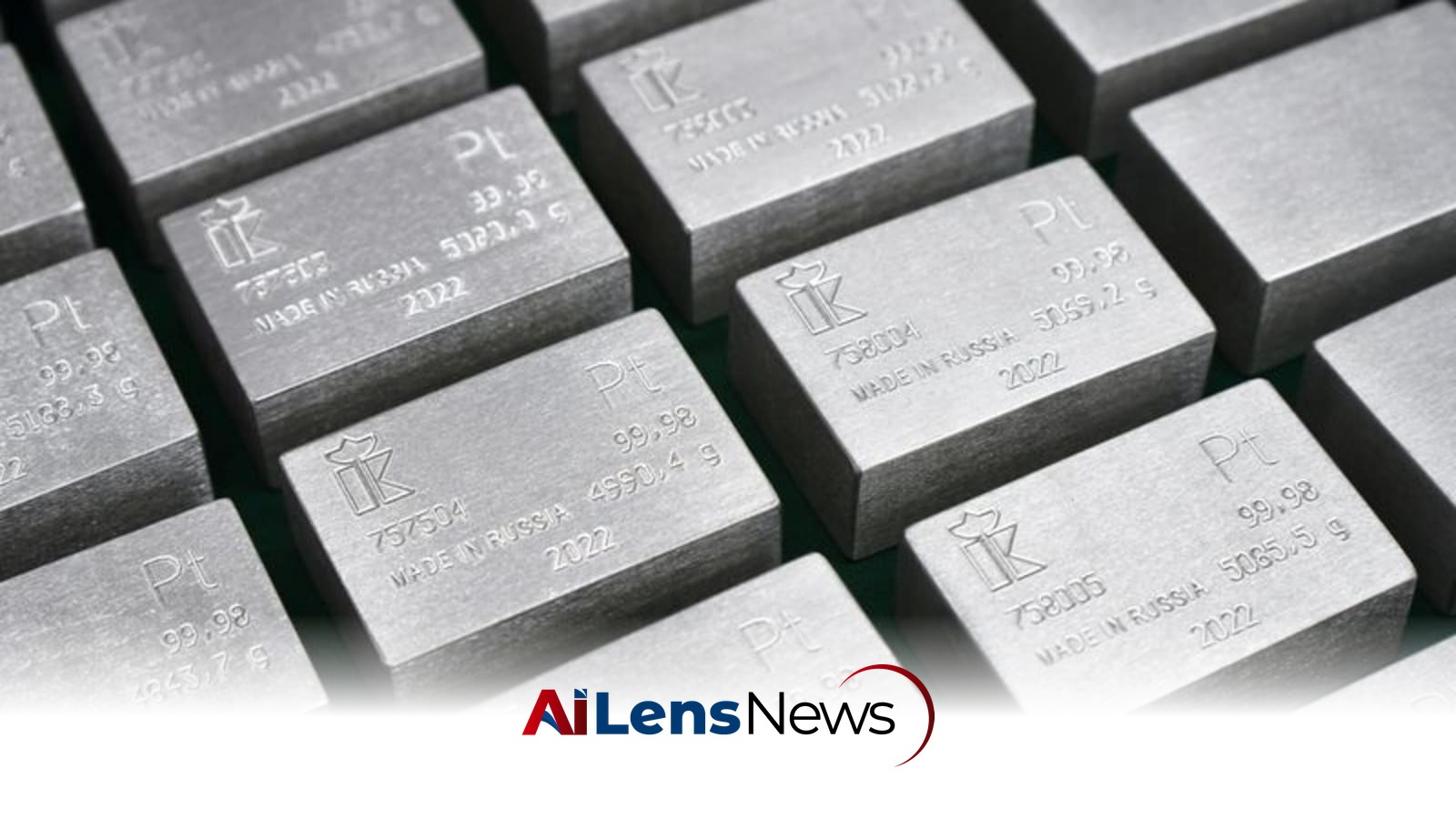


The World Platinum Investment Council reports that increased platinum imports to China have led to shortages globally, despite a reported surplus.
Singapore, Singapore Sep 5, 2022 ALN: Stronger than expected shipments of platinum to China in the first half of the year have resulted in shortages elsewhere, as supply from mines and recycling has declined, according to the World Platinum Investment Council (WPIC) on Monday (Sep 5). This development has raised concerns among industry stakeholders about the balance of supply and demand in the global platinum market, which is witnessing significant shifts.
Platinum, a precious metal often associated with luxury and industrial applications, has seen fluctuating demand patterns over recent years. Its primary uses include catalytic converters in vehicles, which are essential for reducing harmful emissions, as well as in jewelry and various industrial applications. The metal's importance in the automotive sector, particularly in light of tightening emissions regulations, makes it a focal point for market analysis.
Tracking the fate of some of the Chinese imports has proven challenging, leading to a situation where the platinum market appears to be in surplus on paper. However, actual market conditions have tightened, causing lease rates to surge to their highest levels in a decade, the WPIC noted in its latest quarterly report. The disparity between reported supply and actual availability has left many analysts puzzled.
"It certainly is weird to have a really big surplus published yet unavailability of metal in the spot market," said Trevor Raymond, the WPIC's head of research. This statement underscores the complexities involved in accurately assessing market dynamics, particularly when considering the opaque nature of trade flows and consumption patterns in major markets like China.
Lease rates for platinum peaked at around 10 percent in May, surpassing levels seen during the peak of the pandemic. Although the one-month lease rate has since eased back to 3.6 percent, it remains significantly higher than the 10-year average of 0.3 percent, Raymond added. These elevated lease rates indicate a tightening of available supply, prompting concerns from manufacturers and investors alike.
In the first six months of the year, China imported 1.44 million ounces of platinum; however, 645,000 ounces of that amount could not be tracked regarding its usage. This uncertainty is partly attributed to travel restrictions within the country, Raymond explained. Such restrictions have complicated the logistics of tracking how much of the imported platinum is being utilized or stored, further exacerbating the challenges in the market.
"While speculative flows are certainly part of it ... there also seems to be more consumption, but we cannot prove it and it's frustrating that it doesn't appear in our supply-demand data," he stated. This highlights a critical issue in the platinum market: the difficulty in obtaining reliable data that reflects actual consumption trends, especially in a rapidly changing economic environment.
Some of the increased buying may be linked to the low prices of platinum, which have decreased by 13 percent this year, hitting their lowest point in over two years last week, Raymond noted. The price drop could be enticing manufacturers and investors to increase their holdings, anticipating that tighter supply conditions will lead to price recovery in the future.
China may be increasing its platinum loadings in catalytic converters for heavy vehicles due to stricter emission standards, he added. As nations around the world implement more stringent environmental regulations, the demand for platinum in automotive applications is likely to grow, creating potential upward pressure on prices in the long term.
Around 40 percent of platinum is utilized in vehicle exhaust systems to eliminate harmful emissions, and it is also widely used in jewelry. The automotive industry's shift towards greener technologies is critical in shaping the demand landscape for platinum, as electric vehicles (EVs) become more prevalent, potentially altering the dynamics of platinum usage in the sector.
Total platinum supply is projected to decline by 8 percent this year, with mine supply having dropped by 4 percent in the second quarter. While higher output from Russia has been noted, it has been offset by declines in other regions, according to the report. This reduction in supply is concerning for manufacturers reliant on platinum for their production processes, as it could lead to increased production costs and potential supply chain disruptions.
Investment demand has been impacted by concerns over a potential global recession and rising interest rates, leading to a reduction of 89,000 ounces in holdings within exchange-traded funds (ETFs) during the quarter. The interplay between macroeconomic factors, such as inflation and monetary policy, plays a significant role in influencing investment decisions in precious metals, including platinum.
The published data indicates a platinum surplus of 349,000 ounces in the second quarter, with an anticipated full-year surplus of 974,000 ounces. However, the actual market conditions tell a different story, with shortages being reported in various regions. This discrepancy raises questions about the reliability of supply and demand data available to market participants and highlights the need for more transparent reporting mechanisms.
As the global economy continues to navigate uncertainties, including the lingering effects of the COVID-19 pandemic and geopolitical tensions, the platinum market will likely remain volatile. Stakeholders, including miners, manufacturers, and investors, must stay informed of market developments and adapt their strategies accordingly to navigate the complexities of the evolving landscape.
In conclusion, the current dynamics in the platinum market, characterized by increased imports to China, declining supply, and rising lease rates, suggest a period of significant transition. As the market grapples with these changes, the implications for pricing, investment, and consumption patterns will be closely watched by industry participants and analysts alike. The coming months will be crucial in determining how these factors will shape the future of platinum and its role in both industrial applications and investment portfolios.
To learn more about the latest developments in Trade & Commerce, stay updated with our exclusive reports and analyses on AiLensNews.

